Quick answer
Buy sunglasses labeled UV400 with lenses that block 100% of UVA and UVB, then treat fit as the deciding factor: if the frames slide, tilt, or get pulled off within a minute, the protection is not really there. For babies, choose a soft wrap frame with a stay-put strap; for toddlers, a flexible frame with adjustable arms or a strap works best. Match the size to head width, not age, and check that lenses sit close to the eyes without pressing on the nose or temples.
What UV400 actually means for baby sunglasses UV protection
UV400 is a lens rating, not a frame style. It means the lens blocks wavelengths up to 400 nanometers, which covers the UVA and UVB range. A sticker or product page that says UV400 is useful only if it also states 100% UVA and UVB protection, because a lens can be dark without filtering the full spectrum. Dark tint without UV filtering is worse than no sunglasses at all: it opens the pupil wider while letting UV through.
For babies and toddlers, lens material matters less than coverage. Wraparound shapes and larger lenses reduce light entering from the sides and top. If a product page does not list a UV rating, treat that as a missing specification and keep looking rather than assuming protection.
- Look for UV400 plus 100% UVA and UVB on the label or listing.
- Prefer larger, wrapped lenses over small round ones for side coverage.
- Skip any pair with no stated UV rating, no matter how cute the frame.
The fit test you can run in 30 seconds
Fit is the part most parents get wrong, because a frame that looks right in a photo can sit too low or too wide in real life. Put the sunglasses on your child and watch for three things: do the lenses stay centered over the eyes when they look down, do the arms or strap stay behind the ears or around the head without pinching, and does the frame stay put when they shake their head or bend over. If any answer is no, the size or style is wrong.
Head width is a better guide than age. Measure across the widest part of the head, just above the ears, and compare it with the frame width in the product details. A frame that is too wide slides forward; one that is too narrow presses at the temples and gets pulled off. For babies under about 12 months, a strap-style frame is usually the only design that stays on through crawling and stroller naps.
- Lenses should sit close to the eyes, not resting on the cheeks.
- No red marks or pressure points at the nose bridge or temples.
- The frame should survive a head shake and a forward bend without shifting.
Strap vs arms: which style suits your child's stage
Strap styles wrap around the back of the head and are the most secure option for babies and early toddlers, especially in strollers and carriers. The trade-off is that older toddlers may resist the strap or learn to pull it off. Arm styles look more like adult sunglasses and are easier for a child to put on themselves, but they depend on the arms hooking securely behind the ears, which is unreliable on very small heads.
A practical compromise is a flexible frame with adjustable arms and a removable strap. That gives you the security of a strap for outings and the independence of arms as your child gets older. Whichever you choose, check that the hinge or strap attachment has no sharp edges and that the frame bends rather than snaps when twisted.
Materials, lens color, and the trade-offs worth accepting
Flexible rubberized or TPU-style frames survive being bent, sat on, and chewed, which matters because toddlers treat sunglasses like a toy. Polycarbonate lenses are the common choice for impact resistance. No material is indestructible, so a spare pair or a hard case is often more useful than paying extra for a premium frame your child refuses to wear.
Lens color is mostly a comfort choice, not a safety one, as long as the UV rating is present. Gray and brown lenses keep colors more natural; mirrored or very dark lenses can feel too dim for cloudy days and make some children fussy. Polarized lenses cut glare, which helps at the beach or on water, but they are not required for UV protection and often cost more.
- Choose flexible frames for toddlers who bend and chew everything.
- Polarized lenses help with glare but are optional for UV safety.
- A spare pair or case is often a better spend than a premium frame.
Decision rules for choosing baby and toddler sunglasses
- Rule 1: UV rating first, style second: If the listing does not state UV400 and 100% UVA/UVB protection, stop there. A dark lens without a stated rating can let more UV into the eye, not less. No UV rating means no purchase.
- Rule 2: Fit by head width, not age: Measure across the widest part of the head above the ears and compare it with the frame width. Age labels vary between brands and are a rough guide at best. A frame that shifts when your child bends over is the wrong size.
- Rule 3: Babies get straps, toddlers get options: Under about 12 months, choose a soft wrap frame with a stay-put strap. From around 18 months, a flexible frame with adjustable arms or a removable strap gives more independence. Match the retention style to your child's stage, not to the photo.
- Rule 4: Spend on retention and spares, not on branding: A mid-priced flexible frame that stays on protects better than a premium frame that spends the outing in your bag. A spare pair or hard case is often the better upgrade. Protection only counts when the sunglasses are actually worn.
Product facts that help you decide
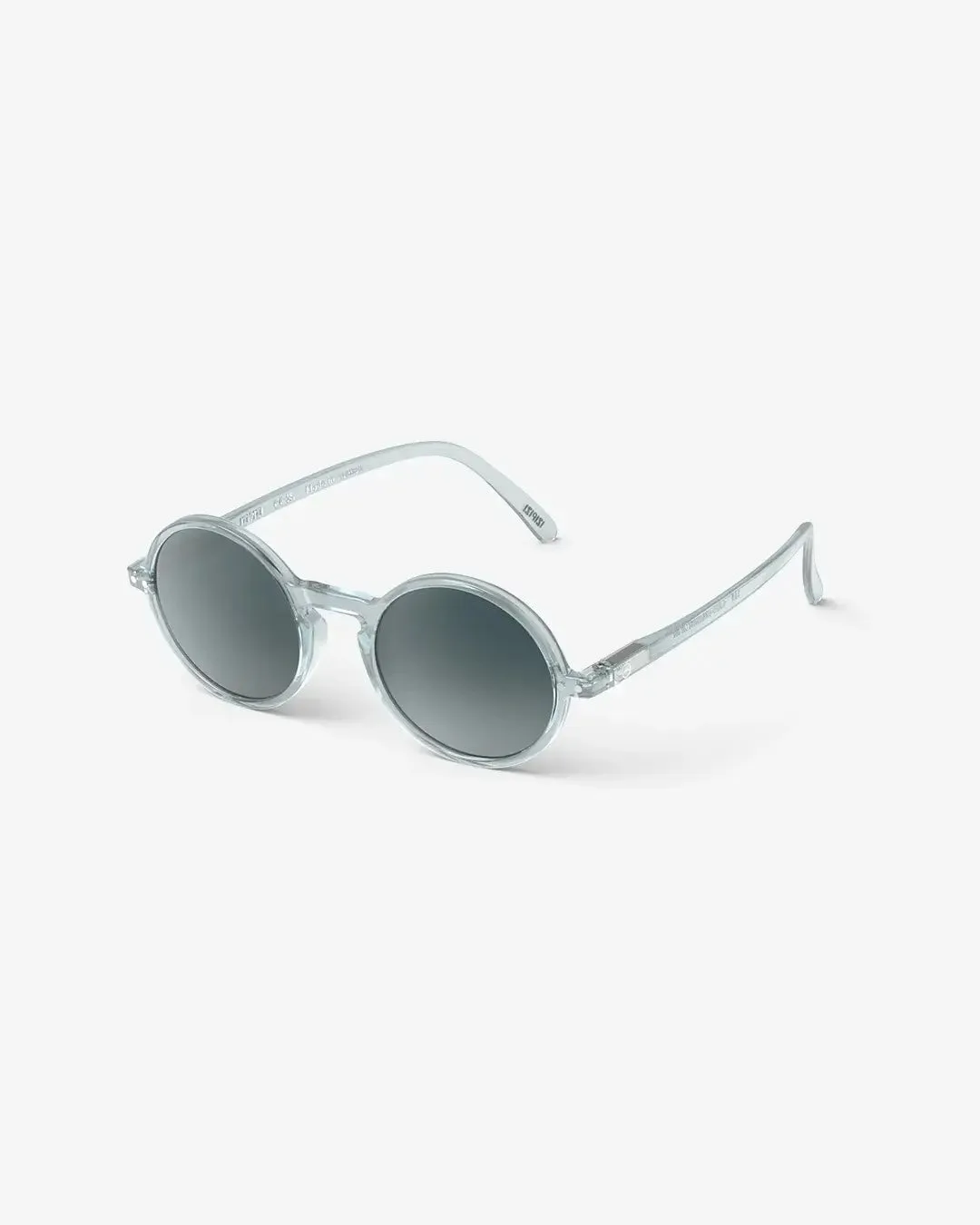
- Izipizi: Adult Sunglasses - Frozen Blue (C Frame): Izipizi adult sunglasses in Frozen Blue use a C frame with a square, assertive shape and are described as a statement accessory for adults. This is an adult frame, not a child size, so it is a good reference point for the shape and style an older child may want to copy, but it should not be bought as a first pair for a baby or toddler.
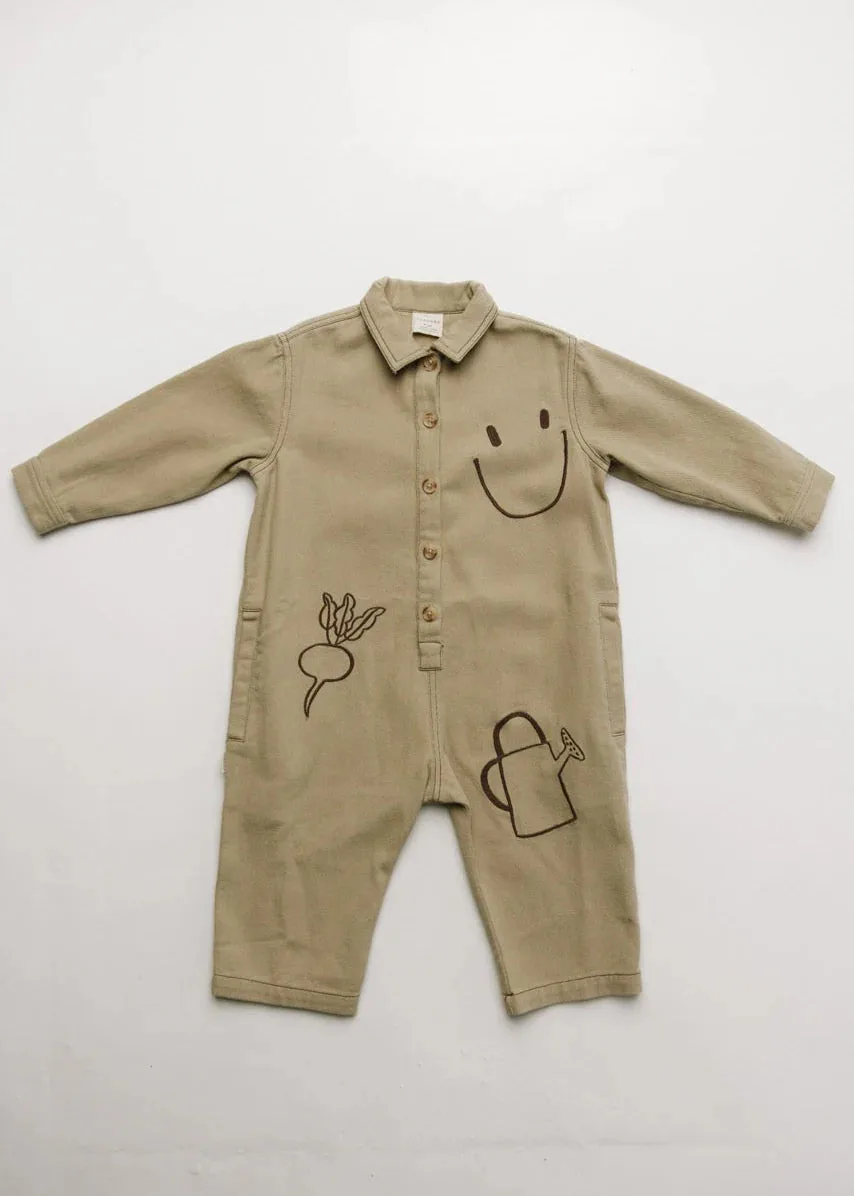
- Claude & Co: Quinn Olive Allotment Embroidered Overalls: The Quinn Olive Allotment Embroidered Overalls are made from 100% organic cotton twill with a roomy, relaxed fit and button-up front fastening. A relaxed cotton layer makes it easier to dress a baby or toddler for a sunny outing, and the button front means you can adjust the outfit without wrestling a tight neckline over the head.
Who these sunglasses are for
Best for
- Babies and toddlers who need a secure strap-style frame for stroller and carrier outings
- Parents who want a flexible, chew-resistant frame that survives daily handling
- Toddlers ready to move from a strap to adjustable arms
Not for
- Children who need prescription lenses, which require an optician rather than a fashion frame
- Adults or older children wanting a statement frame such as the Izipizi C frame, which is sized for adults
- Anyone shopping for a pair without a stated UV400 and 100% UVA/UVB rating