Quick answer
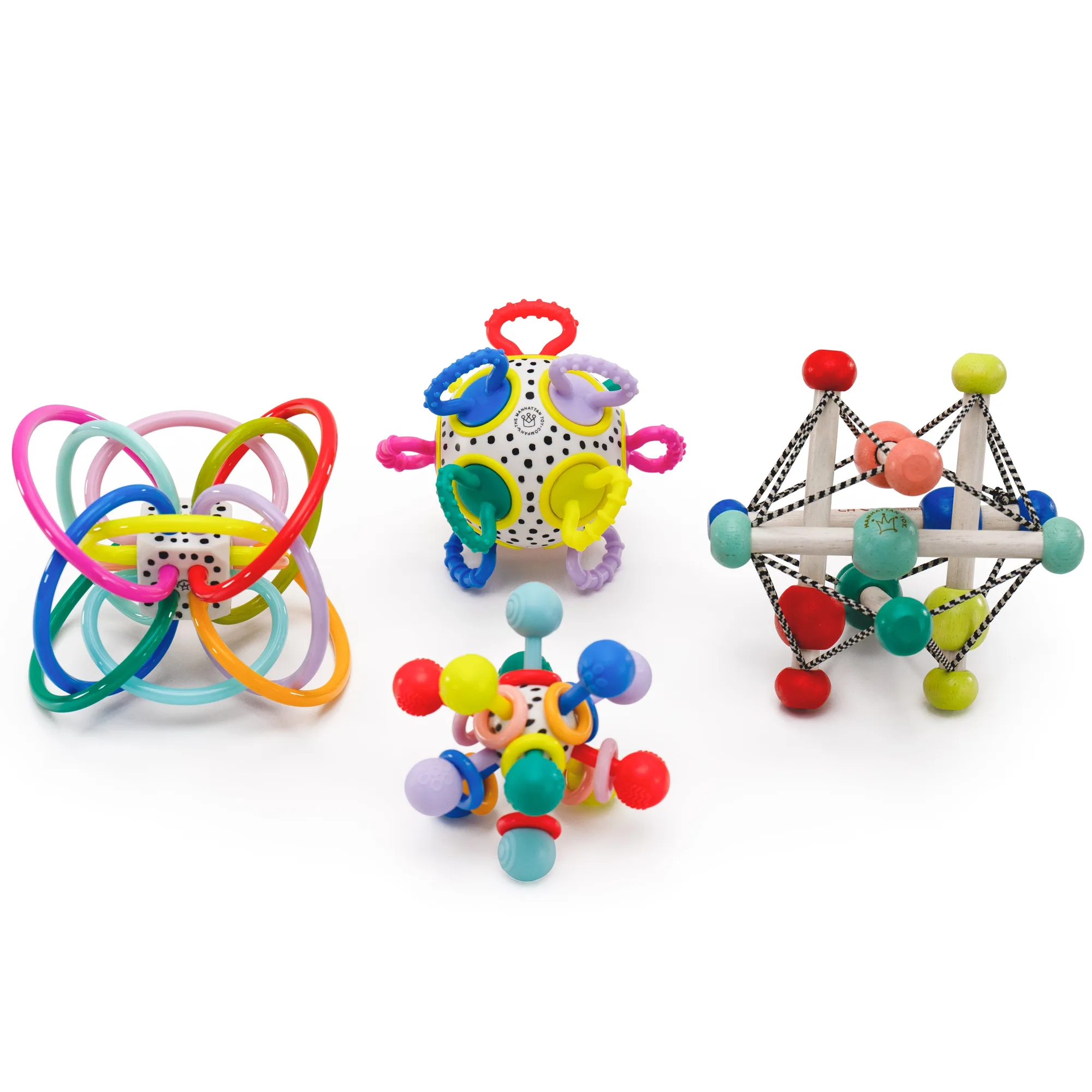
Focus on toys that match your baby's current motor and sensory milestones—simple shape sorters and stacking cups for early exploration, and textured blocks for older babies who can grasp and stack.
Why stage matters more than age
Babies develop at their own pace, so a toy labeled for 6 months might frustrate a 9-month-old who hasn't mastered sitting yet. Instead of relying solely on age labels, watch for cues like reaching, grasping, or mouthing—these behaviors tell you which sensory toy will actually engage your baby.
A toy that is too advanced can cause frustration, while one that is too simple won't hold attention. The sweet spot is a toy that challenges just slightly beyond what your baby can already do.
Material and safety considerations
Sensory toys for babies should be free of small parts, BPA, and toxic materials. Look for silicone or soft plastic that can be chewed and washed easily. Avoid anything with sharp edges or strings longer than 12 inches.
Jellystone Designs uses toxic-free silicone in many of its sensory toys, which is safe for mouthing and easy to clean—an important feature for babies who explore everything with their mouths.
Trade-off: open-ended vs. structured play
Open-ended toys like stacking cups encourage creativity and can be used in many ways (stacking, nesting, pouring), while structured toys like shape sorters teach specific skills like shape recognition and problem-solving. Both have value, but the right balance depends on your baby's temperament.
For younger babies (under 9 months), open-ended toys often work better because they don't require precision. As babies approach their first birthday, structured toys become more engaging.
Decision rules for choosing sensory toys by stage
-
Newborn to 3 months: Focus on high-contrast patterns, soft rattles, and toys that produce gentle sounds. Babies at this stage are developing visual tracking and hearing. Avoid any toy with small parts that could become a choking hazard. Look for black-and-white or high-contrast patterns and soft textures.
-
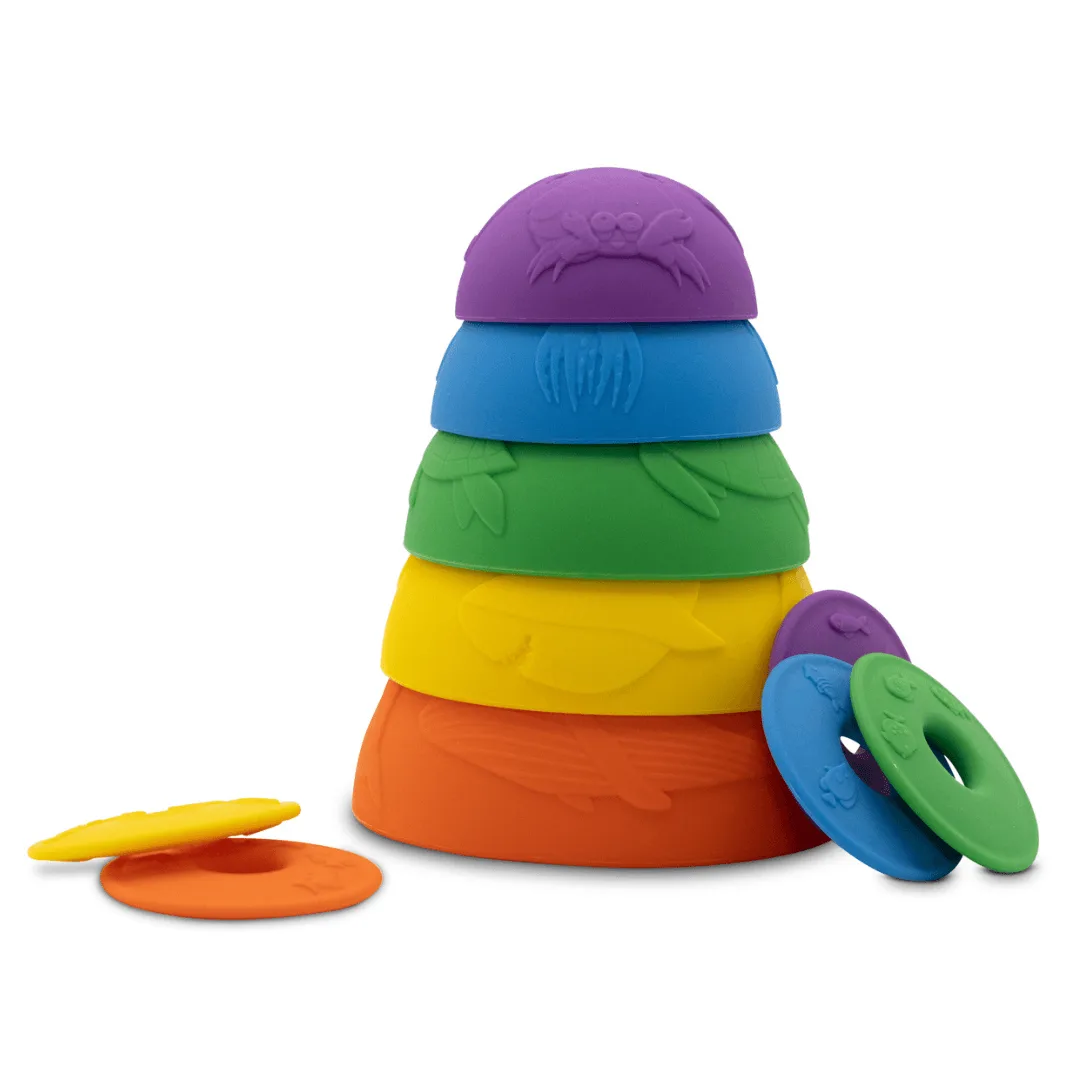
3 to 6 months: Babies begin reaching and grasping. Offer toys that are easy to hold, like silicone rings or small stacking cups. Mouthing is common, so ensure toys are BPA-free and dishwasher-safe. The Ocean Stacking Cups work well here for simple grasping and mouthing. Choose lightweight, graspable toys that are safe to chew.
-
6 to 9 months: Babies start sitting and may begin to stack or knock down towers. Introduce toys that encourage cause and effect, like cups that stack or blocks that make noise. The Triblox offer numbered blocks that can be stacked and also introduce numbers. Look for toys that can be stacked or knocked down to build motor skills.
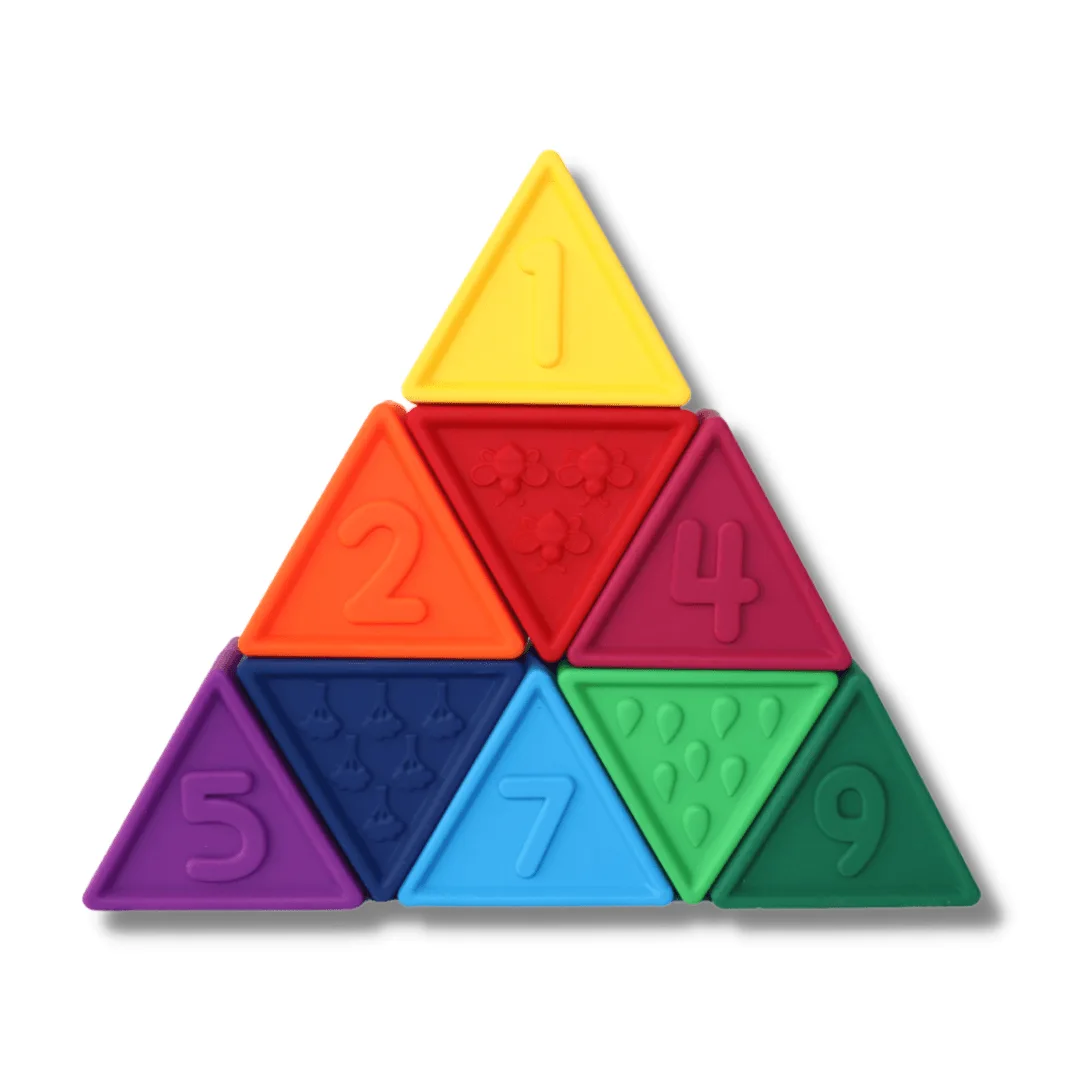
Triblox
-
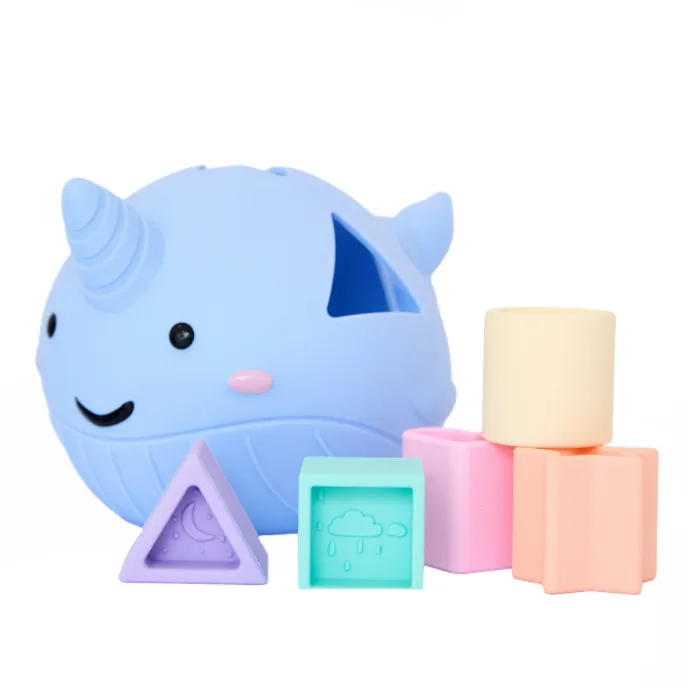
9 to 12 months: Babies are often pulling up and may start to solve simple problems. Shape sorters like the Narwhal Shape Sorter are appropriate now, as they require matching shapes to holes. Also consider sensory bottles like the DIY Calm Down Bottle for focused attention. Introduce problem-solving toys like shape sorters and sensory bottles.
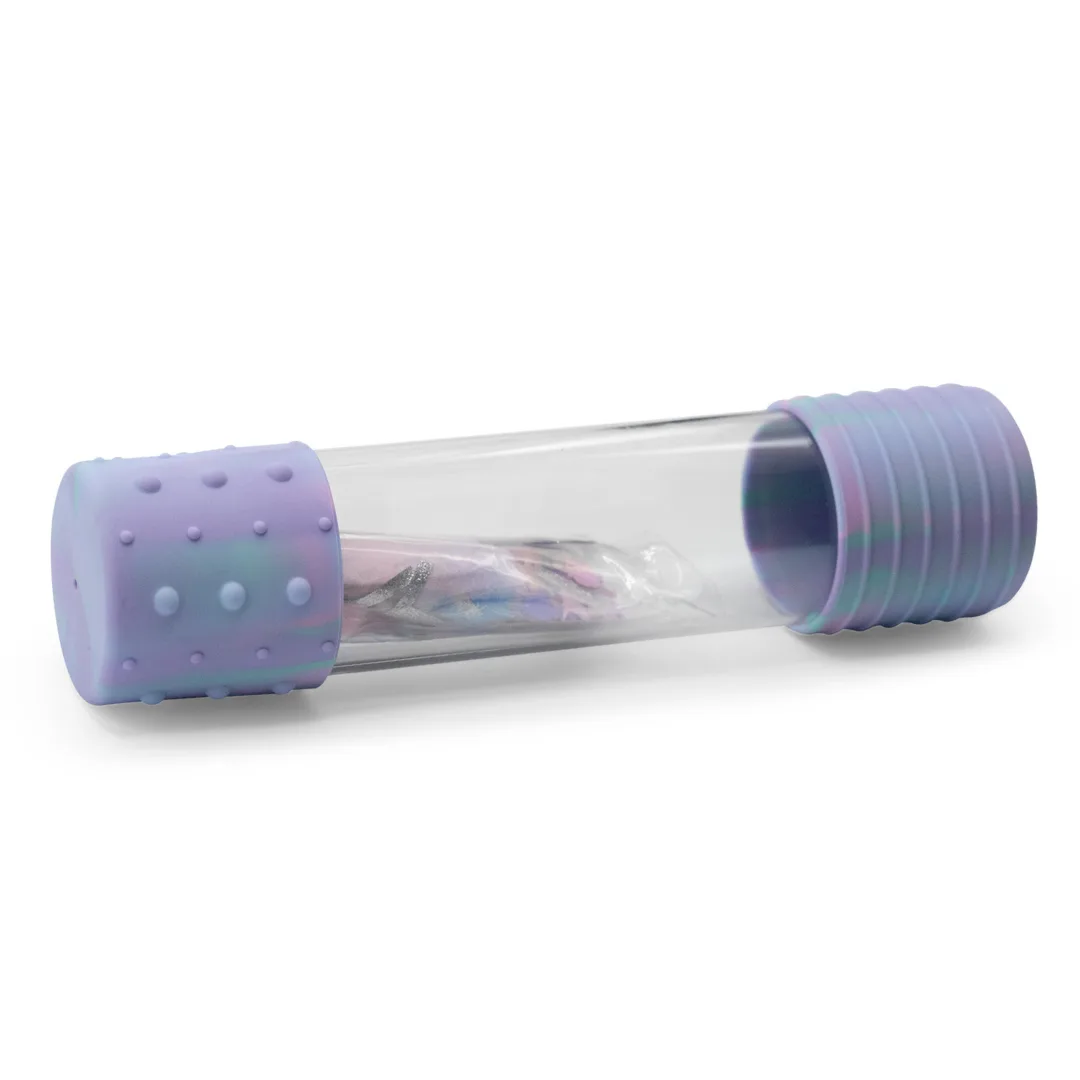
DIY Calm Down Bottle
Product facts
- Narwhal Shape Sorter: The Narwhal Shape Sorter features five shapes that fit through corresponding openings, and the blocks can be easily accessed when it's time to play again. This makes it ideal for babies around 12 months who are learning to match shapes, but the easy-access base prevents frustration if they can't get the blocks out.
- Ocean Stacking Cups: The Ocean Stacking Cups include 5 cups and 5 treasure coins, and can be used for stacking, nesting, hiding objects, texture stamping, and water play. This versatility makes it suitable from around 6 months for simple stacking and later for more complex play like matching coins to cups, growing with your baby.
Which sensory toy fits your baby?
Best for
- Parents of babies 6-12 months who want a versatile toy that grows with their child: Ocean Stacking Cups
- Parents of toddlers around 12 months who are ready for shape matching: Narwhal Shape Sorter
Not for
- Babies under 6 months who are not yet sitting or grasping: Narwhal Shape Sorter may be too advanced
- Parents seeking only open-ended play without structured learning: Triblox may be preferred over shape sorters