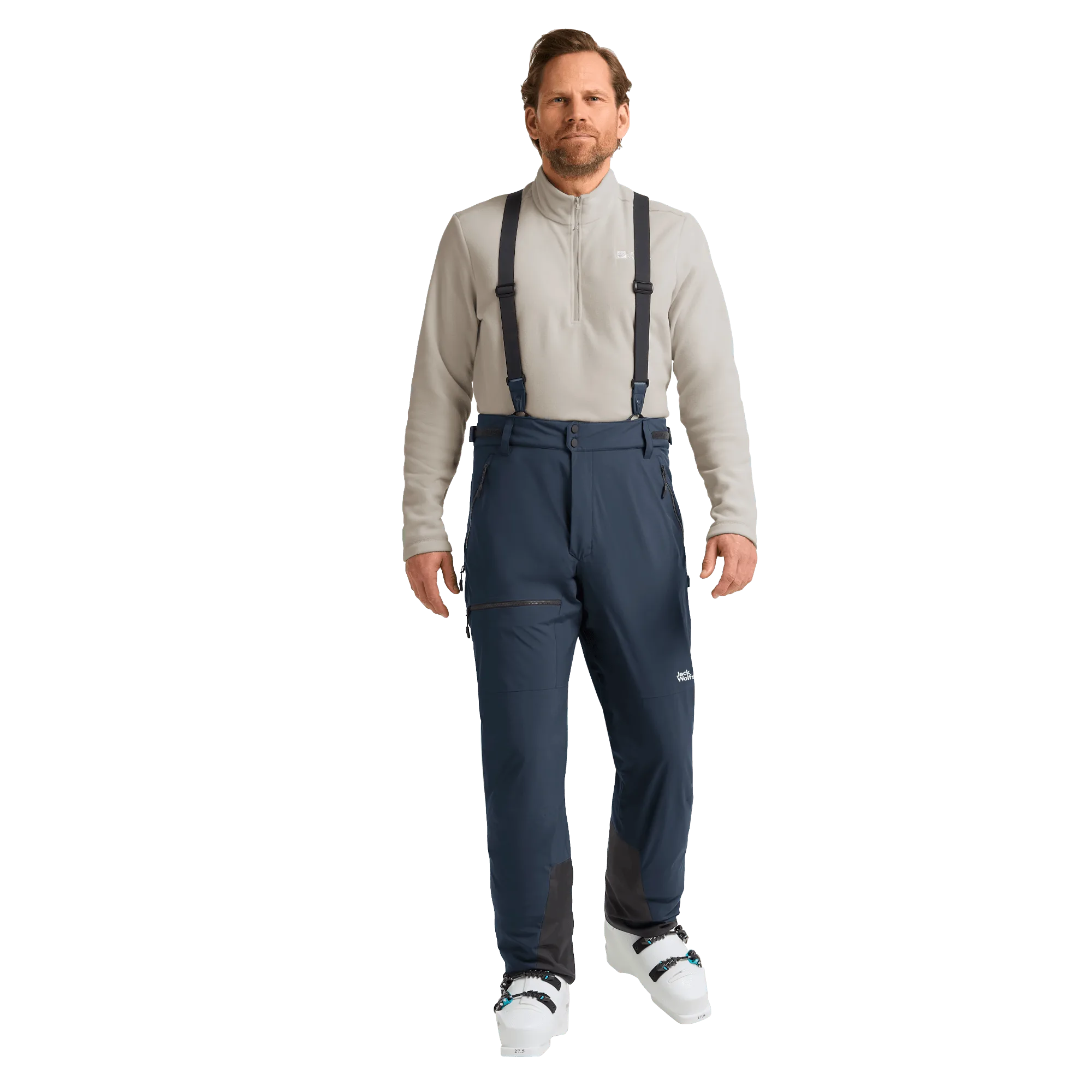
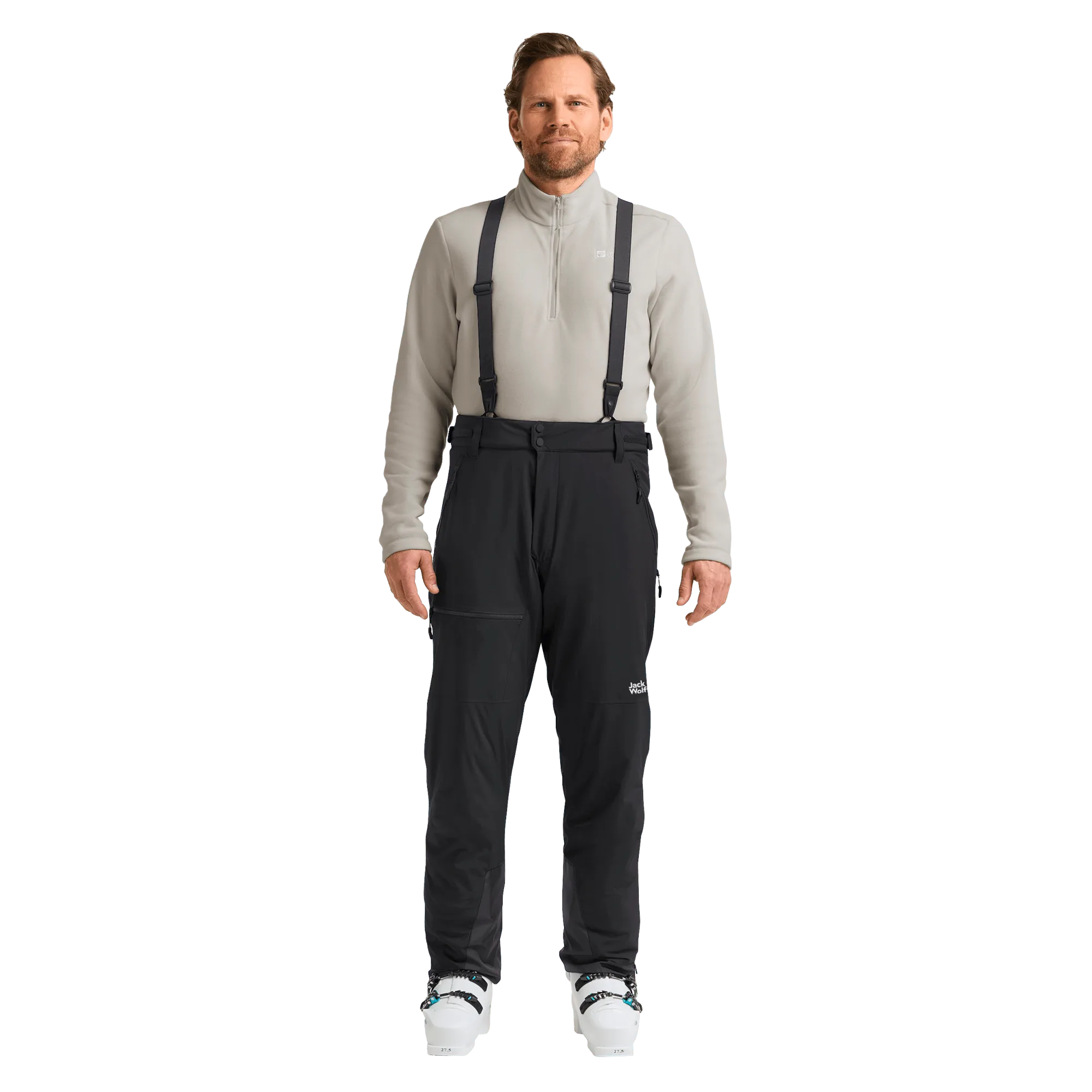
Quick answer
The best ski pants for you balance insulation, waterproofing, breathability, and fit based on your typical weather and activity level. For most resort skiers, an insulated pant with side ventilation offers the best mix of warmth and versatility.
Insulation or shell: what suits your day?
Insulated ski pants have a built-in layer (like 60 g synthetic insulation) to keep you warm without adding a bulky base layer. Shell pants are unlined and rely on layering underneath, giving you more control over temperature but requiring extra pieces.
If you ski mostly in cold conditions (below freezing) or tend to run cold, insulated pants simplify your kit. For spring skiing or high-output touring, a shell with adjustable layers is more flexible.
Waterproofing and breathability trade-offs
A waterproof membrane (like TEXAPORE CORE) keeps snow and slush out while letting sweat vapor escape. Higher breathability ratings help during active runs, but no fabric breathes as well as a non-waterproof softshell. Side ventilation slits are a practical compromise, letting you dump heat quickly on warm days or after a hard run.
If you ski in wet snow or frequent storms, prioritize a fully waterproof pant. For dry, cold climates, a water-resistant softshell may be enough and feels more comfortable against the skin.
How to choose your ski pants
- 1. Pick insulation level: If you ski mostly in temperatures below 20°F or sit on cold chairlifts, choose insulated pants (60 g or more). If you ski in variable conditions and like to layer, a shell pant gives you more flexibility. Insulated pants are simpler for cold days; shells require a base and mid layer.
- 2. Check waterproofing: Look for a waterproof membrane (like TEXAPORE CORE) if you ski in wet snow or rain. For dry powder, a water-resistant fabric with a DWR finish is often enough and breathes better. Waterproof membranes add weight and cost; choose based on your typical snow conditions.
- 3. Evaluate ventilation: Side zips or mesh-lined vents let you release heat during active runs. If you ski hard or in spring conditions, ventilation is a must-have. Without vents, you may overheat in insulated pants. Vents add a small zipper; they are worth it for anyone who skis more than a few hours at a time.
- 4. Consider fit and features: Boot-cut cuffs with reinforced edges protect against ski edges and snow. Adjustable waistbands or suspenders help dial in the fit. Suspenders are great for deep snow or if your pants tend to sag, but they add one more thing to adjust. Suspenders are removable on some models, giving you the option to go without.
Ski pants we recommend
-
FLOWLINE 2L INS PANTS M: The FLOWLINE 2L INS PANTS M uses TEXAPORE CORE TASLAN for a waterproof, soft outer layer and 60 g TEXATHERM CORE insulation. This gives you reliable weather protection and warmth without the stiff feel of some heavy-duty shells, plus side ventilation slits let you cool off on warmer days.
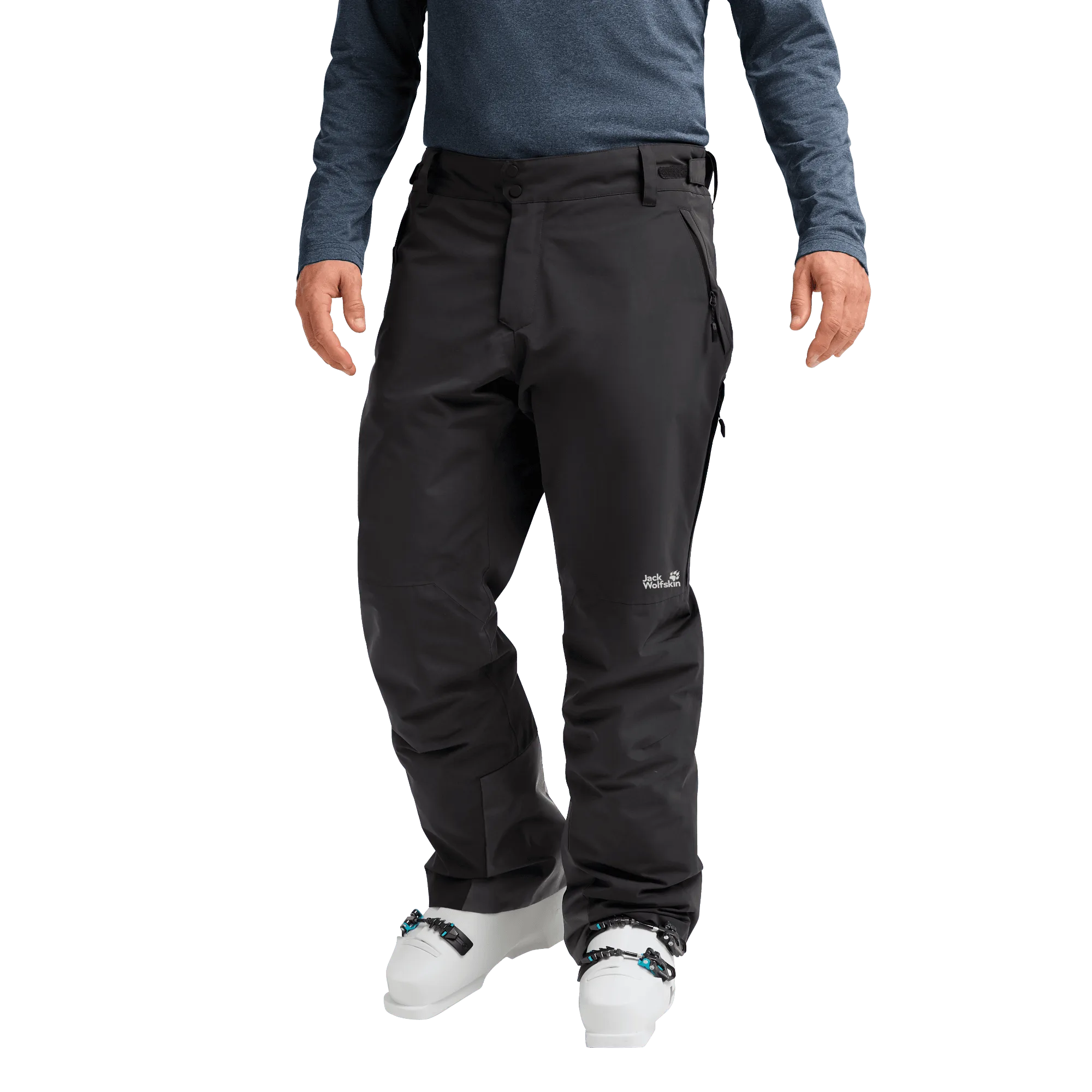
FLOWLINE 2L INS PANTS M
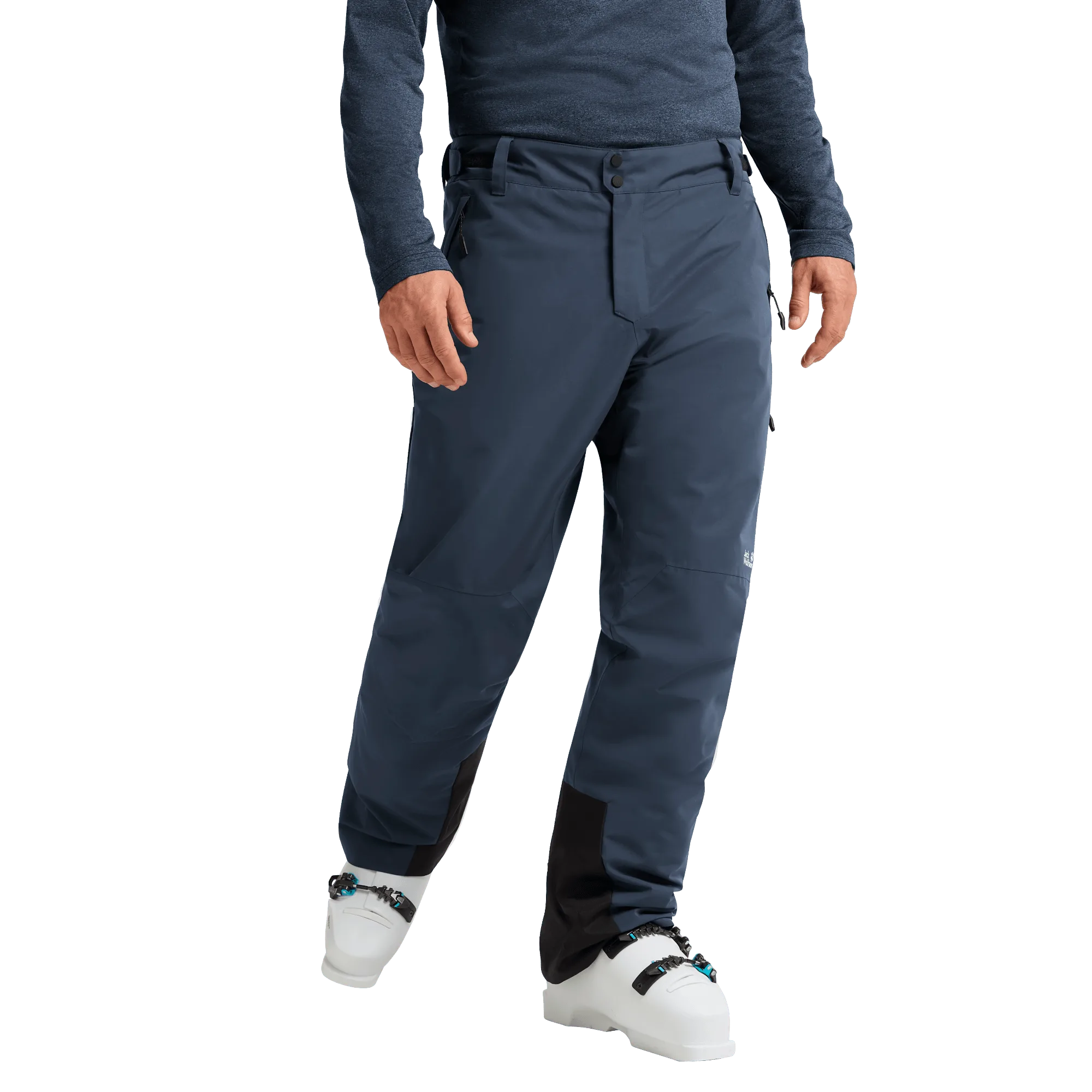
FLOWLINE 2L INS PANTS M
-
FLOWLINE PRO 2L INS PANTS M: The FLOWLINE PRO 2L INS PANTS M also has 60 g TEXATHERM CORE insulation and removable suspenders for a secure fit. Removable suspenders keep the pants in place when bending or squatting, which is especially useful if your jacket tends to ride up.
Which ski pants should you choose?
Best for
- Resort skiers who want all-day warmth and simplicity – the FLOWLINE 2L INS PANTS M offers insulation, ventilation, and a soft waterproof shell.
- Skiers who need a secure fit in deep snow or while bending – the FLOWLINE PRO 2L INS PANTS M with removable suspenders keeps pants in place.
Not ideal for
- Backcountry touring where a lightweight shell with full side zips is more packable and breathable.
- Warm-weather skiing (above 40°F) where uninsulated shell pants with vents are more comfortable.