Quick answer
Choose a stroller organizer caddy only after you measure two things: your handlebar width and the distance from the bar to the canopy or fold mechanism. Prioritize open exterior pockets for the items you touch every walk, a secure closure for anything that could spill, and a fabric you can wipe clean. If you regularly carry more than a short outing's worth of gear, treat the caddy as a cockpit and keep a convertible diaper bag for the bulk.
Measure fit before you compare pockets
A caddy that sags, slides, or blocks the fold is the most common reason people stop using one. Measure your handlebar width at the point where straps would sit, then measure the vertical clearance from the bar down to the canopy or the fold release. If your stroller has a single curved bar, look for a caddy with adjustable straps rather than fixed loops.
Also check whether your stroller's fold requires the bar area to stay completely clear. Umbrella and compact strollers often fold through the handlebar zone, so a caddy that stays attached can prevent a one-hand fold. If you fold daily, choose a caddy you can detach in one motion or one that sits high enough to stay out of the mechanism.
Match pocket layout to what you actually reach for
Think through a single walk in order: phone, keys, water, wipes, a snack, a pacifier. Open-access exterior pockets are for the first three because you grab them without looking. A zipped or flap interior section is for items that must not fall out when you lift the stroller over a curb.
A deep single compartment sounds generous but becomes a bag you have to dig through one-handed. Two or three defined zones usually work better than one large cavity. If you carry bottles, check that at least one pocket is tall enough to hold them upright rather than letting them tip into the main space.
Fabric, lining, and cleanup decide long-term satisfaction
Stroller gear takes sun, rain, crumbs, and spit-up. A coated organic cotton exterior resists light moisture and wipes down more easily than an untreated woven, while a lined interior protects the outer fabric from leaks and makes crumbs easier to shake out. Quilted channel stitching adds structure so the caddy holds its shape instead of collapsing when empty.
If you walk in strong sun, remember that dark linings and coated fabrics can feel warm to the touch after a long outing. That is a comfort consideration, not a safety rating, so test with your own stroller and climate.
When a caddy replaces a diaper bag and when it does not
For a 20-minute neighborhood loop, a caddy plus a few diapers and wipes in the stroller basket is genuinely enough, and it is faster than swinging a bag on and off your shoulder. For a half-day trip, a caddy alone will run out of room, and you will end up carrying loose items.
A practical split: keep the caddy loaded with the essentials you touch constantly, and keep a larger bag packed for longer outings. A convertible bag that shifts from backpack to tote lets you carry the bulk on your back while the caddy stays on the stroller, so you are not re-packing between trips. If you already own a diaper bag you like, you do not need to replace it to add a caddy.
Decision rules for picking your setup
- If you fold your stroller every day: Choose a caddy you can remove in one motion, or one that sits high enough to clear the fold mechanism. Test the fold with the caddy attached before committing. A caddy that blocks the fold will get left at home.
- If you walk in rain or dust: Prioritize a coated or wipeable exterior and a lined interior over an untreated woven, and avoid deep open pockets that collect debris. Cleanup ease beats extra pockets in bad weather.
- If your outings run longer than an hour: Use the caddy for quick-reach items only and carry the rest in a convertible bag worn as a backpack or tote. Two small systems beat one overloaded caddy.
- If you carry bottles upright: Check that at least one pocket is tall enough to hold them vertically; a single deep cavity lets them tip and leak. Measure the pocket, not the caddy.
Product facts that matter for this decision
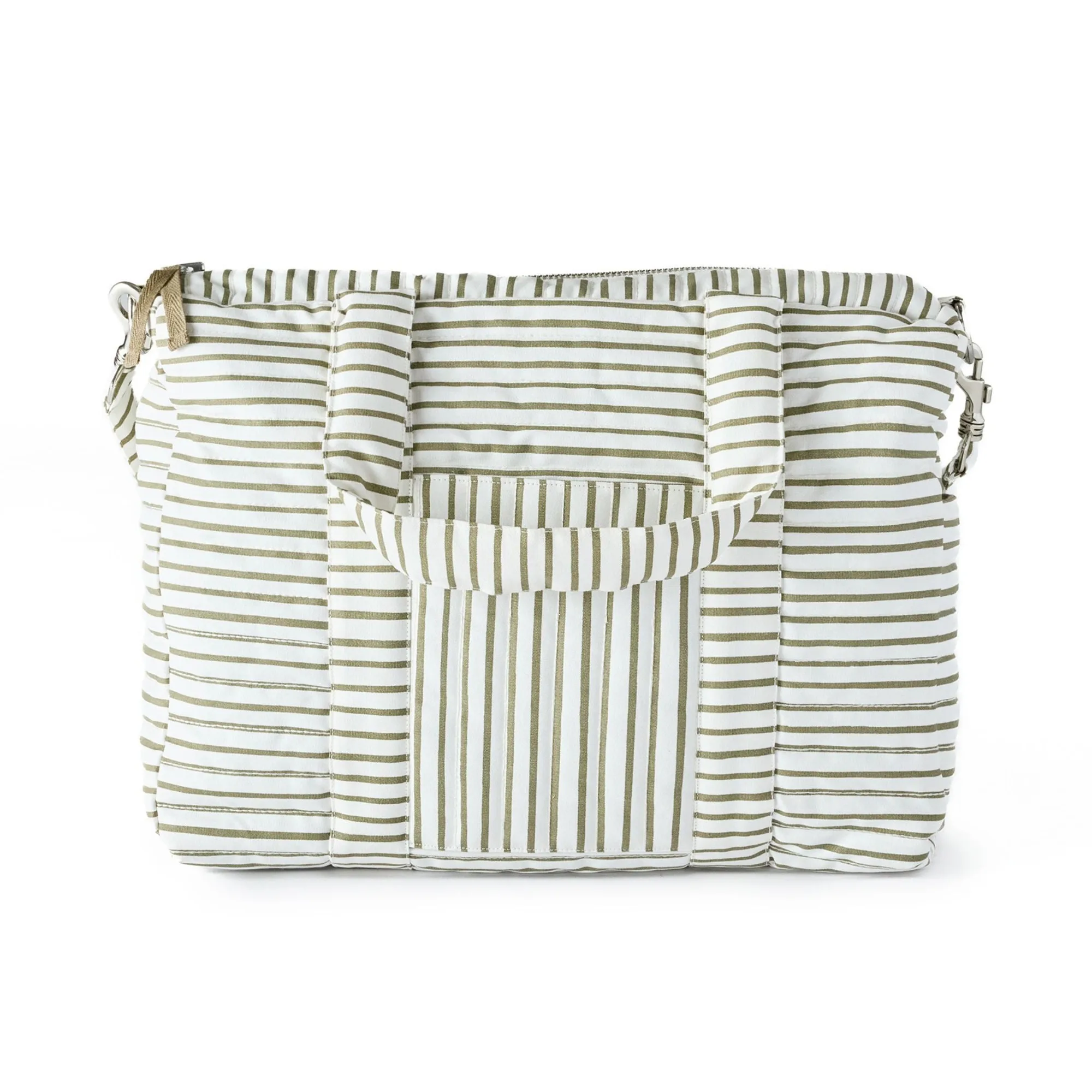
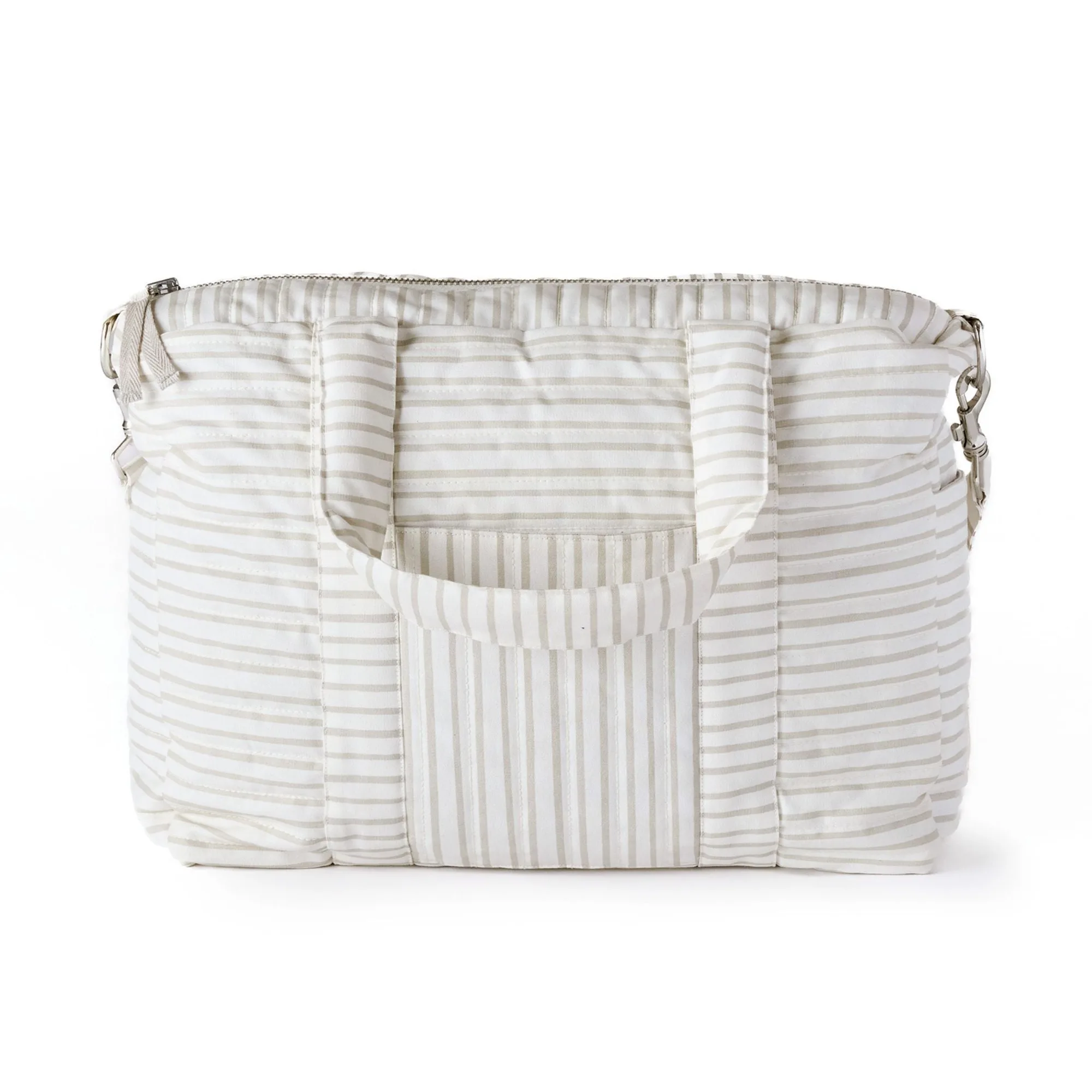
- Stroller Organizer Caddy - Spotted: Crafted from non-toxic acrylic coated organic cotton with wide quilted channel stitching and an Olive-toned canvas lining, plus open-access exterior pockets and a fully loaded interior. The coated cotton and quilted stitching support shape and wipe-down cleanup, while the open exterior pockets match the grab-and-go items you reach for on a walk.
- Ribbed Baby Sleeper - Happy Valley: Ribbed Sleeper with footies in GOTS certified organic cotton rib knit, full-length zipper, and built-in footies. A full-length zipper makes diaper changes faster on the go, which is exactly the scenario a stroller caddy is meant to make easier.
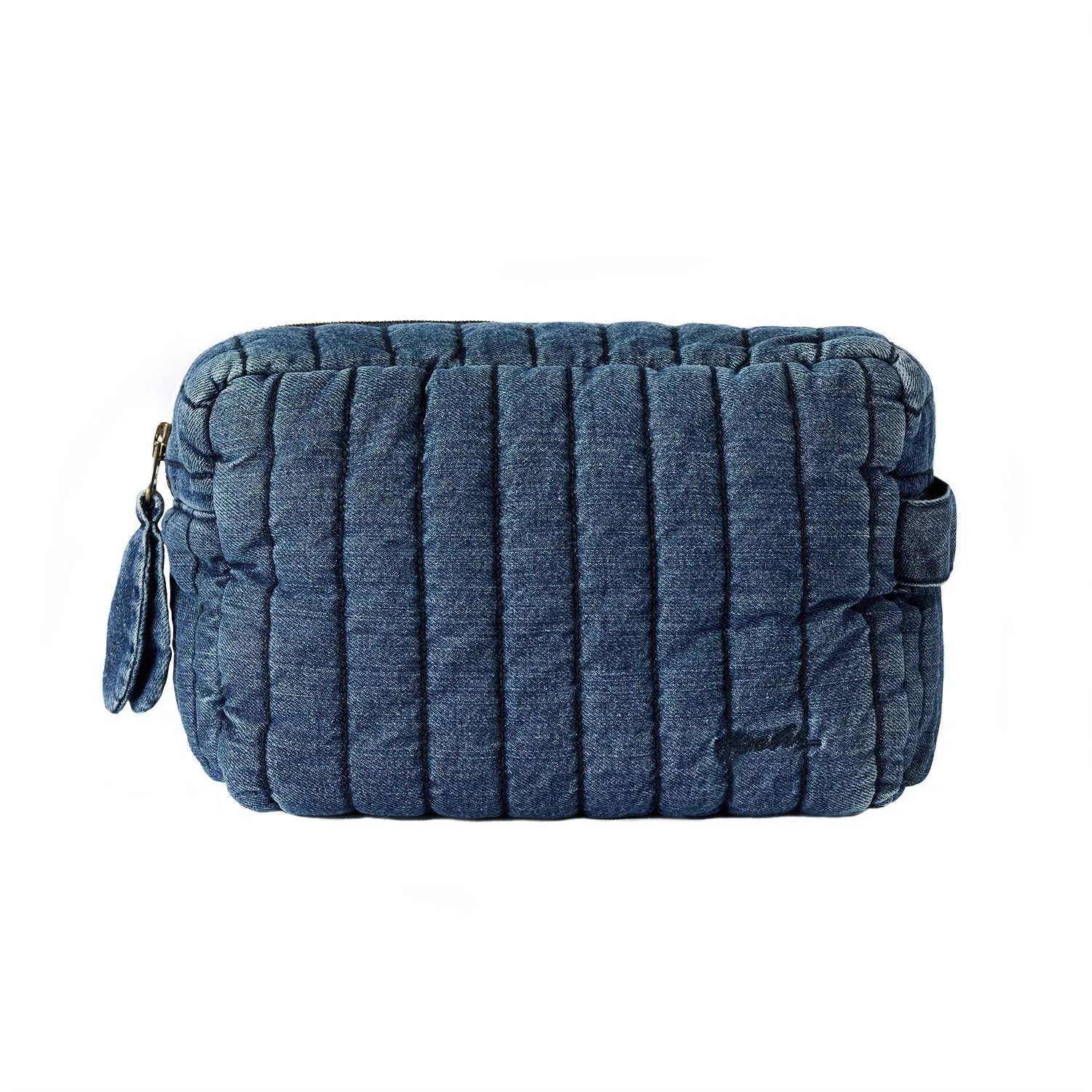
- Denim Convertible Diaper Bag - Soft Indigo: 100% cotton Denim Convertible Diaper Bag with smart compartments, secure pockets, and a design that shifts from backpack to tote. This is the bulk-carrying counterpart to a caddy: it handles longer trips while the caddy stays on the stroller for quick-reach items.
Who this setup is for
Best for
- Parents doing daily neighborhood walks who want phone, keys, and wipes within reach without carrying a bag
- Caregivers using a stroller with a wide handlebar and clear space above the fold mechanism
- Anyone who wants a wipeable, structured caddy that holds its shape when empty
Not for
- Parents who need to carry a full day's supplies in one bag; a convertible diaper bag fits that better
- Strollers whose fold passes directly through the handlebar area with no clearance
- Shoppers looking for insulated bottle storage; check the product facts for temperature features before assuming