Quick Answer
For cutting steel with a TCT blade, choose a blade with a triple-chip grind (TCG) tooth design, match the tooth count to the saw's RPM and the cut quality you need, and confirm the blade size fits your saw. For most steel-cutting jobs, a 6-1/2" 48-tooth blade offers a balanced mix of speed and finish, while a 12" 60-tooth blade suits larger, faster cuts on compatible low-RPM saws.
Why TCG Tooth Geometry Matters for Steel
Steel is harder than wood or aluminum, so a standard alternate top bevel (ATB) tooth can chip or dull quickly. TCT blades for steel use a triple-chip grind (TCG) tooth design, where each tooth has a flat top followed by a chamfered tooth. This geometry distributes cutting forces more evenly and produces a cleaner edge on ferrous materials.
When you see TCG listed on a blade, it's a strong sign the blade was designed for steel, not just wood. Both the 6-1/2" 48-tooth and 12" 60-tooth Benchmark Abrasives blades use TCG geometry, which is a key reason they work well on steel and other ferrous metals.
Blade Size and Saw Compatibility
Blade size must match your saw's arbor and guard. A 6-1/2" blade fits compact circular saws, while a 12" blade requires a larger, typically stationary saw. Always check the blade's maximum RPM rating against your saw's speed; using a blade at too high an RPM can be dangerous.
For steel cutting, many users prefer low-RPM dry-cut saws, which are designed to handle the heat and chip load. The 12" 60-tooth blade is specifically built for compatible low-RPM dry-cut saws, so it's a good match if you already own one.
Tooth Count: Speed vs. Finish
Tooth count affects the balance between cutting speed and edge quality. A lower tooth count (like 48) removes material faster but leaves a rougher finish. A higher tooth count (like 60) produces a smoother cut but may cut slower and generate more heat.
For general steel cutting where you'll grind or finish the edge later, a 48-tooth blade is a practical choice. If you need a cleaner cut right off the saw and your saw can handle the load, a 60-tooth blade gives you that extra finish without a huge sacrifice in speed.
Decision Rules for Choosing a TCT Steel Blade
- Check the saw's RPM rating: Confirm the blade's maximum RPM is equal to or higher than your saw's no-load speed. Using a blade rated for lower RPM on a high-speed saw is unsafe and can cause the blade to fail. Always match the blade's RPM rating to your saw's speed before mounting.
- Match blade size to your saw: Measure the blade diameter your saw accepts (e.g., 6-1/2" or 12") and check the arbor size. A blade that's too large or small won't fit safely. If you're unsure, consult your saw's manual for the maximum blade diameter and arbor size.
- Choose tooth count by cut quality: For rough, fast cuts where finish isn't critical, a 48-tooth blade is sufficient. For cleaner edges or when you want to minimize secondary finishing, choose a 60-tooth blade. If you often cut thin-wall steel or need a neat edge, a higher tooth count will save you time on deburring.
- Prefer TCG geometry for steel: Select blades with triple-chip grind (TCG) teeth, as they are designed to handle the hardness of steel and reduce chipping. Avoid blades with ATB geometry for ferrous metals. Look for 'TCG' or 'triple-chip grind' in the product description when buying a steel-cutting blade.
Two TCT Blades for Steel
-
6-1/2" 48-tooth Tct Saw Blade For Steel & Ferrous Metal: The 6-1/2" 48-tooth TCT saw blade uses TCG tooth geometry and is designed for clean, controlled cutting of steel and other ferrous metals. This blade is a versatile choice for compact saws, offering a balance of cutting efficiency and edge quality for most steel-cutting tasks.
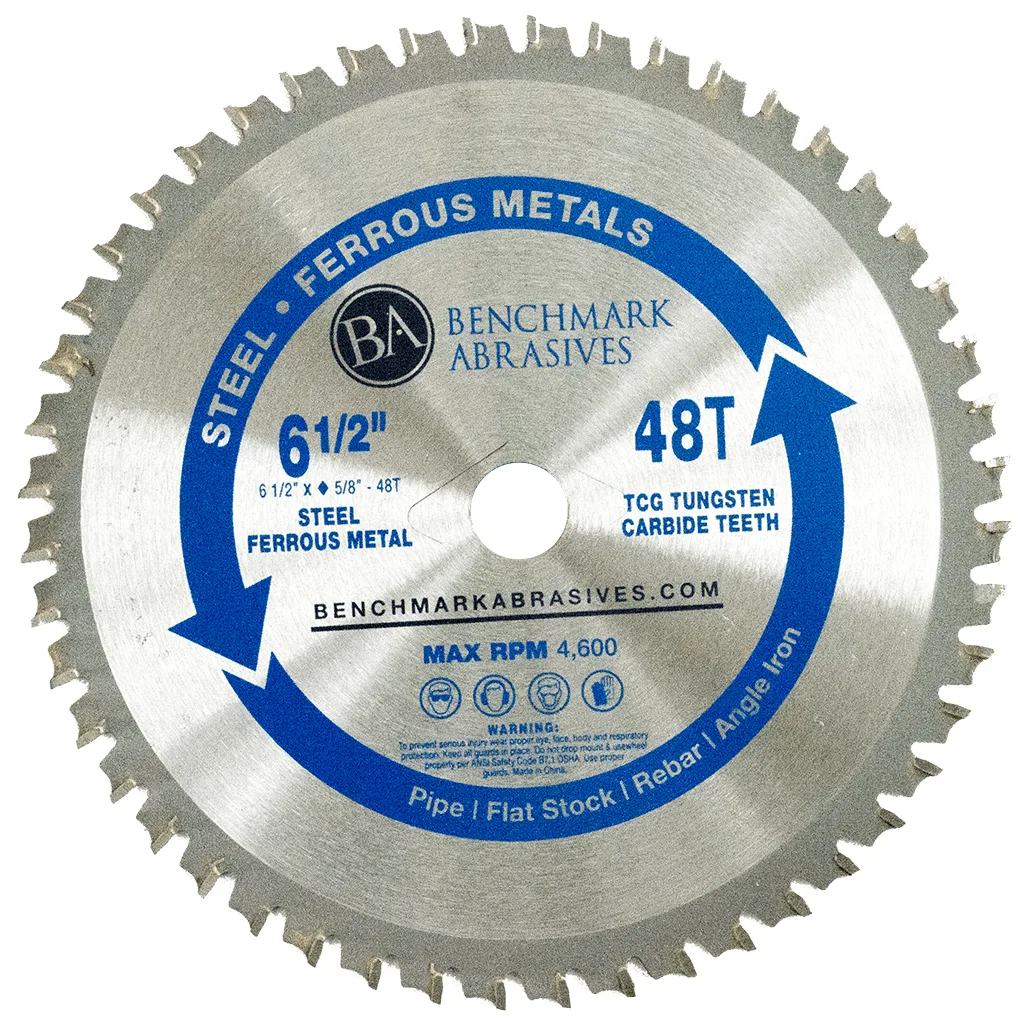
6-1/2" 48-tooth Tct Saw Blade For Steel & Ferrous Metal
-
12" 60-tooth Tct Saw Blade For Steel & Ferrous Metal: The 12" 60-tooth TCT saw blade features TCG geometry and is built for fast, controlled cutting on compatible low-RPM dry-cut saws. With a larger diameter and higher tooth count, this blade suits bigger cuts where you want both speed and a cleaner finish on steel.
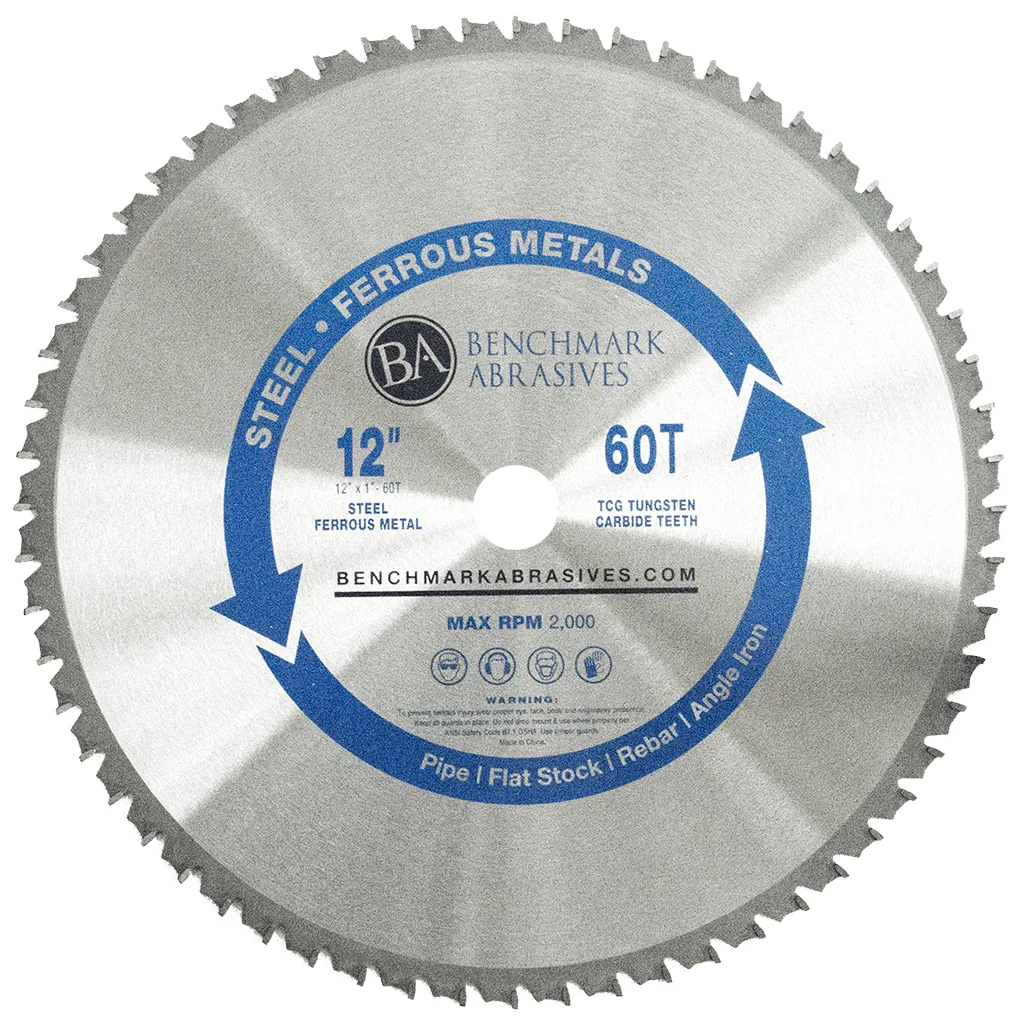
12" 60-tooth Tct Saw Blade For Steel & Ferrous Metal
Who Should Choose Which Blade
Best For
- DIYers and contractors using a compact circular saw for occasional steel cutting
- Users who need a cost-effective blade for general steel fabrication and don't require a mirror finish
Not For
- High-volume industrial cutting where a larger blade and faster material removal are needed
- Users with a miter saw or table saw that only accepts a 10-inch blade (these blades won't fit)