Quick Answer
To choose the perfect patch for your jacket or bag, start by measuring the space and considering the garment's fabric. Pick a patch size that fits proportionally, choose a backing that suits your attachment method, and match the style to your personal aesthetic. For a durable, classic look, an embroidered patch like the 1ST Embroidered Patch is a versatile choice.
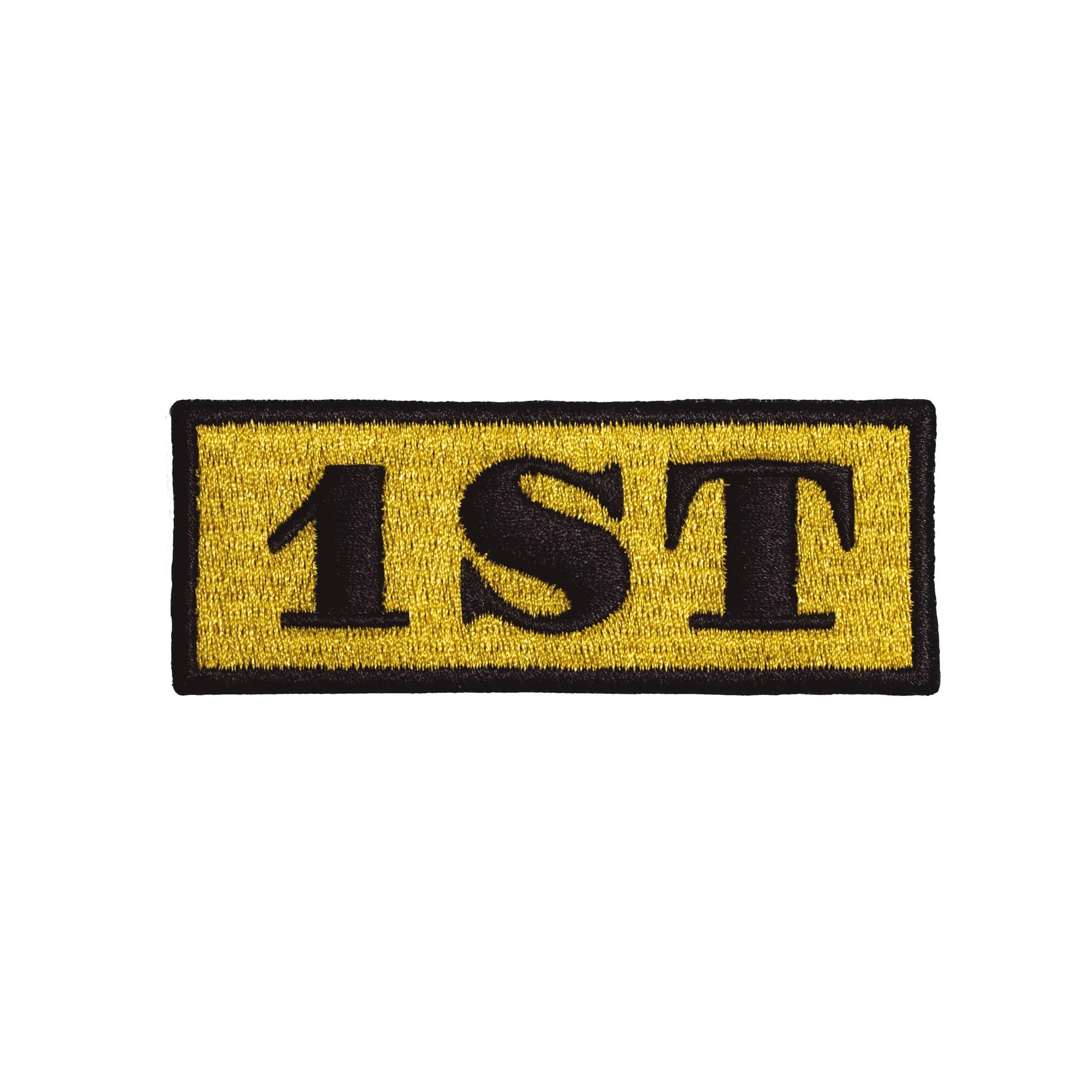
1ST Embroidered Patch
Patches are a simple way to personalize a jacket, backpack, or tote, but picking the right one involves more than just liking the design. Size, backing, placement, and durability all matter, and the wrong choice can lead to a patch that looks awkward or falls off after a few washes.
This guide walks you through the key decisions so you can buy with confidence. Whether you're covering a stain, representing a brand, or just adding flair, these rules will help you choose a patch that fits both your gear and your style.
Measure Your Space Before You Shop
Before browsing patches, measure the area where you plan to attach it. A patch that's too large can overwhelm a small bag or jacket pocket, while one that's too small may get lost in the design. Use a ruler or tape measure to note the width and height of the available space, and keep those numbers handy when comparing options.
As a rule of thumb, patches on jacket sleeves or chests look best when they're between 2 and 4 inches across. For bags, consider the panel size; a larger tote can handle a bigger patch, while a compact crossbody might suit something smaller. If you're covering a stain or tear, the patch should be at least half an inch larger than the damaged area on all sides.
- Measure the exact space and keep dimensions with you while shopping.
- For jackets, aim for 2–4 inches; for bags, match the patch to the panel size.
- When covering damage, add at least 0.5 inches to each side.
Match the Backing to Your Attachment Method
Patches come with different backings, and each suits a different attachment method. Iron-on backings are convenient for cotton and denim, but they may not adhere well to nylon bags or leather jackets. Sew-on patches are the most secure and work on nearly any fabric, but they require a needle and thread.
If you're not handy with a needle, consider a peel-and-stick adhesive backing, though it's less durable for items that get heavy use. For a patch you plan to move between items, a hook-and-loop backing offers flexibility. Think about how often you'll wash the item and how much wear it will get; a patch on a daily-use backpack needs a more permanent attachment than one on a decorative tote.
- Iron-on: best for cotton and denim, but not for synthetics or leather.
- Sew-on: most secure and versatile, ideal for heavy use.
- Adhesive or hook-and-loop: easy to apply or swap, but less durable.
Consider the Fabric and Curvature
The fabric of your jacket or bag affects both attachment and appearance. Stretchy materials like knit or spandex can distort a patch, especially if it's stiff. Curved surfaces, such as the shoulder of a jacket or the front pocket of a backpack, may cause a rigid patch to pucker or peel over time.
For curved or flexible areas, choose a smaller patch or one with a flexible border. Embroidered patches with a sturdy border are great for flat surfaces like a denim jacket back or a canvas tote. If you're applying to a curved surface, you may need to sew it on and ease the fabric slightly to prevent buckling.
- Avoid stiff patches on stretchy or highly curved surfaces.
- For curved areas, opt for smaller or more flexible patches.
- Sewing on curved surfaces helps prevent puckering.
Style and Durability: What to Look For
Patches are both decorative and functional, so choose a design that reflects your personality or brand. Embroidered patches offer a classic, textured look and are generally durable. Check the stitch density and thread quality; a well-made patch will have tight, even stitching that resists fraying.
Consider the color contrast with your jacket or bag. A dark patch on a dark fabric may be hard to see, while a bright patch can pop. Also think about the patch's edge: a merrowed border (the overlocked edge common on many patches) adds durability, while a heat-cut border gives a more modern, laser-cut look. Both have trade-offs, so choose based on the style you prefer and how much wear the patch will endure.
- Embroidered patches are durable and classic; check stitch density.
- Choose colors that contrast with your fabric for visibility.
- Merrowed borders are sturdy; heat-cut borders look modern but may fray.
Decision Rules for Buying a Patch
- Size rule: Measure the target area and choose a patch that covers 50–80% of that space. For a jacket chest, that's roughly 3–4 inches; for a sleeve, 2–3 inches. For a bag, match the patch to the panel size. A patch that's too large overwhelms; too small gets lost.
- Backing rule: Choose iron-on for cotton/denim, sew-on for leather or heavy-use items, and adhesive for temporary placement. If you're unsure, sew-on is the safest bet. Match the backing to the fabric and how often you'll wash the item.
- Placement rule: Flat surfaces like the back of a jacket or a tote's front are easiest. For curved areas, pick a smaller, flexible patch or plan to sew it on carefully. Placement affects durability and appearance; avoid stiff patches on curves.
Product Facts
- 1ST Embroidered Patch: Black 1ST logo on gold embroidered patch. 3.5in X 1.4in. *only a patch, garment not included. Designed in Montreal. Limited quantities. Ships from Canada. Please allow 2-3 Business days to process your order. At 3.5 by 1.4 inches, this patch is ideal for a jacket sleeve or a small bag flap. Its embroidered construction is durable, and the gold-on-black design offers contrast on most fabrics.
- 1ST "Remove Before Flight" Keychain: Fabric key chain with embroidered 1ST logo on one side and "REMOVE BEFORE FLIGHT" writings on the other side. Designed in Montreal. Limited quantities. Ships from Canada. Please allow 2-3 Business days to process your order. If you're not ready to commit to a patch, this keychain lets you carry the 1ST logo without altering your jacket or bag. It's a versatile alternative for those who prefer not to sew or iron.
Who Should Choose What
Best for
- The 1ST Embroidered Patch is best for fans of the 1ST brand who want a durable, classic embroidered patch for a jacket or bag.
- Sew-on patches are best for people who want a permanent, secure attachment on items they use daily.
Not for
- The 1ST Embroidered Patch is not for those who want a large, statement piece; it's compact and subtle.
- Iron-on patches are not for nylon or leather items, as they may not adhere well.
Choosing the perfect patch comes down to measuring your space, matching the backing to your fabric, and considering the curves of your jacket or bag. By following these rules, you'll find a patch that looks great and lasts. For a durable, stylish option, the 1ST Embroidered Patch is a solid choice for adding a subtle brand touch.