Quick answer
Choose a postcard printed on heavyweight matte cardstock, because it lies flat in a frame and resists glare. Match the card's orientation to your wall space, and pick a design you would still enjoy seeing every day. If the card is double sided, decide which side deserves to be visible before you commit to a frame.
Framing a postcard is one of the cheapest ways to get original art onto a wall, but not every card holds up once it is behind glass. Paper weight, finish, size, and which side faces out all change how the finished piece looks.
This guide walks through the decisions that matter, from choosing postcards for framing to picking a mat and a display spot. It also covers what to check when framing vintage postcards, where condition and paper quality matter even more.
Start with paper weight and finish
A postcard that feels flimsy in your hand will usually look flimsy in a frame. Heavyweight cardstock holds its shape, sits flat against the backing, and does not ripple when humidity changes. Matte finishes are the safer choice for display because they scatter light instead of bouncing it back at you, so the image stays readable from an angle.
Glossy cards can look richer in bright rooms, but they often create hot spots under glass. If you already own a glossy card you love, frame it without glass or use anti-reflective glazing. For new purchases, weight and finish are the two specifications worth checking first.
- Look for a stated paper weight rather than a vague 'premium' claim.
- Matte 110lb cardstock is a solid baseline for display.
- Skip cards with visible dents, creases, or soft corners.
Match orientation and size to your space
A standard 4 x 6 postcard fits easily into ready-made frames and mats, which keeps costs down. Before you buy, decide whether you want a portrait or landscape composition, because that choice locks in how the piece sits on the wall. A tall narrow gap between two shelves wants a portrait card; a wide space above a desk usually wants landscape.
If you are framing several cards together, keep the outer dimensions consistent even when the images differ. Uniform frames with different artwork read as a collection, while mixed frame sizes read as clutter unless you plan the layout carefully.
- Measure the wall space first, then buy the card.
- Standard 4 x 6 cards give you the widest frame and mat options.
- Consistent frame sizes make a group of cards look intentional.
Check the layout and the second side
Many postcards are printed on both sides, and the back is often where the personality lives. That creates a real decision: do you frame the image or the message? If the printed side is the stronger visual, frame it and keep a photo of the reverse. If the writing is the point, frame the back and let the image stay hidden.
Bold, high-contrast designs hold up better at small sizes than busy illustrations with fine detail. If you are choosing postcards for framing from a distance, squint at the card. If the main shapes still read clearly, it will work on a wall.
- Photograph the hidden side before framing so you keep a record.
- Simple, high-contrast designs read best from across a room.
- Avoid cards with important detail crowded near the edges, since mats crop the border.
Frame it without damaging the card
Use a mat or acid-free backing so the card is not pressed directly against the glazing. Direct contact traps moisture and can leave marks over time. If you want to keep the card in collectible condition, choose a frame that lets you remove it later without adhesive, tape, or staples touching the paper.
For a casual, low-cost display, a simple clip frame or a card stand works fine and keeps the piece reversible. For anything you plan to keep for years, spend a little more on proper mounting.
- Keep the card out of direct sunlight to slow fading.
- Avoid tape and glue if you may want to sell or trade the card later.
- A mat adds visual breathing room and protects the edges.
Decision rules for framing a postcard
- If the card is flimsy or glossy: Skip the frame or display it without glass. Thin paper ripples and glossy finishes create glare under glazing. Choose heavyweight matte stock instead.
- If the card is double sided: Pick the side with the stronger visual and photograph the other side for your records before framing. Decide before you buy the frame, not after.
- If the card is vintage or collectible: Use acid-free backing and reversible mounting so the card is not damaged or devalued. Never tape or glue a card you might resell.
- If you are framing a group: Keep outer frame dimensions identical and vary only the artwork inside. Consistency makes a set look deliberate.
What to look for in a frame-ready postcard
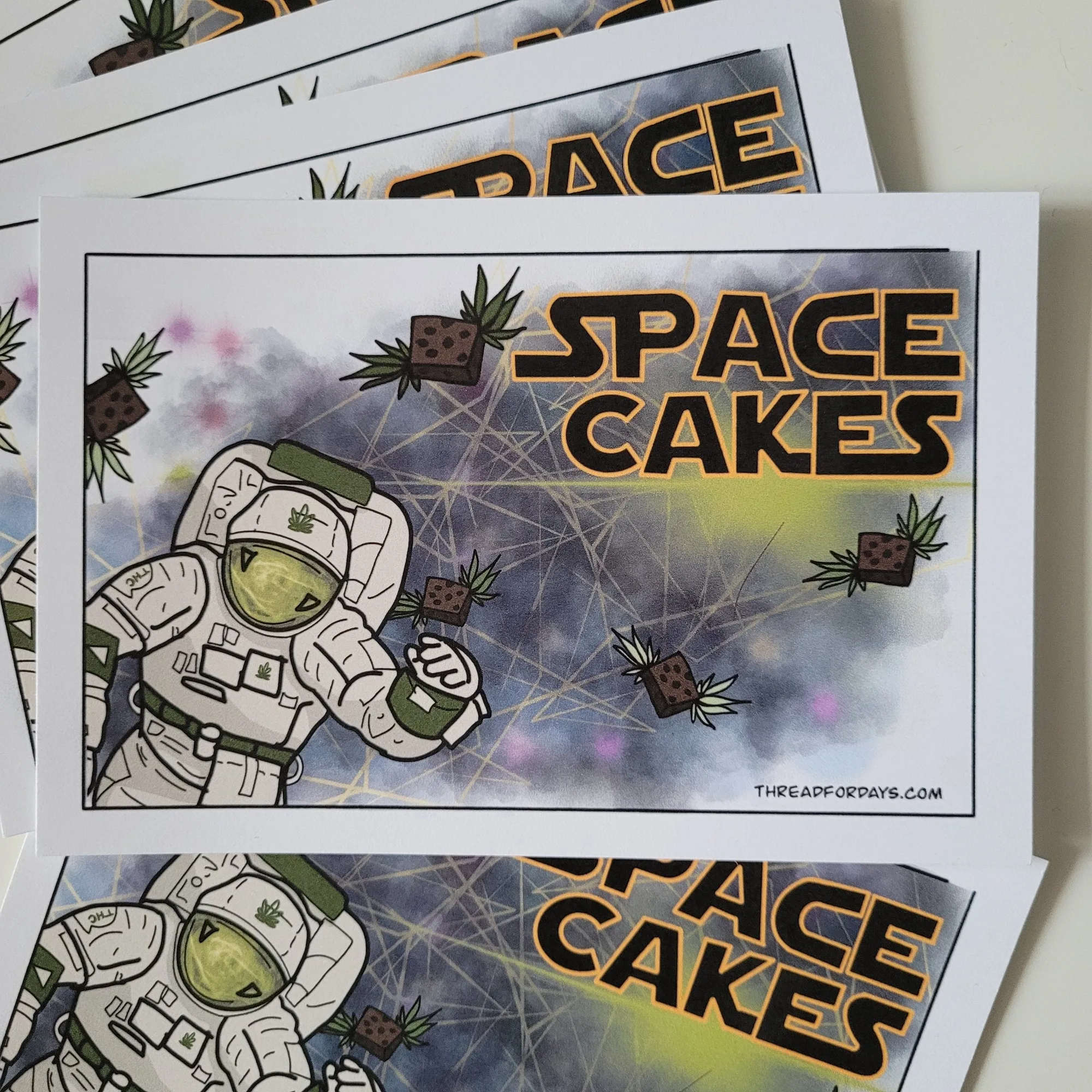
- Space Cakes | Postcard: Printed on durable 4 x 6 matte 110lb heavyweight cardstock paper, double sided. The heavyweight matte stock lies flat and cuts glare, which is exactly what you want behind glass.
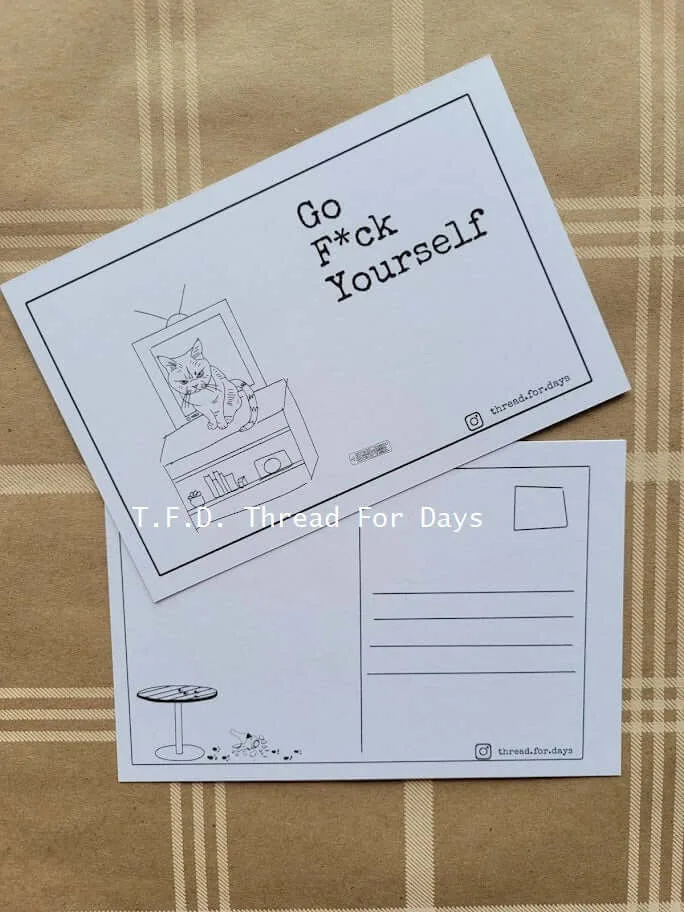
- Go F*ck Yourself | Postcard: Digitally drawn, designed, and handmade, printed on 4 x 6 matte 110lb heavyweight cardstock. A bold, simple design at this size reads clearly from across a room, so it works well as a small framed piece.
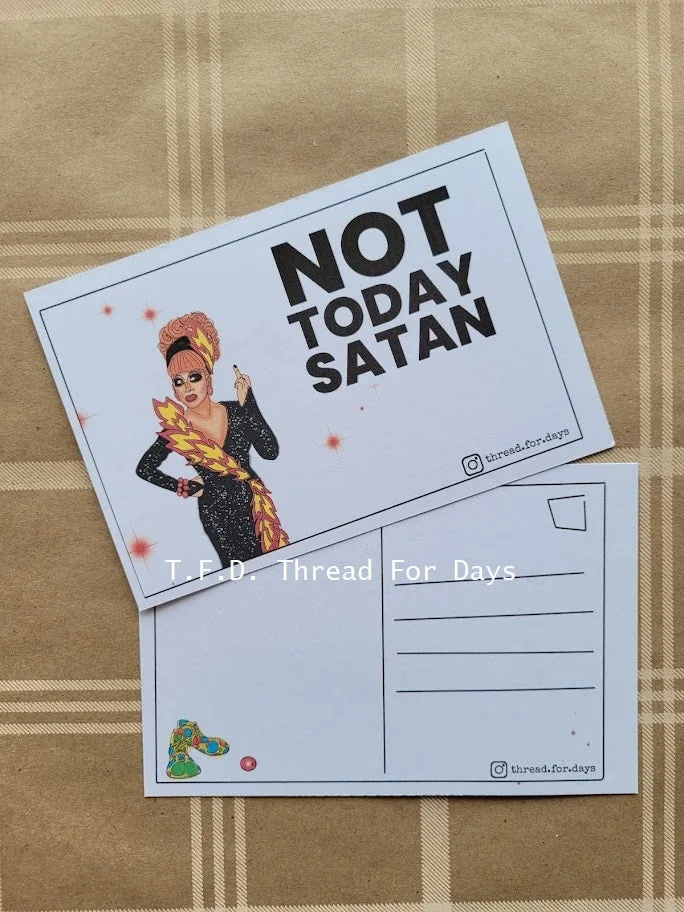
- Not Today Satan | Postcard: 4 x 6 double sided, printed on durable matte 110lb heavyweight cardstock; fan art, not official merch. Because it is double sided, decide which face to display, and note the fan-art status if resale value matters to you.
Is framing a postcard right for you?
Best for
- Budget-conscious decorators who want original art without gallery prices
- Anyone displaying a card with personal meaning, such as a travel or event postcard
- Collectors who want to rotate pieces without permanent mounting
Not for
- Buyers who need large-format wall art, since 4 x 6 cards stay small even when matted
- Anyone unwilling to keep the piece out of direct sun, which speeds fading
- People who want a permanent, sealed display and do not care about reversibility
Pick a heavyweight matte card, match its orientation to the wall, and mount it so the paper is never glued down. Do those three things and a two-dollar postcard can hold a wall as well as a print.