A beautiful cheese platter starts long before the first wedge is cut. It begins with the board itself. The serving board is not just a functional surface — it sets the stage for the entire experience, influencing how your cheeses look, how they taste (yes, temperature and material matter), and how your guests interact with the spread. Whether you're hosting a casual gathering or a formal dinner, choosing the right board can elevate your presentation from simple to spectacular.
At Snowdonia Cheese, we believe that every great cheese deserves a worthy platform. Our multi award-winning cheeses, such as the bold Blue masterpiece Green Thunder or the creamy, aged classic Rock Star, shine brightest when arranged on a board that complements their character. In this buying guide, we'll walk you through the key considerations — material, size, shape, and maintenance — so you can select the perfect serving board for your cheese platter and impress your guests every time.

Rock Star
Why the Serving Board Matters
The serving board does more than hold cheese — it creates an aesthetic backdrop that highlights the colors, textures, and forms of your selection. A well-chosen board can make a simple wedge of cheddar look artisanal and a wheel of aged gouda feel like a centerpiece. Moreover, the board's material affects cheese temperature. Wood and slate, for example, remain at room temperature, which is ideal for most cheeses. Materials like marble or stone keep cheese cooler, which might be preferred for some soft varieties.
Beyond temperature, the board's surface texture can subtly interact with the cheese. A smooth slate board offers a clean, modern look and is easy to clean, while a rustic wooden board adds warmth and character. The right board also makes it easier to arrange accompaniments — crackers, chutneys, honey, and fruit. For instance, a board with a slight rim can prevent stray crumbs or sticky chutney from spilling onto the table. Ultimately, your serving board is an extension of your personal style and a practical tool that enhances the cheese-tasting experience.
Material Options: Wood, Slate, Marble, and More
The most common materials for cheese boards are wood, slate, marble, and bamboo. Wood is a classic choice — it is warm, natural, and gentle on knife blades. Hardwoods like acacia, walnut, or teak are durable and resistant to staining. Slate boards offer a sleek, contemporary look that contrasts beautifully with pale cheese. Slate is also naturally non-porous, making it easy to wipe clean. However, it can be heavy and may scratch or dull knives if used directly as a cutting surface.
Marble and granite boards are luxurious and excellent at keeping cheese cool — ideal for soft ripened cheeses or summer entertaining. They are heavy and require careful handling. Bamboo is an eco-friendly alternative that is lighter than wood and more sustainable, though it may have a slightly harder surface. For those who love versatility, a round slate serving board is a popular choice for its visual symmetry and ease of sharing. Each material has its benefits; the key is to match the board to the cheeses and the atmosphere you want to create.
- Wood: warm, durable, knife-friendly — perfect for classic cheese boards with Snowdonia's Rock Star aged cheddar.
- Slate: modern, easy-clean, great for contrasting colors — ideal for showcasing the blue veins of Green Thunder.
- Marble: cool surface, elegant — best for soft cheeses like brie or camembert in warmer months.
- Bamboo: lightweight, sustainable — a practical option for casual picnics and outdoor cheese platters.
Size and Shape Considerations
The size of your serving board should correspond to the number of cheeses you plan to serve and the number of guests. A small board (about 12 inches in diameter) works well for an intimate gathering with one or two cheeses, while a larger board (18 to 24 inches) allows for a full spread of three to five cheeses plus accompaniments. Consider the available table space as well — you don't want the board to overwhelm the setting or be too cramped for guests to comfortably reach.
Shape also plays a role in presentation and functionality. Rectangular boards provide long, linear spaces for arranging cheese from mild to strong, or from soft to hard. Round boards, especially slate ones, encourage sharing and create a natural focal point. Some boards come with built-in cheese markers, handles, or grooves for crackers. If you often serve alongside chutneys or honey, look for a board with small recessed areas or a matching cheese stand. For example, pairing the robust flavor of Green Thunder with a drizzle of Hot Honey on a spacious board makes for an unforgettable combination.
Practical Features and Maintenance
Beyond aesthetics, consider practical features that make serving and cleaning easier. Some boards come with a juice groove to catch runny cheese or fruit juices, which is especially useful for soft cheeses or summer fruits. Others include a lip or raised edge to prevent items from sliding off. If you plan to use the board as a cutting surface, opt for wood that is thick enough to withstand knife marks. Slate and marble should not be cut on directly, as they can damage knife blades and leave unsightly marks.
Maintenance depends on material. Wooden boards require periodic oiling with food-grade mineral oil to prevent drying and cracking. They should be hand-washed and dried immediately. Slate and marble can be wiped with a damp cloth and mild soap, but avoid acidic cleaners that may etch the surface. Bamboo boards need similar care to wood. Proper maintenance ensures your board stays beautiful and hygienic for years, making it a worthwhile investment for your cheese-loving lifestyle.
- Wood: oil every 2–3 months, hand wash only, avoid soaking.
- Slate: wipe clean with damp cloth, avoid cutting on it.
- Marble: clean with mild soap, seal occasional stains.
- General: always dry thoroughly after washing to prevent mold or water spots.
Pairing Your Board with Snowdonia Cheeses
The perfect serving board is one that complements the cheeses you love. At Snowdonia, our award-winning range includes a variety of textures and flavors that can inspire your board selection. For a bold blue cheese like Green Thunder, with its striking green veins and creamy yet crumbly texture, a round slate board offers a dramatic, cool backdrop that makes the cheese the star. Pair it with the mild crunch of Spelt & Sea Salt Crackers and a dollop of sweet chutney for balance.
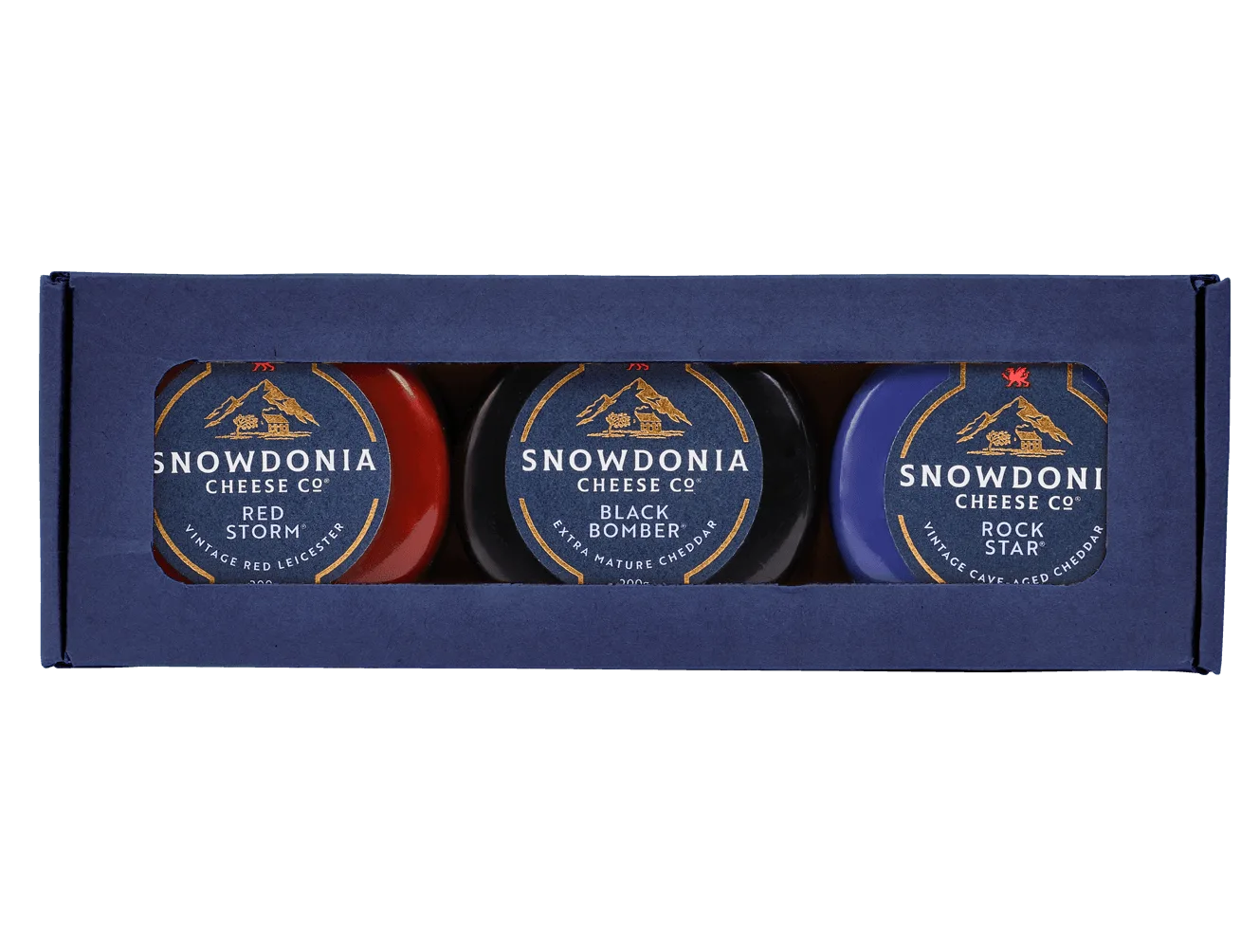
For a classic aged cheddar like Rock Star, which is robust, nutty, and slightly crystalline, a warm wooden board enhances its earthy character. Add slices of apple, a few dried figs, and a glass of full-bodied red wine. If you're assembling a larger platter, consider including the Black Bomber® Ale & Cheese Bake as a hot, melty side dish served in a small ramekin — it pairs beautifully with crusty bread on a wooden board. The key is to match the board's material and style with the cheese's personality, creating a cohesive and inviting presentation.
- Green Thunder: slate or marble board to highlight its blue veins; serve with Spelt & Sea Salt Crackers and Hot Honey.
- Rock Star: wooden board for warmth; pair with nuts, dried fruit, and a crisp apple slice.
- For a mixed board: combine different materials (small slate and wood) to offer visual contrast and functional variety.
Choosing the perfect serving board for your cheese platter is an exciting step in creating memorable entertaining experiences. Whether you opt for the sleek elegance of slate, the rustic charm of wood, or the cool luxury of marble, the right board enhances every cheese you serve. Explore the Snowdonia Cheese range to find cheeses like Green Thunder and Rock Star that will shine on your new board. Pair them with Spelt & Sea Salt Crackers for the ultimate bite, and enjoy the compliments from your guests.