Quick answer
To choose the right ANL fuse, match the fuse's amperage rating to your amplifier's total current draw, typically calculated by dividing RMS power by system voltage. For most systems, a 100-amp ANL fuse is a solid starting point, but always consult your amplifier's manual for the recommended fuse size. Consider using a circuit breaker for easy resets if you frequently blow fuses.
When building or upgrading a car audio system, protecting your investment is paramount. The fuse is your system's first line of defense against electrical faults, short circuits, and potential fires. Among the various fuse types, ANL fuses are popular for high-current applications due to their robust construction and reliability. But with so many options, how do you choose the right one? This guide breaks down the key factors to consider when selecting an ANL fuse for your car audio setup.
Whether you're a seasoned audiophile or a beginner, understanding the role of fuses and how to size them correctly can save you from costly repairs and safety hazards. We'll cover fuse ratings, types, and practical tips to ensure your system runs safely and efficiently.
Understanding ANL Fuses
ANL fuses are blade-type fuses designed for high-current applications, typically ranging from 50 to 300 amps. They are commonly used in car audio systems to protect the main power wire running from the battery to the amplifier. Unlike standard blade fuses, ANL fuses have a larger physical size and are capable of handling continuous high currents without overheating.
The primary function of an ANL fuse is to break the circuit if the current exceeds the fuse's rated amperage, preventing damage to your amplifier and wiring. They are available in various amperage ratings, and choosing the correct one is crucial. If the fuse is too small, it will blow frequently; if too large, it may not protect your equipment adequately.
- ANL fuses are typically used in line with the main power cable, close to the battery.
- They come in a standard size that fits most ANL fuse holders.
- Always use a fuse rated for at least the maximum current draw of your amplifier.
Calculating the Right Fuse Size
To determine the correct amperage for your ANL fuse, you need to know your amplifier's total RMS power and your vehicle's electrical system voltage (usually 12V or 14.4V when the engine is running). The formula is: Amps = Total RMS Power (watts) / System Voltage (volts). For example, a 1000-watt RMS amplifier on a 14.4V system would draw approximately 69.4 amps. Therefore, a 100-amp fuse would be a safe choice, providing a buffer for transient spikes.
However, this calculation provides a theoretical minimum. Always check your amplifier's manual for the manufacturer's recommended fuse size, as some amplifiers have built-in fuses or specific requirements. It's also wise to consider the wire gauge you're using; the fuse should be rated to protect the wire, not just the amplifier. For instance, if you're using 8 AWG wire, which is typically rated for up to 80 amps, you should use a fuse that does not exceed that rating to prevent the wire from becoming the weak link.
- Use the formula: Amps = Total RMS Power / System Voltage.
- Always refer to your amplifier's manual for the recommended fuse size.
- Match the fuse rating to the wire gauge to ensure proper protection.
Comparing ANL Fuses with Other Types
ANL fuses are not the only option for car audio protection. Other common types include AGU fuses, mini ANL fuses, and circuit breakers. AGU fuses are cylindrical glass fuses, typically rated up to 60 amps, and are often used for smaller accessories or as secondary protection. Mini ANL fuses are a compact version of ANL, suitable for limited space installations. Circuit breakers, on the other hand, can be reset after tripping, eliminating the need for spare fuses.
When deciding between these options, consider your system's current requirements and installation constraints. For high-power systems exceeding 100 amps, ANL or mini ANL fuses are preferred due to their higher current capacity. For lower current applications, AGU fuses may suffice. Circuit breakers offer convenience but are typically more expensive upfront. For example, a 140 Amp Circuit Breaker can replace a fuse, allowing you to reset it after a surge without replacing the fuse.
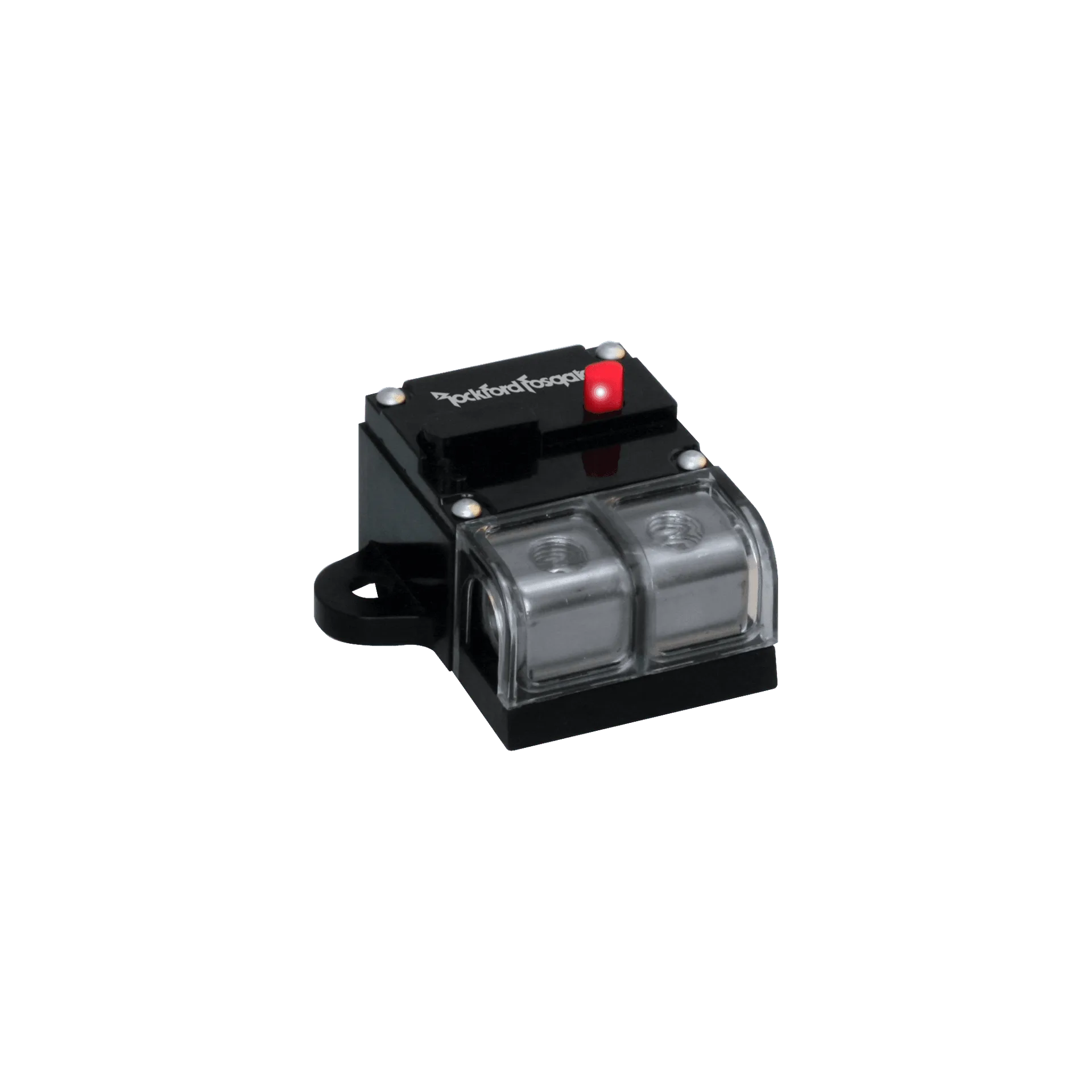
140 Amp Circuit Breaker
- ANL fuses are best for high-current systems (100+ amps).
- AGU fuses are limited to 60 amps, suitable for smaller loads.
- Circuit breakers offer reset capability but at a higher cost.
Decision Rules for Choosing an ANL Fuse
- Calculate your current draw: Add up the RMS power of all amplifiers and divide by your system voltage (typically 14.4V). This gives you the minimum fuse rating needed. Always round up to the nearest available fuse rating.
- Check amplifier specifications: Look for the recommended fuse size in your amplifier's manual. Some amplifiers have internal fuses, and the external fuse should match the total rating. If the manual specifies a fuse size, use that as your primary reference.
- Consider your wire gauge: Ensure the fuse rating does not exceed the current capacity of your power wire. For example, 8 AWG wire is typically rated for 80 amps, so use a fuse ≤80 amps. Protect the wire, not just the amplifier.
- Decide between fuse and circuit breaker: If you frequently blow fuses due to voltage spikes, a circuit breaker like the 140 Amp Circuit Breaker can save you from buying replacements. However, they are more expensive upfront. Choose a circuit breaker for convenience, a fuse for simplicity and cost.
Product Facts
- 100 Amp Maxi Fuse: Rated at 100 amps for high-current applications, Maxi fuse form factor for compatibility with standard fuse holders, constructed for durability in demanding environments. If your amplifier draws around 100 amps, this fuse provides a reliable and easily replaceable protection point. Its Maxi form factor is common in many vehicles, making it a straightforward replacement.
- 60 Amp AGU Fuse: 60 amp current rating for reliable circuit protection, AGU style – a common size for many car audio installations. For lower-power systems or secondary circuits, this AGU fuse offers a cost-effective solution. Its standard size ensures compatibility with many fuse holders.
Which Protection Option Fits You?
Best for
- High-power systems (over 1000W RMS) that require fuses rated above 100 amps.
- Audiophiles who want a durable, replaceable fuse that can handle continuous high current.
Not for
- Low-power systems (under 300W RMS) where a smaller AGU fuse or standard blade fuse suffices.
- Users who prefer the convenience of a resettable circuit breaker over replacing fuses.
Choosing the right ANL fuse is a critical step in ensuring your car audio system operates safely and reliably. By calculating your current draw, consulting your amplifier's specs, and considering your wire gauge, you can select the perfect fuse. Whether you opt for a traditional fuse or a resettable circuit breaker, always prioritize protection. For a reliable and durable option, consider the 100 Amp Maxi Fuse from Rockford Fosgate, designed to safeguard your system with confidence.