Quick answer
Choose a crew sock based on your training type: for weightlifting, go for moderate cushioning; for cardio, prioritize moisture wicking; for versatility, a breathable crew sock with a secure fit works best.
Why cushioning matters for different workouts
The amount of cushioning in a crew sock affects comfort and stability. Thicker cushioning works well for high-impact activities like running or jumping, as it absorbs shock. Thinner cushioning suits weightlifting, where you want better ground feel and more direct contact with your shoes. A medium cushion crew sock often works as a compromise for varied training.
Moisture wicking vs. breathability
Moisture-wicking fibers pull sweat away from your skin to keep feet dry. Breathability refers to airflow through the fabric. For intense cardio or hot gyms, look for a sock that combines both. A blend of cotton with synthetic materials like polyester or nylon can offer a balance of comfort and moisture management, though 100% cotton socks tend to hold sweat and can cause blisters.
Height and fit preferences
Crew socks rise to mid-calf, offering extra coverage and protection. This height is ideal if you wear ankle-high training shoes or want to prevent shin chafing from shoe tongues. A proper fit means the sock stays in place without bunching. Sizing ranges like S/M and L/XL help match foot length and calf circumference for a secure fit.
Decision rules for choosing a crew sock
- Cushioning level: Pick moderate cushion for general gym use, thin for lifting, thick for high-impact cardio.
- Moisture management: Synthetic blends (polyester, nylon) wick sweat; avoid 100% cotton for sweaty sessions. Look for a sock that says moisture wicking or breathable.
- Height check: Crew height works for mid-top shoes and shin protection; ankle socks suit low-cut trainers.
Product facts
-
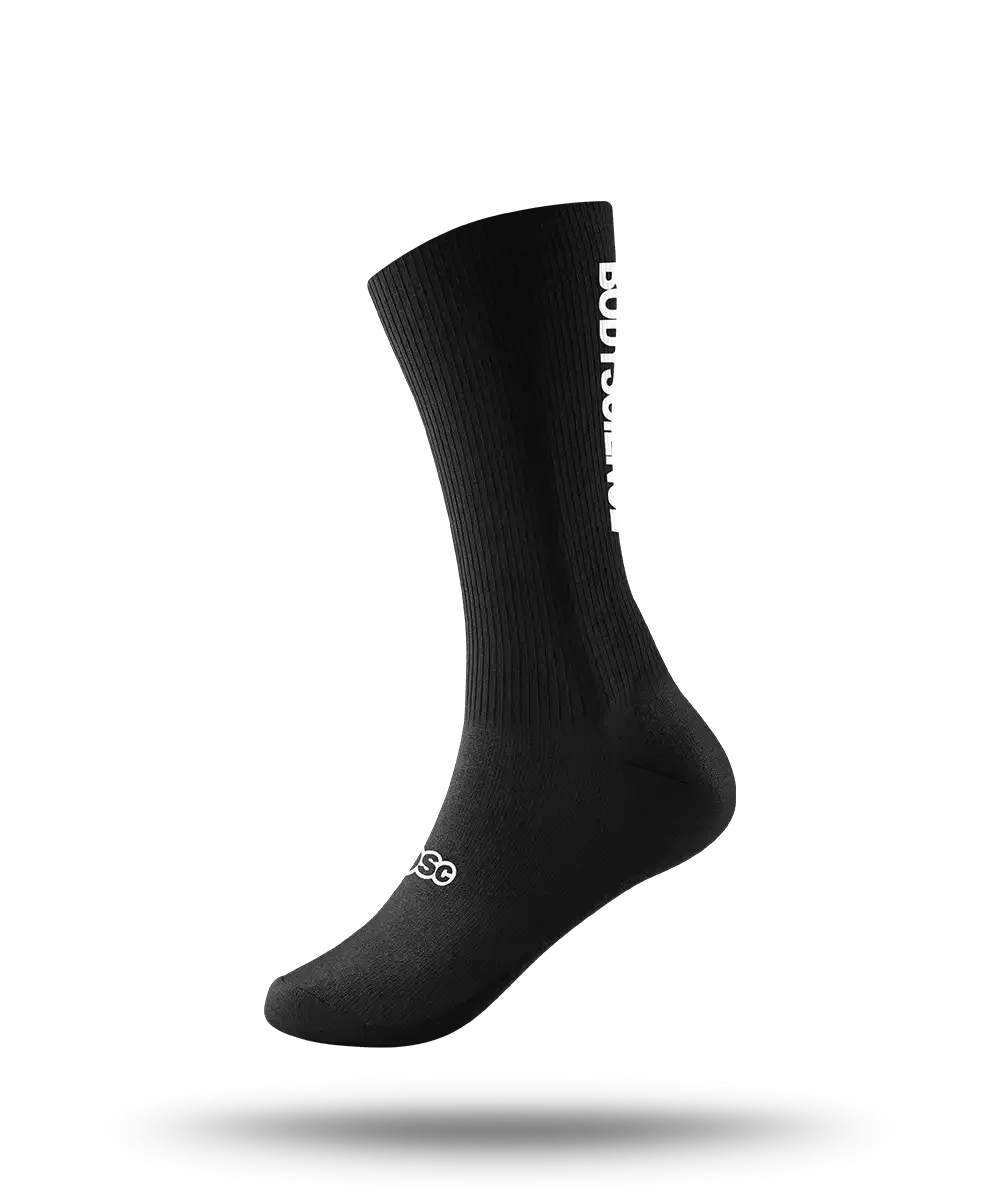
Crew Sock: BSc Crew Socks are available in Black or White, and come in S/M or L/XL sizes. Choosing a color that matches your gear is easy, and the size range ensures a secure fit for different foot and calf sizes.
Crew Sock
Who should use a crew sock for training?
Best for
- Gym-goers who wear mid-top or high-top training shoes
- Athletes wanting extra shin coverage and leg warmth
Not ideal for
- Runners who prefer minimal ankle coverage
- People who dislike visible sock above shoe line