Quick Answer
For most living rooms, floor-length curtains that hover 1/4 to 1/2 inch above the floor are the safest, most classic choice. They suit nearly every window style and create a polished, tailored look. If you want a more relaxed or dramatic feel, consider a slight puddle or a sill-length option for casual spaces.
Curtain length can change the entire feel of a living room, but it's easy to get wrong. Measure once, measure right, and you'll avoid the common mistake of curtains that are too short or awkwardly long. This guide walks you through the standard lengths, how to measure, and how to choose based on your window and style.
We'll also cover the trade-offs of each length, so you can decide what works best for your space. Whether you're hanging room-darkening linen or a light-filtering wool, the right length ensures your curtains look intentional and finished.
Standard Curtain Lengths and When to Use Them
Sill-length curtains stop right at the windowsill. They work well for windows with radiators or for a casual, airy look in kitchens or bathrooms. In a living room, they can make the window appear wider, but they can also make the ceiling look lower. If you have high ceilings, floor-length is usually more flattering.
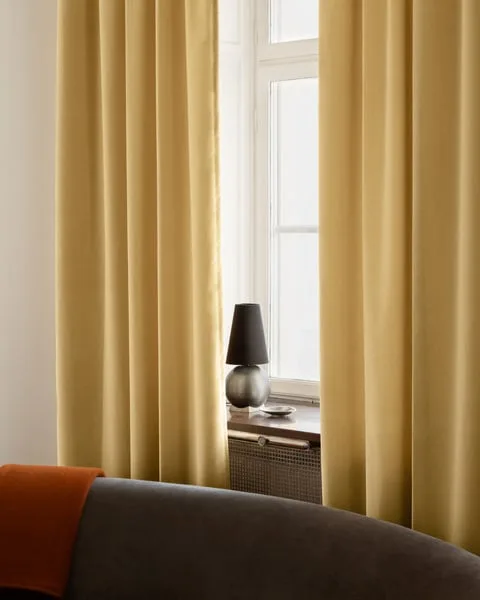
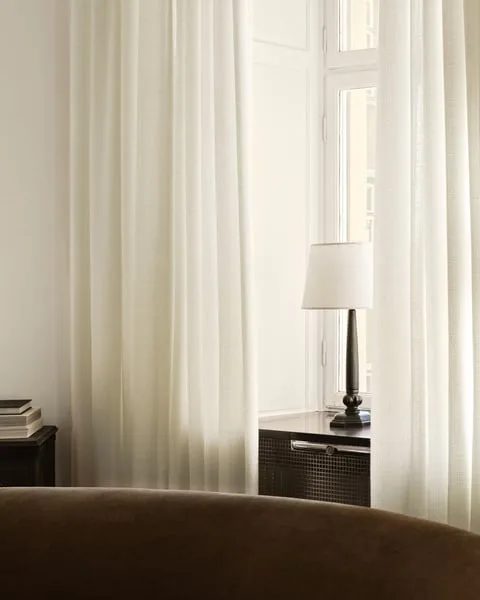
Floor-length curtains are the most popular for living rooms. They should hover just above the floor—about 1/4 to 1/2 inch—to avoid dragging and collecting dust. This length elongates the window and adds a sense of height. It's a safe choice for most rooms and works with almost any curtain style, from blackout linen to sheer wool.
Puddle curtains extend a few inches onto the floor, creating a luxurious, romantic look. They require extra fabric and are best in formal spaces with little foot traffic. Puddling can be tricky to clean and may not suit homes with pets or young children. If you love the look but want less maintenance, a 1-inch 'kiss' puddle is a subtle compromise.
- For a standard living room, choose floor-length curtains that hang 1/4 to 1/2 inch above the floor.
- Sill length suits casual spaces or windows with obstructions below.
- Puddle length adds drama but requires more fabric and maintenance.
How to Measure for Curtain Length
Start by deciding where you'll mount the rod. For a taller look, mount the rod 4 to 6 inches above the window frame, or even closer to the ceiling. This makes the window appear taller and lets in more light when the curtains are open. Measure from the rod's top to your desired endpoint—floor, sill, or puddle—to get the length.
When measuring for floor-length curtains, use a metal tape measure and measure from the rod to the floor, then subtract 1/4 to 1/2 inch for a hover. If you want a puddle, add 2 to 4 inches. Always measure at least twice, and if your floor isn't level, measure at multiple points and use the longest measurement for consistency.
Remember to account for the curtain header. If your curtains have a rod pocket or grommets, the length is usually measured from the top of the rod. For pinch pleats or rings, measure from the bottom of the ring. When in doubt, err on the longer side—it's easier to hem curtains than to add fabric.
- Mount the rod 4–6 inches above the window frame for a taller look.
- Measure from the rod to the floor, then subtract 1/4–1/2 inch for a hover.
- Add 2–4 inches for a puddle effect.
Matching Curtain Length to Your Window and Room Style
Consider the architectural features of your living room. If you have tall ceilings, floor-length curtains emphasize that height. If your windows are close to the ceiling, a rod mounted near the ceiling and floor-length curtains can make the room feel more spacious. For wide windows, choose a length that doesn't overwhelm the space—floor-length is usually safe.
Your curtain fabric also affects the look. A heavyweight linen, like The Studio Linen – Sunrise, falls with a natural drape and can create a soft, relaxed line. A lighter fabric, such as a linen-cotton blend, may need a bit more length to avoid looking skimpy. Consider the weight and drape when deciding between a hover and a puddle.
Finally, think about how you use the room. If you open and close curtains often, a hover length is practical—it won't drag on the floor or catch underfoot. For a formal living room that's mostly decorative, a puddle can add elegance. For a casual family room, sill length might be easier to maintain.
- Tall ceilings: floor-length curtains enhance the sense of height.
- Heavy fabrics: natural drape works with a hover or slight puddle.
- High-traffic rooms: hover length is more practical.
Decision Rules for Curtain Length
- Ceiling Height: If your ceiling is under 8 feet, mount the rod closer to the ceiling and choose floor-length curtains to elongate the wall. For ceilings over 9 feet, you can still use floor-length, but avoid puddles that might overwhelm the space. Floor-length is the safest bet for most ceiling heights.
- Window Position: If the window is close to the floor, a hover length is best. If there's a radiator or built-in below, opt for sill length to avoid blocking heat or access. Sill length for obstructions; floor-length for unobstructed windows.
- Room Formality: Formal living rooms can handle puddle curtains for drama. Casual or high-traffic rooms should stick to a hover or sill length to keep things practical. Puddle for formal, hover for everyday.
Curtains That Fit Your Length Needs
- The Triple Stripe – Sunrise/Black: A room-darkening curtain in a linen-cotton blend, providing a more substantial feel and effective light control. Woven in a jacquard construction with contrasting twill stripes. Each curtain panel is made-to-measure, tailored precisely to your desired length for a perfect fit. Made-to-measure means you can get the exact hover or puddle length you want without hemming. The linen-cotton blend gives a substantial drape that works well for floor-length styles.
- The Jacquard – Natural White: A luxurious, light-filtering wool curtain with a refined jacquard weave that lends subtle texture and depth. Made in Italy from all-natural, undyed wool. Each curtain panel is made-to-measure, tailored precisely to your desired length for a perfect fit. Wool's natural weight creates a beautiful, structured fall, making it ideal for floor-length curtains. The made-to-measure option ensures a precise length that enhances the elegant look.
Which Length Is Right for You?
Best For
- Living rooms with standard 8–10 foot ceilings where a polished, classic look is desired.
- Windows that are unobstructed below, allowing floor-length curtains to hang freely.
Not For
- Windows with radiators, built-in seating, or other obstructions below—choose sill length instead.
- High-traffic family rooms or homes with pets where puddle curtains would get dirty or tangled.
Choosing the right curtain length comes down to your ceiling height, window position, and how formal or casual you want the room to feel. Floor-length is the most versatile, but sill and puddle lengths have their place. Measure carefully, consider your fabric's drape, and you'll find the perfect length for your living room.