Quick Answer
Choose an inline AGU fuse holder that matches your amplifier's total current draw and the gauge of your power wire. For most car audio systems, a 4 AWG wire with a 60-80 amp AGU fuse works, but always check your amp's fuse rating and the wire's max amperage. If your system draws over 100 amps, consider an ANL or mini-ANL fuse instead.
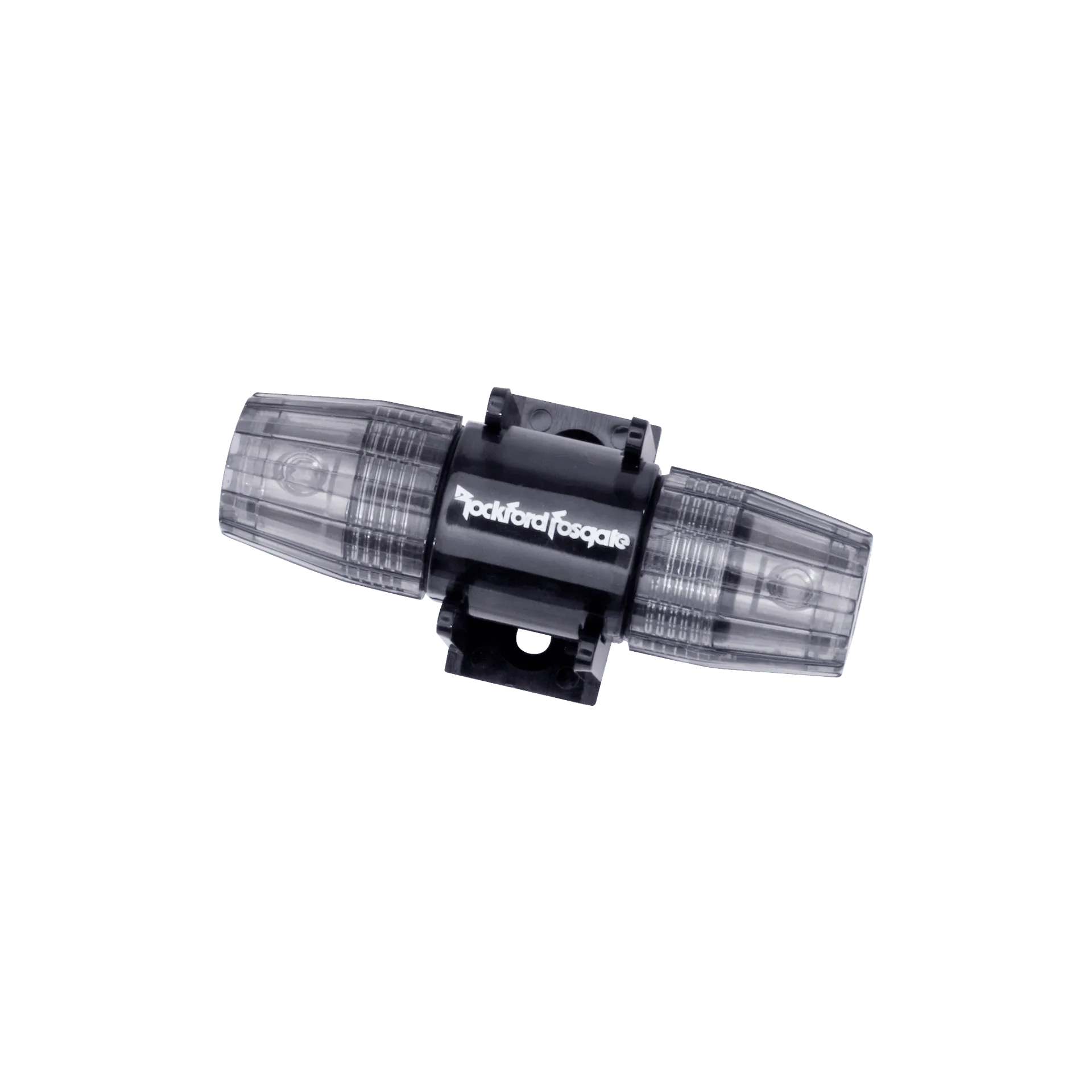
inline AGU fuse holder
When you're wiring up a new amplifier, the inline fuse holder is the unsung hero of the install. It sits right off the battery and protects your power wire—and your car—from a short circuit. An AGU fuse holder is a classic choice because it's simple, affordable, and easy to replace. But picking the right one means matching the fuse size to your system's needs, not just grabbing the biggest fuse you can find.
In this guide, we'll walk through how to size an inline AGU fuse holder for your car audio setup, what to look for in the holder itself, and when an AGU fuse makes sense versus an ANL fuse. We'll also cover fit guidance so you can install it with confidence.
AGU Fuse Basics: What You Need to Know
AGU fuses are cylindrical glass fuses with metal caps on each end. They're common in car audio because they're cheap and widely available. The fuse holder is a small inline unit that sits between the battery and your amplifier, usually within 18 inches of the battery. When too much current flows, the fuse blows and breaks the circuit, preventing damage to your wiring or equipment.
AGU fuses come in a range of amperages, typically from 20 to 80 amps. The holder itself is rated for a certain wire gauge—usually 4 AWG or 8 AWG. You need to match the fuse holder to your wire size, and the fuse amperage to your amp's requirements. If you use a fuse that's too large, the wire could overheat before the fuse blows. If it's too small, you'll blow fuses constantly.
- Always place the fuse within 18 inches of the battery to protect the entire power wire run.
- Check your amplifier's recommended fuse rating—usually listed in the manual or near the power input.
How to Size Your AGU Fuse Holder
The first step is to figure out your amplifier's total current draw. Add up the RMS power of all your amps and divide by your system voltage (usually 13.8V with the engine running). For example, a 500W RMS amp draws about 36 amps. That means you need a fuse rated at least 40 amps, but you also need to account for the wire gauge's max amperage.
Here's a quick rule of thumb: 8 AWG wire can handle about 60 amps, 4 AWG handles about 100 amps, and 1/0 AWG handles about 200 amps. Your fuse should be rated at or below the wire's max amperage. So if you're using 4 AWG wire, a 60-80 amp AGU fuse is a safe range for most single-amp setups. If your setup draws more than 80 amps, you're better off with an ANL fuse or a larger holder.
- Use a fuse amperage that's 10-20% above your amp's current draw to avoid nuisance blows, but never exceed the wire's rating.
AGU vs. ANL: Which Fuse Type Should You Use?
AGU fuses are great for smaller systems with a single amp and moderate power. They're inexpensive and easy to find at any auto parts store. However, they max out around 80 amps, so they're not suitable for high-power systems with multiple amps or large subwoofers. For those, an ANL fuse or a mini-ANL is the better choice because they're available in much higher amperages, like 100, 150, or 200 amps.
ANL fuses are also more robust and less likely to blow from vibration or temperature changes. The downside is that they require a different holder, which can be a bit more expensive. If you're planning a system that might grow, it's worth starting with an ANL holder to avoid re-wiring later. For a simple 2-channel amp or a modest sub, an AGU holder is perfectly fine.
- If your amp's fuse rating is over 80 amps, skip AGU and go straight to ANL.
Fit Guidance: What to Look For in an Inline AGU Fuse Holder
When shopping for an inline AGU fuse holder, check the wire gauge it accepts. Most are designed for 4 AWG or 8 AWG, but some are adjustable to fit both. Make sure the holder's opening matches your power wire's diameter. If the wire is too thick, it won't fit; if it's too thin, it might not make a solid connection.
Also look at the holder's build quality. A good holder has a clear plastic cover so you can see the fuse, and it should have a tight-fitting cap to keep moisture out. Some holders include a spare fuse, which is a nice bonus. The holder should be mountable—either with a screw or zip ties—so you can secure it away from moving parts and heat sources.
- Measure your power wire's diameter before buying a holder to ensure a snug fit.
Decision Rules for Choosing Your AGU Fuse Holder
- Check your amp's fuse rating: Look at the amp's manual or the fuse near the power input. Your inline fuse should match or be slightly higher, but never exceed the wire's rating. If the amp says 80A, use an 80A AGU fuse with 4 AWG wire.
- Match the holder to your wire gauge: AGU holders come in 4 AWG and 8 AWG sizes. Use a holder that fits your power wire snugly to ensure a good connection. For 4 AWG wire, get a 4 AWG AGU holder.
- Consider future upgrades: If you think you'll add more amps later, an ANL holder might be a smarter investment. AGU maxes out around 80A. If you plan over 80A, go ANL now to avoid re-wiring.
Products That Help With Your Install
- 4 AWG Complete Installation Kit: This 4 AWG Complete Installation Kit from Rockford Fosgate provides the essential power, ground, and signal wiring needed to install a 2-channel amplifier. It is designed to support a straightforward and reliable setup for your audio system. If you're using a 4 AWG power wire, this kit gives you everything you need for a clean install, including the right gauge for your AGU fuse holder.
- 1/0 AWG Distribution Block: This 1/0 AWG distribution block from Rockford Fosgate is designed to split a single power input into two outputs, helping to organize and distribute power in your audio system. It is built for use with 1/0 gauge wire. If you're running a larger system with multiple amps, a distribution block lets you split your power feed and add separate fuses for each amp, which is safer than one big fuse.
Is an Inline AGU Fuse Holder Right for You?
Best for
- Single-amp systems with up to 80A current draw
- Budget-friendly installs with 4 AWG or 8 AWG wire
Not for
- High-power systems with multiple amps or over 80A draw
- Systems using 1/0 AWG wire, which typically need ANL fuses
Choosing the right inline AGU fuse holder comes down to matching the fuse amperage to your amp's needs and the wire gauge to the holder. For most single-amp setups, a 4 AWG holder with a 60-80A fuse is a solid choice. If your system is bigger, step up to an ANL fuse. Always prioritize safety and use the correct fuse rating to protect your investment.