Quick Answer
Choose an inline ANL fuse holder for high-current systems (over 100 amps) and a maxi fuse holder for moderate power (up to 100 amps). Match the fuse holder to your wire gauge and amp rating, and always place it as close to the battery as possible. For most aftermarket amplifiers, an ANL holder with a 500-amp fuse like the Rockford Fosgate 500 Amp ANL Fuse gives you headroom for future upgrades.
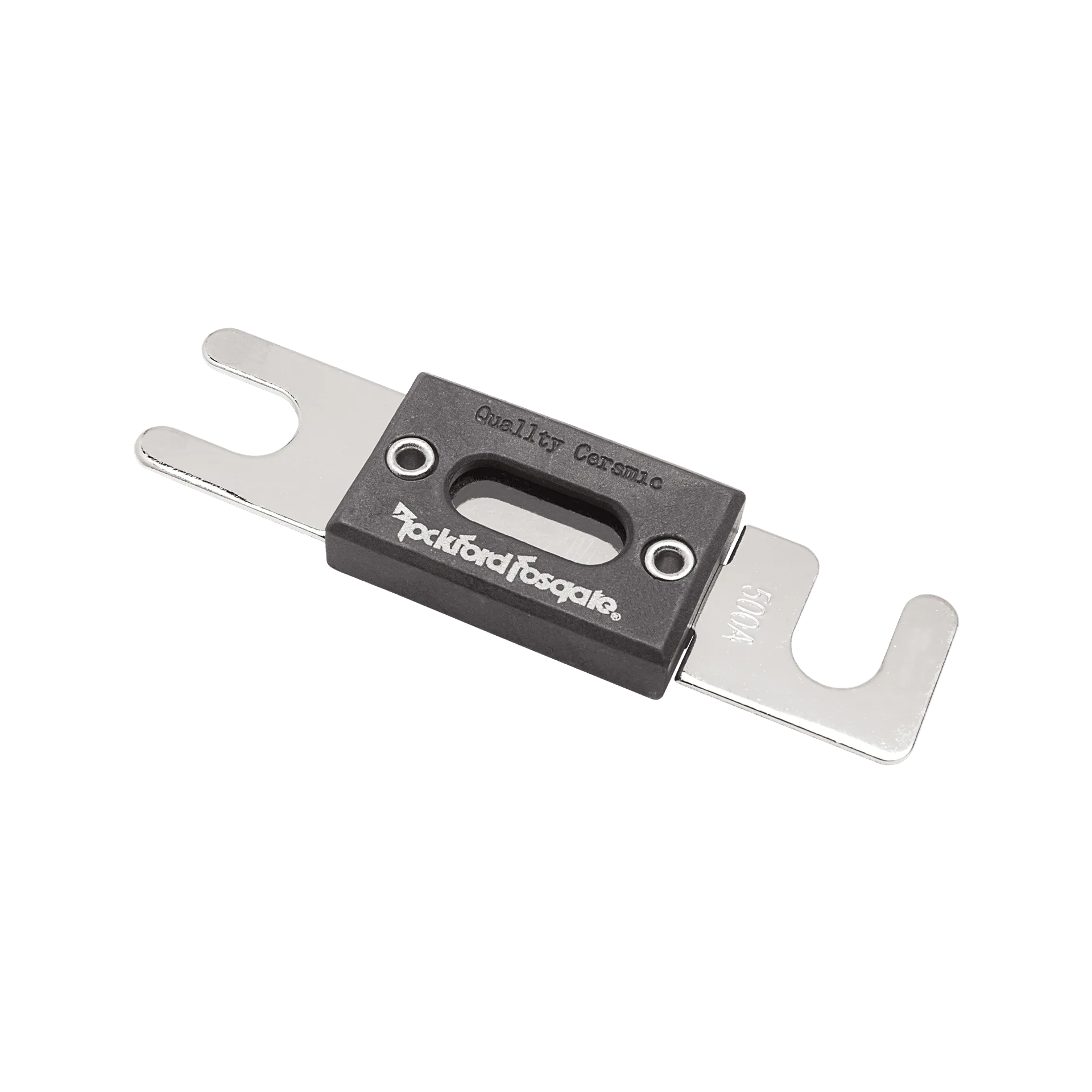
500 Amp ANL Fuse
When you're building or upgrading a car audio system, the fuse holder is a small part that can save your gear from a costly failure. An inline fuse holder sits between the battery and your amplifier, protecting the power wire and your equipment if something goes wrong. But with ANL and maxi fuse types, it's easy to pick the wrong one for your setup.
This guide breaks down the differences between inline ANL and maxi fuse holders, how to match them to your wire and amp, and what to watch during installation. You'll leave with a clear decision rule so you can buy the right part the first time.
ANL vs. Maxi Fuse Holders: What's the Difference?
ANL and maxi fuses both protect your audio system, but they're designed for different current ranges and physical sizes. ANL fuses are typically rated for higher currents—often 100 to 500 amps—and have a flat, rectangular body. Maxi fuses are smaller, blade-style fuses rated up to about 100 amps. That means ANL holders are usually bulkier and built for larger power wire (like 1/0 or 2 AWG), while maxi holders fit standard 4 or 8 AWG wiring.
The choice matters because using a fuse that's too small for your amplifier's current draw will blow constantly, while a fuse that's too large won't protect the wire from overheating. Your system's total current draw—from all amplifiers and components—determines the fuse rating you need. For example, a 100 amp maxi fuse works for a moderate system, but a high-power subwoofer amp might pull 200 amps, requiring an ANL holder with a higher rating.
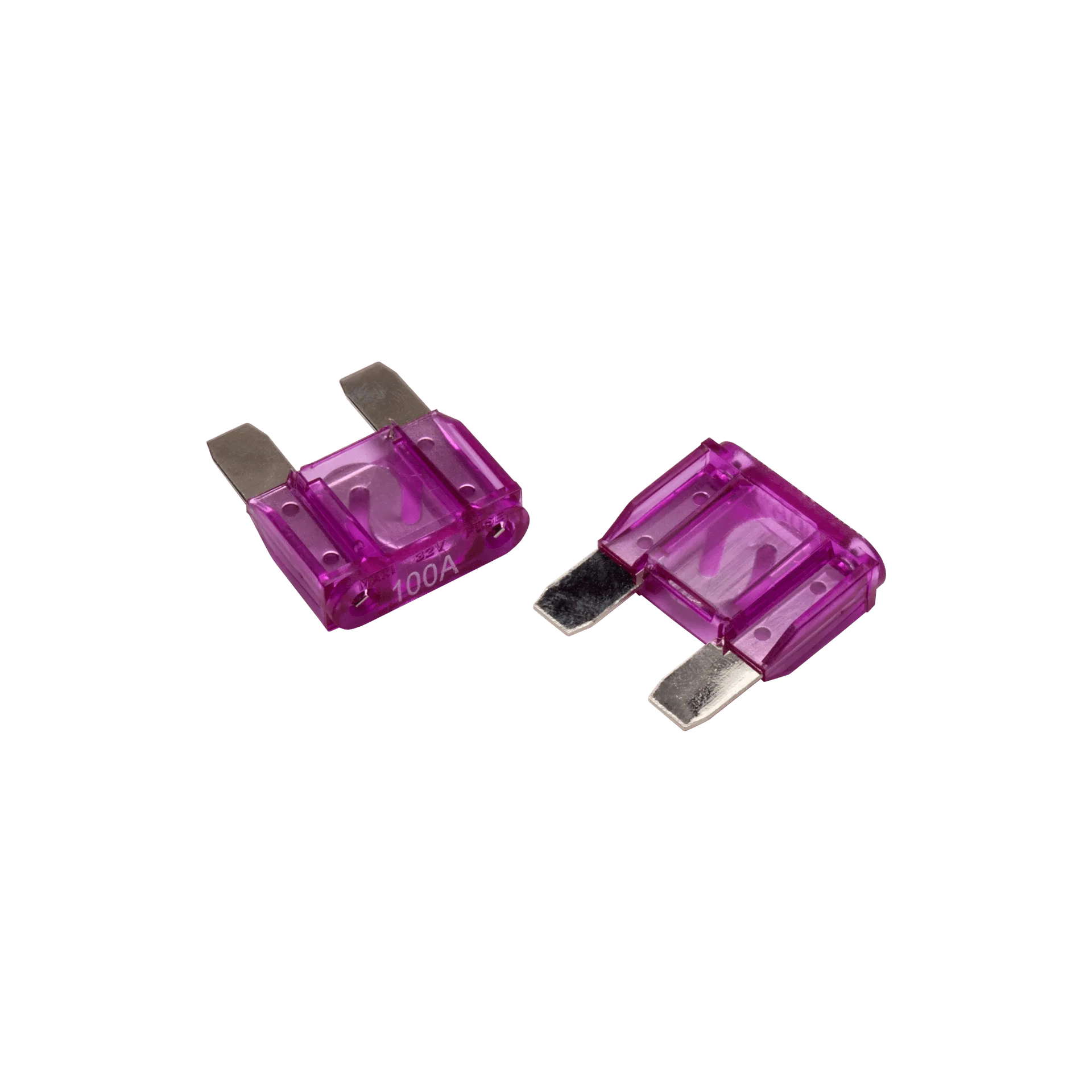
100 amp maxi fuse
- Check your amplifier's fuse rating or recommended fuse size in the manual—that's your starting point.
- If you're planning to add more amps later, choose a holder that can handle more current than you need now.
How to Match Fuse Holder Amp Rating to Your System
The fuse rating should be slightly higher than your system's maximum current draw but lower than the wire's rated capacity. A common rule is to use a fuse rated at about 75-80% of the wire's maximum ampacity. For instance, if you're running 8 AWG wire rated for around 80 amps, a 60-amp maxi fuse is a safe choice. For a high-current system with 1/0 wire, a 300-amp ANL fuse might be appropriate.
To find your system's current draw, add up the total RMS power of all amplifiers and divide by your vehicle's voltage (usually around 13.8V). For example, a 1000-watt RMS system draws roughly 72 amps. That would allow a 100-amp maxi fuse, but if you plan to upgrade, an ANL holder with a 500-amp fuse gives you room to grow without re-wiring.
- Always use a fuse that's rated for less than the wire's maximum capacity to protect the wire itself.
- If you're unsure, err on the side of a slightly higher amp rating to avoid nuisance blows, but never exceed the wire's rating.
Wire Size and Fuse Holder Compatibility
Fuse holders are designed to accept specific wire gauges. A maxi fuse holder typically fits 8 or 4 AWG wire, while an ANL holder usually accommodates 1/0 or 2 AWG. Check the holder's specifications for the wire size range before buying. If you're using a 250-foot spool of 8 AWG frosted red wire for a long power run, you'll need a holder that accepts 8 AWG—often a maxi type.
The wire gauge also determines the maximum fuse rating you can use. For example, 8 AWG wire can handle about 80 amps, so a 100-amp maxi fuse would be too large and could allow the wire to overheat. In that case, you'd need to step up to 4 AWG wire and a larger holder. Always match the fuse rating to the wire, not just the amplifier.
- Measure your wire gauge before purchasing a holder—most holders list the accepted AWG range.
- If you're using a long wire run (over 15 feet), consider upsizing the wire to reduce voltage drop and allow a higher fuse rating.
Installation Tips: Where and How to Mount Your Fuse Holder
Place the inline fuse holder as close to the battery as possible—ideally within 18 inches. This protects the entire power wire run from a short circuit. Mount it securely to a solid surface using screws or zip ties, but avoid areas with excessive heat or moving parts. Make sure the holder is accessible so you can check or replace the fuse easily.
When installing, disconnect the battery first, then connect the fuse holder between the battery positive terminal and your amplifier's power input. Use the correct wire size for the holder's terminals, and tighten all connections securely. After installation, test the system with the fuse in place. If the fuse blows immediately, check for a short or a wrong connection before replacing it.
- Use a fuse puller or insulated tools to avoid accidental short circuits when working near the battery.
- If your holder has a clear cover, it's easier to inspect the fuse without removing it.
Decision Rules for Choosing Your Fuse Holder
- Check your system's current draw: Add up the RMS power of all amplifiers and divide by 13.8V to get the total current draw. Round up to the nearest common fuse rating. Example: 1000W RMS ÷ 13.8V ≈ 72A → a 100A maxi fuse works.
- Match the fuse to your wire gauge: The fuse rating must be less than the wire's maximum ampacity. For 8 AWG (80A), use a 60-80A fuse; for 4 AWG (150A), use up to a 150A fuse; for 1/0 AWG (300A), use up to a 300A fuse. Never exceed the wire's rating—choose a fuse that protects the wire first.
- Select the fuse holder type based on current and wire size: For currents up to 100A and wire up to 8 AWG, choose a maxi fuse holder. For currents above 100A and wire 4 AWG or larger, choose an ANL fuse holder. If you plan to upgrade, go with an ANL holder for future flexibility.
- Consider installation space and accessibility: Mount the holder within 18 inches of the battery, on a solid surface, and in an accessible location. Ensure the holder's physical size fits your vehicle's layout. A compact maxi holder is easier to place in tight engine bays, while ANL holders are larger.
Product Facts: Rockford Fosgate Fuse Options
- 100 Amp Maxi Fuse: Rated at 100 amps for high-current applications, maxi fuse form factor for compatibility with standard fuse holders, constructed for durability in demanding environments. This is a good choice for a moderate system with 8 or 4 AWG wire. It fits standard maxi holders and provides reliable protection without overkill.
- 500 Amp ANL Fuse: 500 Amp rating for high-power audio systems, ANL type fuse for standard fuse holders, Rockford Fosgate quality and reliability. If you're running a high-power amplifier or plan to upgrade, this ANL fuse gives you headroom. It requires a compatible ANL holder that accepts 1/0 or 2 AWG wire.
Which Fuse Holder Fits Your Setup?
Best For
- Systems with moderate power (up to 100A) using 8 or 4 AWG wire—choose a maxi fuse holder.
- High-power systems (over 100A) with 1/0 or 2 AWG wire that need an ANL fuse holder for headroom.
Not For
- Systems with very low current draw (under 30A) might be better served by a mini or standard ATO fuse holder, which are smaller and cheaper.
- If you have a factory-installed fuse box, you may not need an inline holder at all—but adding one for aftermarket amps is still recommended.
Choosing the right inline ANL or maxi fuse holder comes down to your system's current draw, wire gauge, and future plans. Start with the fuse rating, match it to your wire, and pick the holder type that fits. Rockford Fosgate offers reliable fuses like the 100 Amp Maxi and 500 Amp ANL to keep your audio system protected. Install it close to the battery, and you'll have peace of mind on every ride.