Why Resistance Band Type Matters
Resistance bands are versatile tools for strength training, rehabilitation, and general fitness, but not all bands serve the same purpose. Choosing between a tube band with handles and a closed-loop leg band depends on your target muscles, preferred exercises, and resistance range. The right choice helps you progress safely and effectively.
Understanding Your Options
-
Single Stackable Resistance Band: The Single Stackable Resistance Band includes 7 color-coded bands that can be stacked to provide 23 levels of resistance, ranging from 5 to 50 pounds. Stackable bands allow you to increase resistance incrementally as you get stronger, making them suitable for both beginners and experienced gym-goers.
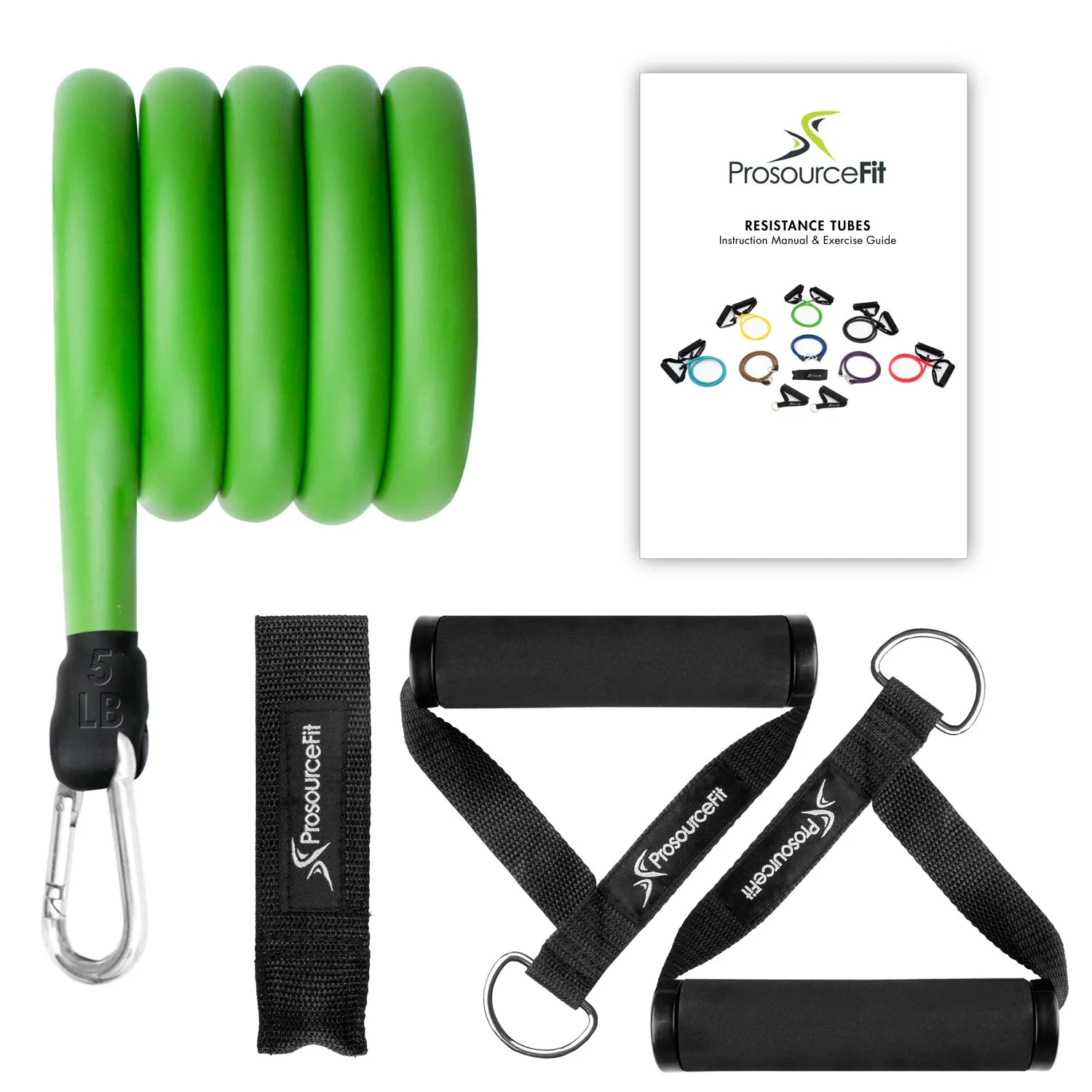
Single Stackable Resistance Band
-
Leg Resistance Band: The Leg Resistance Band offers 15–20 pounds of resistance with padded ankle cuffs and a closed-loop design. This band is purpose-built for lower body isolation exercises like leg raises and lateral movements, providing targeted resistance without needing to loop or fold a long band.
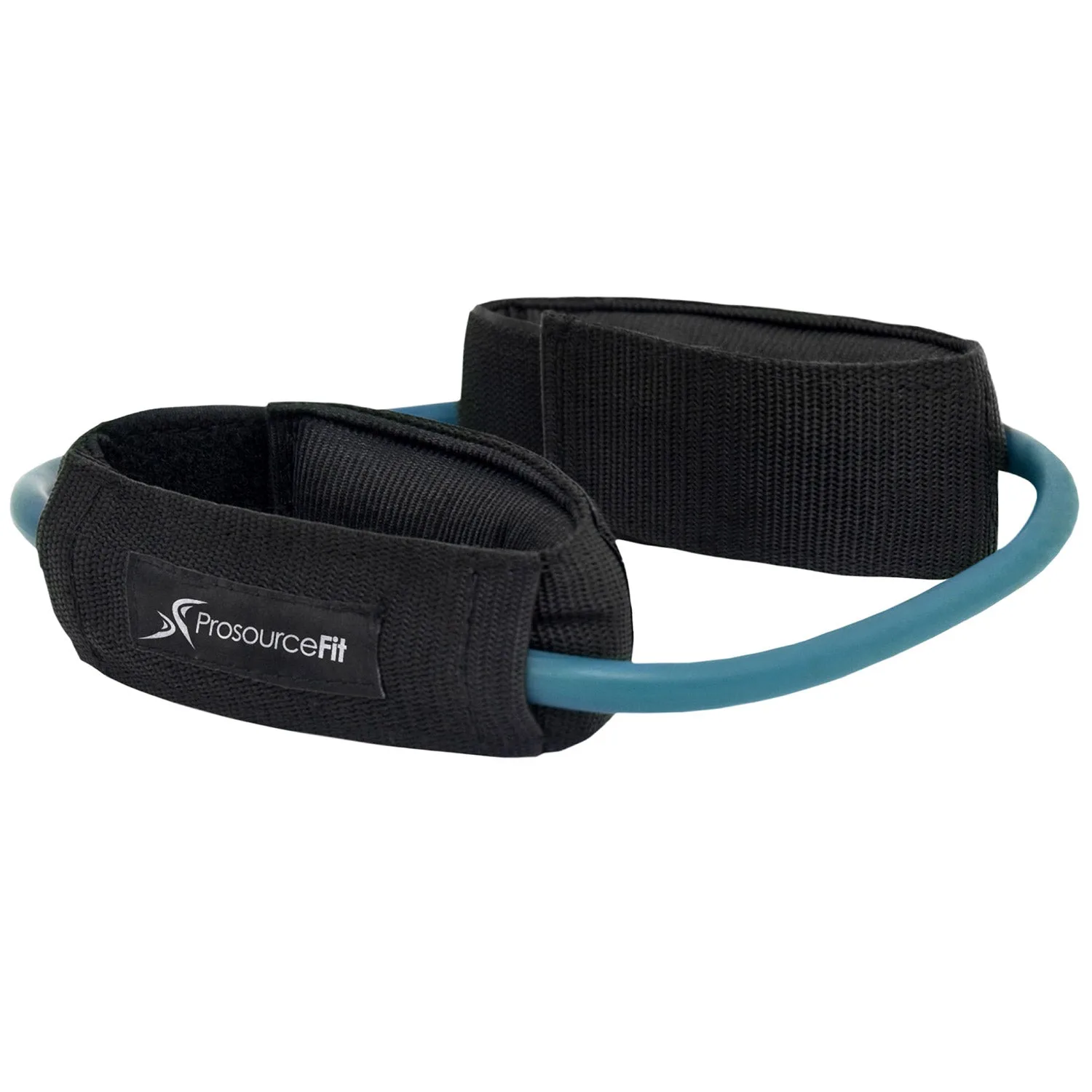
Leg Resistance Band
Full-Body vs. Lower Body Focus
If your goal is a total-body workout that includes arms, shoulders, chest, back, and legs, a stackable tube band with handles and a door anchor gives you the most versatility. The ProsourceFit Single Stackable Resistance Band comes with two comfortable foam handles and a door anchor, allowing you to perform rows, presses, curls, and more from different angles. Its 48-inch length provides a full range of motion similar to cable machines.
If you primarily want to strengthen and tone your legs, hips, and glutes, a dedicated leg band with padded ankle cuffs is more convenient. The ProsourceFit Leg Resistance Band’s closed-loop design and adjustable cuffs make it easy to perform standing or lying exercises without the band slipping.
Resistance Levels and Progression
The Single Stackable Resistance Band offers seven bands with resistance from 5–8 pounds (green) up to 40–50 pounds (brown). By stacking bands together, you can create 23 different resistance levels—ideal for progressive overload as you build strength.
The Leg Resistance Band provides a fixed 15–20 pounds of resistance. This is a moderate range suitable for lower body toning and rehabilitation. If you need lighter or heavier leg-specific resistance, you may need to combine bands or choose a different product.
How to Decide Which Band to Buy
Follow these steps to match a band to your workout needs.
- Identify your primary workout goal: For full-body strength and variety, choose a stackable tube band. For lower body isolation and toning, choose a leg band.
- Check the resistance range you need: If you want to start light and progress over time, stackable bands give you the widest range. If you know you need 15–20 pounds for leg work, the Leg Resistance Band is a straightforward choice.
- Consider your workout space: Tube bands with a door anchor work well in small spaces and can be used anywhere with a door. Leg bands require no anchor and can be used on a mat or floor.
- Think about exercise variety: Stackable bands support dozens of exercises for upper body, lower body, and core. Leg bands are specialized for lower body movements like kickbacks, side leg raises, and glute bridges.
Using Your Band Safely
Both band types are made from durable latex. Always inspect your band for tears or wear before each use. For stackable bands, ensure the door anchor is securely placed and the handles are firmly attached. For leg bands, adjust the ankle cuffs so they are snug but not restrictive. Start with the lightest resistance to practice form before progressing.