Quick answer
Start with a water report, then buy the simplest filter that removes the specific problems your water has. If your water is high in minerals, a three-stage system like the WPD EZ-SXSP3CT-1PNC is the safer choice for espresso equipment because it combines sediment, carbon, and scale-control stages.
Stage count is a response to your water, not a ranking
A single-stage carbon filter is often enough for municipal water with low hardness and no sediment issues. Two stages add sediment protection ahead of the carbon block, which extends cartridge life in older buildings. Three stages make sense when you need dedicated scale prevention in addition to sediment and carbon treatment.
More stages also mean more cartridges to replace and more space under the counter. If your water report shows low hardness and low sediment, paying for a three-stage system buys protection you may not need.
Scale prevention protects the boiler, not just the taste
Scale builds up in the boiler and heat exchanger, reducing recovery time and eventually causing expensive service. A scale prevention coffee water filter is cheaper than a descaling service or a failed heating element. The trade-off is that scale-control media adds cost and needs regular replacement, so check the cartridge schedule before you buy.
Match flow rate and capacity to your busiest hour
A filter sized for a home kitchen will choke a coffee bar during the morning rush. Check the system's rated flow against the combined draw of your espresso machine and any water-fed brewers. If the filter cannot keep up, the machine starves and you get inconsistent shots. Sizing for peak demand usually means a larger cartridge or a system with a higher flow rating, not a different brand.
When a three-stage system is the wrong purchase
If you already run a reverse osmosis system with remineralization, adding a three-stage filter downstream can be redundant and may strip minerals you deliberately added. Similarly, if your water is very soft and clean, a basic carbon block is simpler and cheaper to maintain. High-mineral water is the condition that justifies the extra stages.
Decision rules for your coffee bar
- Start with a water report: Test for hardness, alkalinity, sediment, and chlorine before choosing a filter. The report tells you which stages you actually need. No report, no purchase: guessing stage count is how you overspend or undersize.
- Low hardness, low sediment: Choose a single-stage carbon block filter. It handles taste and chlorine without the cost and maintenance of extra stages.
- Moderate hardness or sediment: Choose a two-stage system with sediment pre-filtration ahead of carbon. This protects the carbon cartridge and extends replacement intervals.
- High mineral content: Choose a three-stage system with dedicated scale prevention, such as the WPD EZ-SXSP3CT-1PNC. The extra stage targets the scale that damages espresso boilers. Confirm the cartridge replacement schedule and cost before committing.
- Check flow at peak demand: Add up the flow needs of your espresso machine and brewers, then compare to the filter's rated flow. If the filter is undersized, step up to a larger cartridge or system.
- Budget for cartridges, not just the housing: Compare annual cartridge cost across systems. A cheaper housing with frequent cartridge changes can cost more over three years.
Product facts to know
-
WPD EZ-SXSP3CT-1PNC Three Stage NanoCeram with ScaleX NAC & CT Technology Water Filter System: Three-stage system with NanoCeram, ScaleX NAC, and CT technology, engineered for coffee and espresso equipment in high mineral content water conditions. It is designed for the exact problem that damages boilers, so it is a fit when your water report shows high hardness or mineral content.
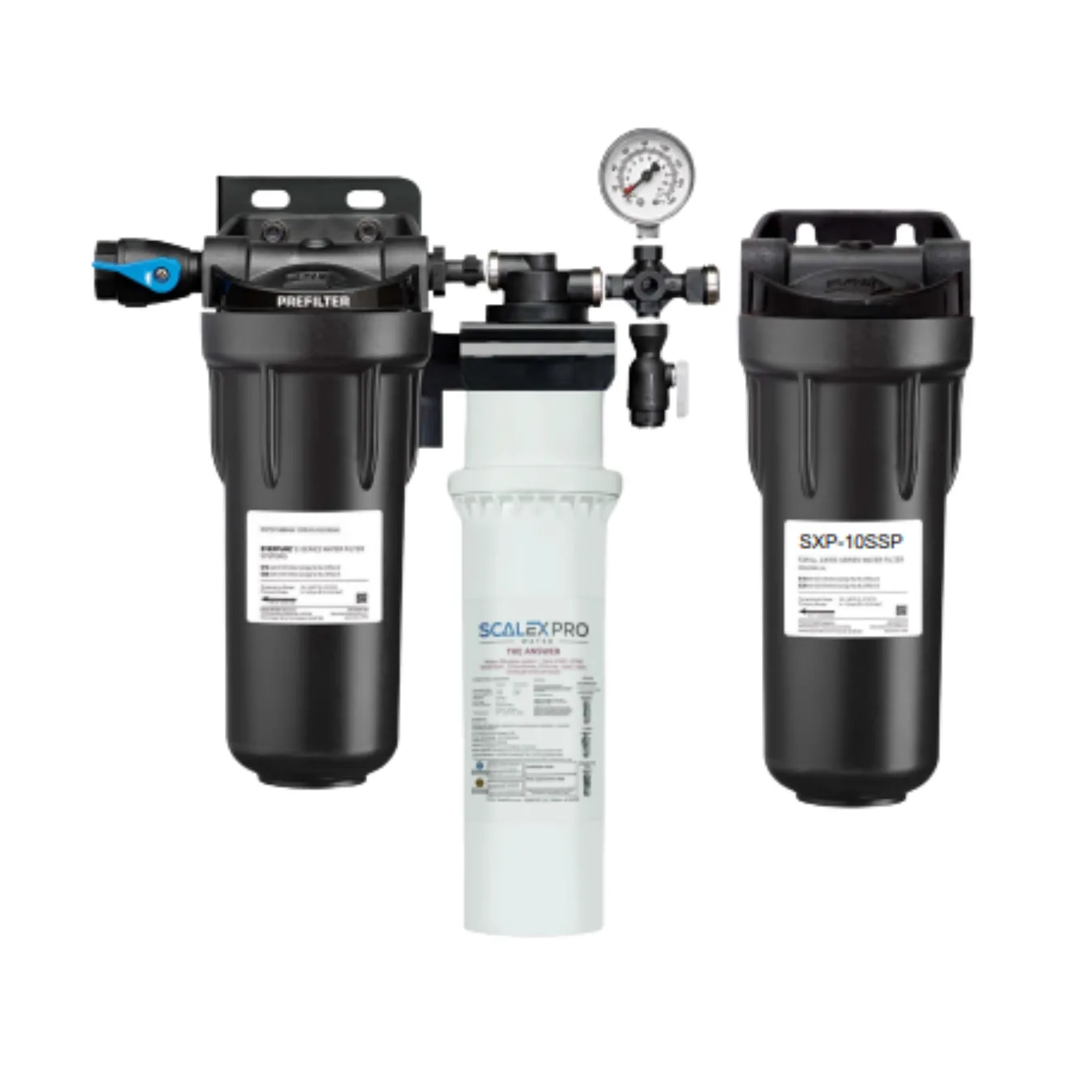
WPD EZ-SXSP3CT-1PNC Three Stage NanoCeram with ScaleX NAC & CT Technology Water Filter System
Who this guide fits
Best for
- Coffee bar owners installing or replacing filtration for espresso equipment
- Operators in areas with high mineral content water
- Buyers comparing stage counts and cartridge costs before purchase
Not for
- Home users with clean, soft municipal water who only need taste improvement
- Operators already running a full reverse osmosis system with remineralization