Quick answer
Choose women's ski boots by matching flex to your ability and terrain, then prioritize a snug heel and comfortable forefoot. For touring, consider the Kilo; for freeride, the Sender; for all-around adventure, the Vanguard.
Flex: Match It to Your Skiing Style
Flex rating indicates how stiff the boot is. A softer flex (around 100) is more forgiving and easier to walk in, while a stiffer flex (130) offers more power transfer and support for aggressive skiing. Beginners and lighter skiers usually prefer a softer flex, while advanced skiers on bigger skis need a stiffer boot.
Consider your primary terrain: if you're mostly in the backcountry touring, a lighter boot with moderate flex may be better; if you're charging steep lines on wide skis, a stiffer flex is essential.
Fit: The Shell and Liner Matter
A proper fit should be snug but not painful. Your heel should stay locked in place when you flex forward, and your toes should lightly touch the front when standing upright. Pay attention to the instep and calf fit—women's-specific boots often have a lower instep and narrower heel.
The liner plays a big role in comfort and warmth. Some boots feature heat-moldable liners that conform to your foot shape, reducing pressure points.
Touring vs. Freeride: Know Your Priority
Touring boots prioritize uphill efficiency with lighter materials and a walking mode, while freeride boots prioritize downhill power and stiffness. Some boots blend both, offering a balance for skiers who do a bit of everything.
If you're planning long tours with big elevation gain, weight becomes critical. If you're dropping into steep couloirs, you'll want a boot that can handle high-speed, high-impact skiing.
Decision Rules for Choosing Women's Ski Boots
- Define your primary use: If you mostly tour and value uphill efficiency, choose a lighter boot like the Kilo. If you prioritize downhill performance, choose a stiffer boot like the Sender. If you want a balance, the Vanguard is a solid all-rounder.
- Match flex to your ability: Beginners should look for a flex around 100 or lower. Intermediate skiers can handle 110-120. Advanced skiers who ski aggressively should choose 130 or higher. Remember: a stiffer flex requires more leg strength to control.
- Check the fit in the store: Wear the socks you plan to ski in. Your heel should not lift when you flex, and your toes should barely touch the front. Walk around and flex to ensure no pressure points. If the boot feels too roomy, try a smaller size or a thicker liner.
- Consider the walk mode: If you plan to hike or tour, make sure the boot has a walk/ski mode that gives you a good range of motion. Some boots have a more efficient walk mode than others. Test the walk mode to see how much articulation you get.
- Factor in your ski width: Wider skis (over 100mm underfoot) require a stiffer boot to transfer power effectively. If you ski a narrow waist, a softer flex may suffice. Match the boot flex to the width of your skis for best performance.
Compare La Sportiva Women's Ski Boots
-
Vanguard Women's: The Vanguard Women's is designed for powder-focused adventure skiing, offering all-day comfort and range of motion for big tours along with rigid downhill performance for bigger skis on steeper terrain. This is a versatile choice if you want one boot that can handle both long tours and aggressive descents without compromising on comfort.
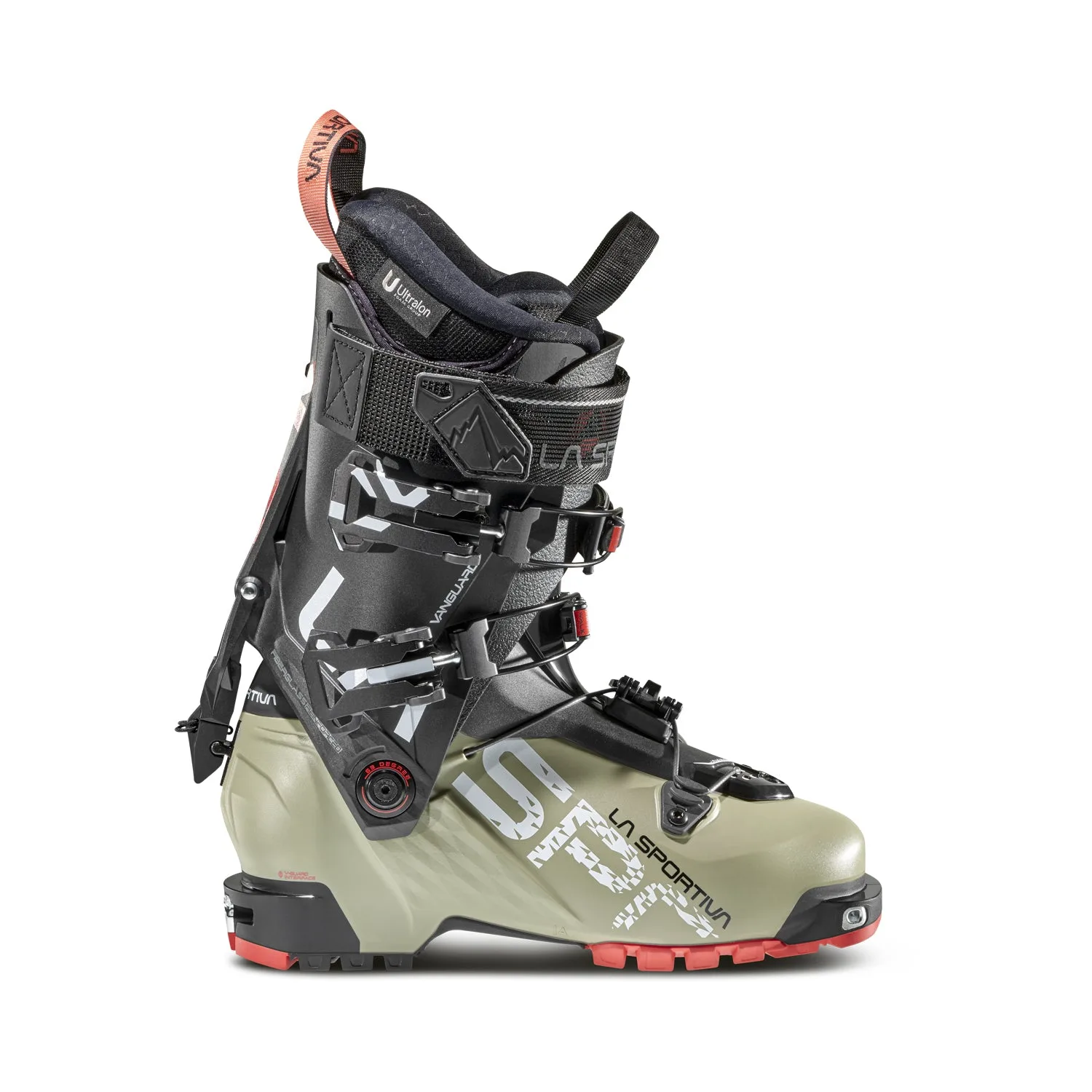
Vanguard Women's
-
Kilo Women's: The Kilo Women's is built for maximum uphill lightness using Grilamid Bio Based LF Carbon™, with a Force™ shell closure system that distributes pressure and regulates fit. If you're a demanding ski mountaineer who counts every gram, the Kilo's lightweight construction and precise fit adjustment make it ideal for big objectives.
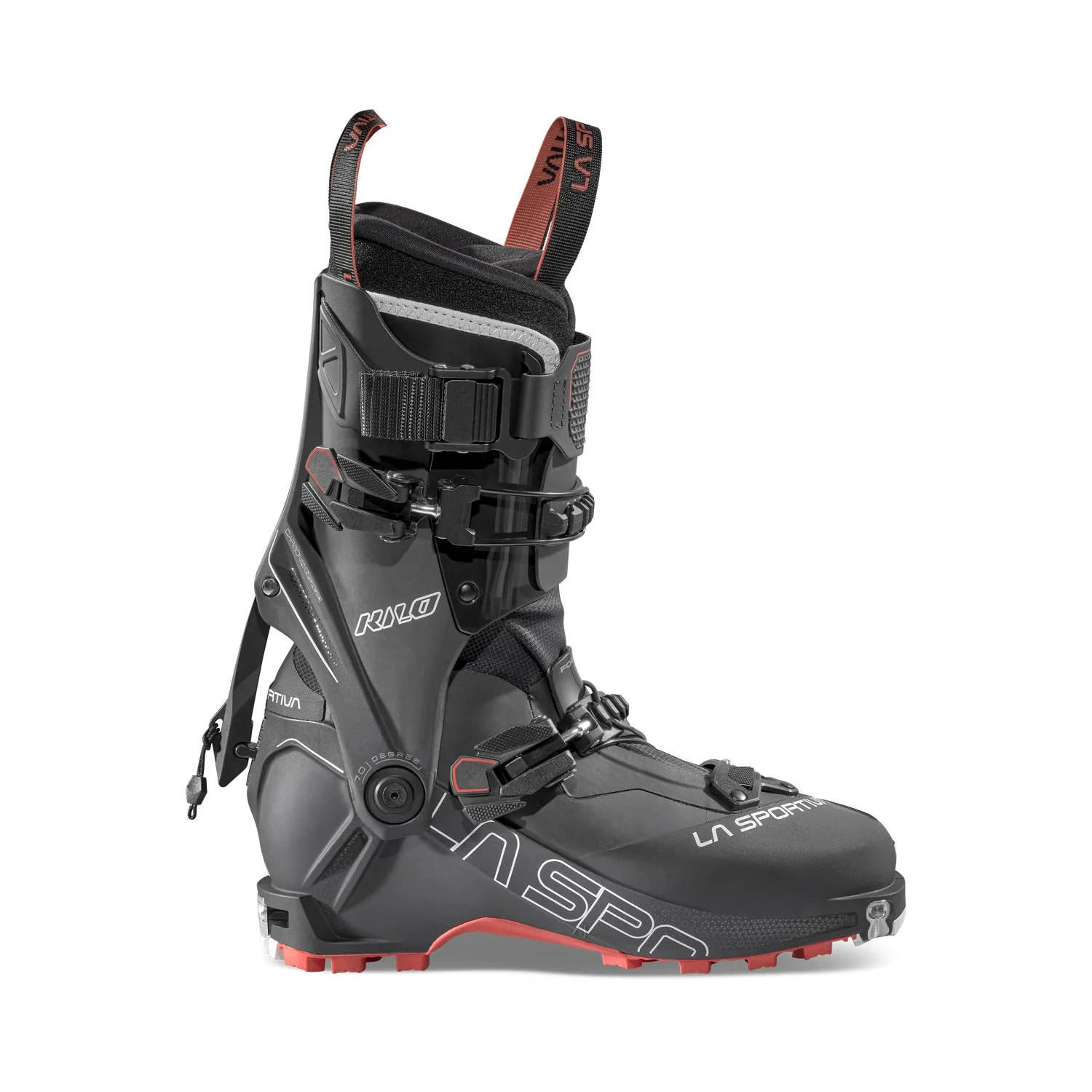
Kilo Women's
-
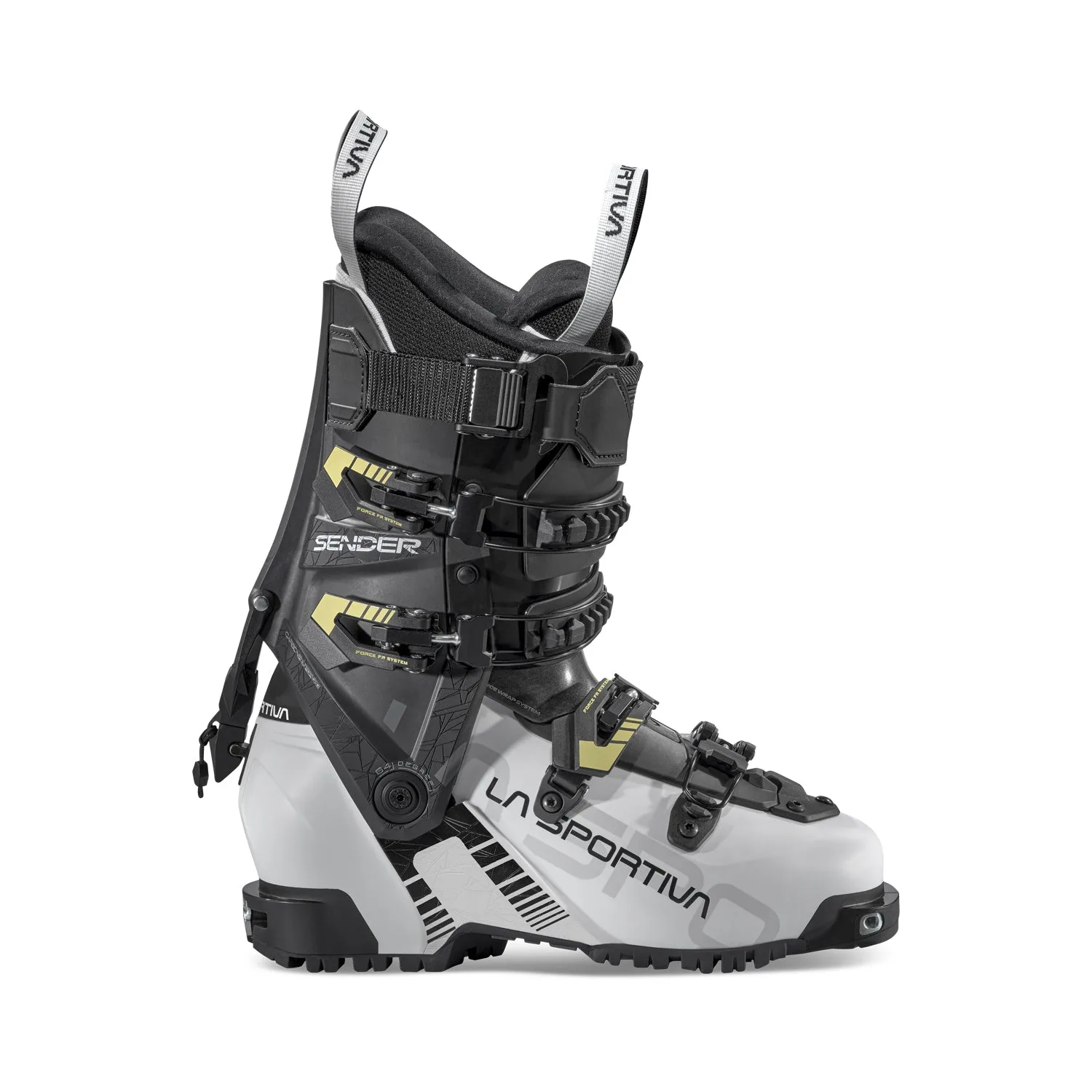
Sender Women's: The Sender Women's is an ultra-lightweight freeride touring boot with a carbon-loaded Grilamid cuff and Wrap tongue system, weighing 1480g with a 130 flex. This boot gives you the downhill power of a 130 flex while keeping weight low, making it perfect for skiers who want to charge on wide skis without exhausting themselves on the climb.
Fit Guidance
Best for
- Women who tour long distances and want maximum uphill efficiency
- Freeride skiers who need stiff downhill performance on wide skis
Not for
- Skiers who are on a tight budget and don't need touring features
- Beginners who prefer a softer, more forgiving flex