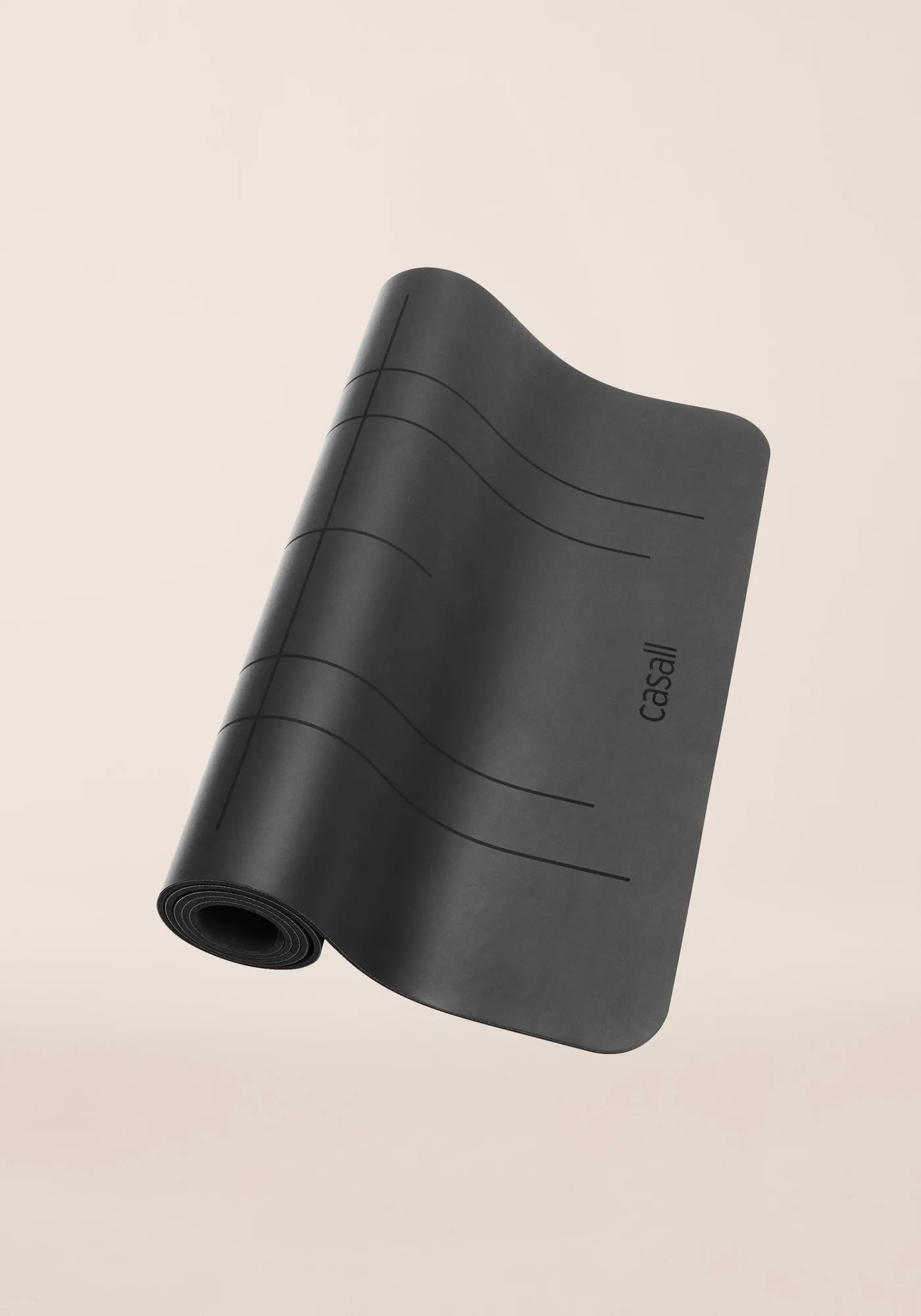
Start with how the mat feels under you, not a number
Mat thickness is usually sold as a number, but the number alone tells you little about how a mat will behave in a home Pilates session. What matters more is the combination of cushioning, density and surface grip: a soft mat can feel comfortable standing but unstable in a plank, while a firm mat can support balance but feel harsh on knees and wrists.
The practical approach is to choose by the body positions you do most and the floor underneath you. If you mostly do standing balance work, you want a surface that does not squirm. If you spend time on forearms, knees or seated stretches, cushioning matters more. And if you sweat or train in a warm room, grip is the deciding factor, not thickness.
Three questions that narrow the choice
- What is under the mat?: A hard floor such as tile or concrete gives less forgiveness, so a mat with more cushioning can make floor work more comfortable. Carpet already adds softness, so a denser mat that does not sink or bunch may suit you better.
- How much time do you spend on knees, wrists and forearms?: If your routine includes kneeling, wrist-loaded poses or seated forward folds, prioritize comfort under those contact points. If your practice is mostly standing and balance-focused, prioritize stability instead.
- Do you sweat or practice in a warm room?: Grip becomes the deciding factor when hands and feet get damp. A surface that holds firm in wet conditions is more useful than extra cushioning you cannot stay planted on.
Why grip and density matter more than a millimeter count
In Pilates, many exercises ask you to press into the mat and hold a position. If the surface is slippery, you compensate with tension in your hands, shoulders or feet, which defeats the purpose. If the mat is too soft, your hands and feet can sink and the mat can shift under load.
That is why a mat's material and surface finish deserve as much attention as its thickness. A natural rubber base with a PU top surface, for example, is designed to hold firm in both dry and wet conditions. That kind of construction helps you stay planted through transitions rather than adjusting your mat mid-session.
A mat built around grip and natural materials
-
Yoga Mat: Crafted from natural rubber with a premium PU surface, this mat holds firm in both dry and wet conditions. Grip is the first thing to check in a home Pilates mat, because a slippery surface undermines balance work and floor transitions regardless of cushioning.
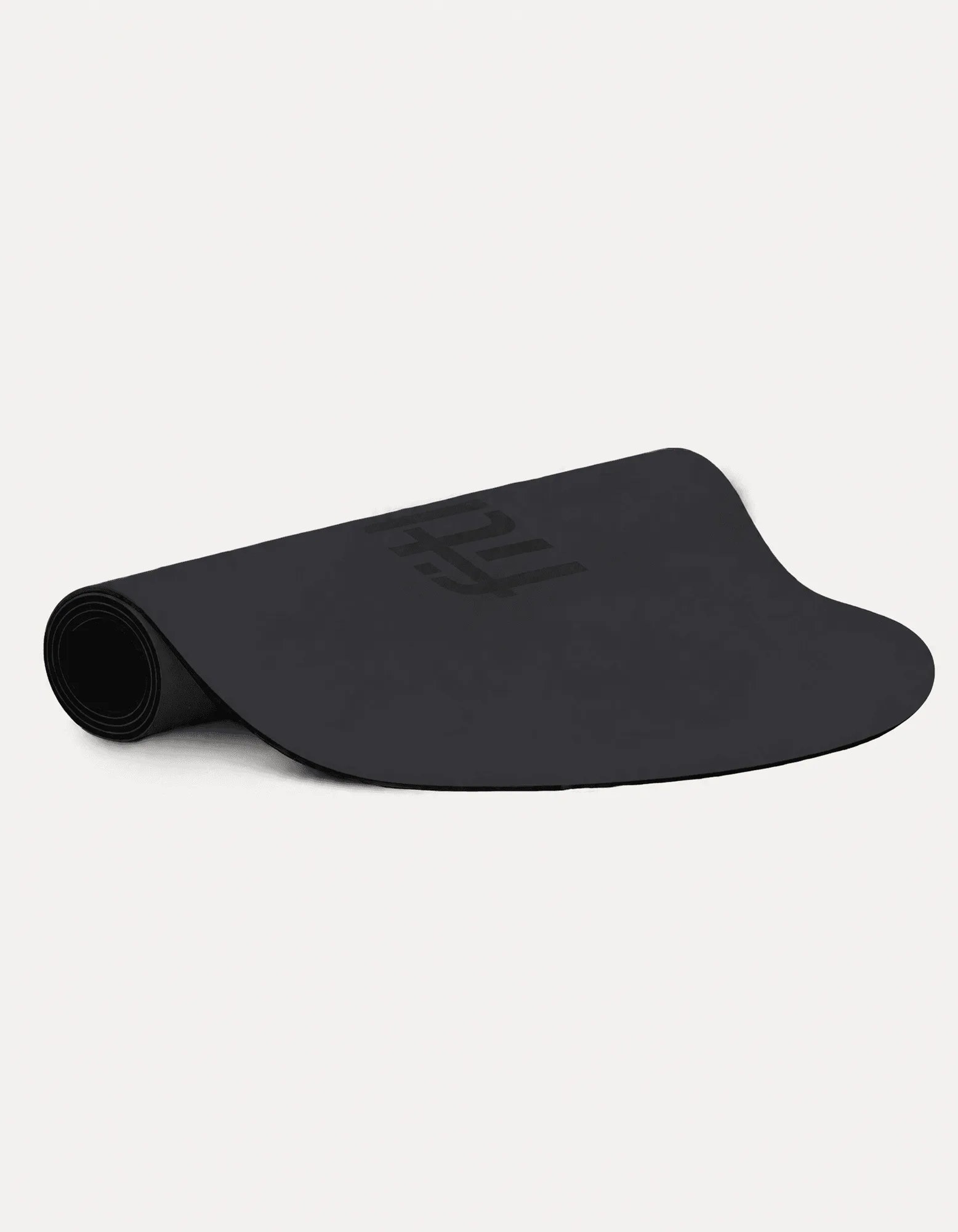
Yoga Mat
-
Yoga Mat: Every material is natural, non toxic and eco friendly, finished to feel soft against skin and free of any lingering odour. If you practice indoors, a mat that feels soft and does not carry a strong smell is easier to live with in a small home space.
-
Yoga Mat: Available in Black, Olive and Dark Brown, with more colours arriving soon. Colour is the only listed option, so your choice is about the surface and material rather than a range of thickness variants.
Cushioned versus firmer: matching the mat to your routine
The table below compares the two broad directions rather than specific products, because the supplied catalog does not list thickness measurements for comparison.
- More cushioning: Better for kneeling, seated stretches and tender wrists or knees on hard floors. Trade-off: a softer surface can feel less stable in standing balance work and may compress under strong presses.
- Firmer, denser feel: Better for standing balance, planks and exercises where you want a stable base. Trade-off: less relief for knees, wrists and forearms during floor work.
- Grip-first surface: Best when sweat or warm-room practice is part of your routine. A PU surface over natural rubber is designed for dry and wet grip, which matters more than thickness once hands and feet get damp.
What the catalog does not tell you, and how to decide anyway
The supplied product information for the Yoga Mat does not include a thickness measurement, weight or care instructions. That is not a reason to avoid it, but it does mean you should not choose it on a millimeter figure. Instead, use the details that are confirmed: a natural rubber base, a PU surface designed for dry and wet grip, natural and non-toxic materials, and a soft feel with no lingering odour.
If thickness is a hard requirement for you, ask the store for the measurement before ordering rather than assuming a number. If grip, material quality and a comfortable surface are your priorities for home Pilates, the confirmed details give you enough to make a decision.
A simple way to test a mat before committing to a full session
Once your mat arrives, run through these checks on the floor where you will actually practice.
- Check stability in a plank: Set up a plank and press through your hands and feet. Notice whether the mat shifts or bunches. If it does, the surface or density is not matching your floor.
- Test grip with damp hands: Wet your hands slightly and repeat a few presses. A PU surface over natural rubber is designed to hold in wet conditions, so this check tells you whether the mat suits sweaty or warm-room sessions.
- Try a kneeling and seated position: Kneel and sit on the mat for a minute. This is where cushioning matters most, and it will tell you whether you want more or less softness under your knees.
- Roll and unroll it once: See how the mat behaves when stored and laid out again. A mat that lies flat quickly is easier to use in a shared home space.