Why Use an Ultrasonic Cleaner for Airbrush Nozzles
Airbrush nozzles and tips collect dried paint, primer, and clear coat. A quick rinse or pipe cleaner often leaves residue that affects spray patterns. An ultrasonic cleaner uses high-frequency sound waves to create microscopic bubbles that gently lift dried material from internal passages and tiny orifices without scrubbing or disassembly.
For hobbyists who switch colors or clear coats often, a dedicated ultrasonic cleaner saves time and reduces the risk of damaging fragile nozzle tips. The key is choosing a unit that fits your workspace and routine.
iSonic P4861 vs P4831: Which Fits Your Airbrush Cleaning?
Both units are commercial-grade ultrasonic cleaners designed for consistent cleaning. The main differences are tank size, heating capability, and transducer power.
- iSonic P4861 Commercial Ultrasonic Cleaner: Non-heated version with a large stainless steel tank that can accommodate long items like dental instruments or multiple airbrush nozzles at once. It has two individually controlled industrial-grade ultrasonic stack transducers, which the manufacturer states give about 30% more efficiency compared to single-transducer designs. Includes a 30-minute full-range timer, a suspensible plastic basket, and a degas feature to remove trapped gases from the cleaning solution before use.
- iSonic P4831 Commercial Ultrasonic Cleaner, 120V: Heated model with a 3L/3.2qt stainless steel tank (9.8"x6.9"x3.1"). Features a 100W ceramic heater with three temperature settings and a multi-stage thermometer, plus an 80W supersized ultrasonic stack transducer. The three-color LED display and 30-minute quick timer make it easy to set and monitor. The heater helps when cleaning water-soluble acrylics or when you want to warm the solution for better cleaning action.
How to Clean Airbrush Nozzles with an Ultrasonic Cleaner
The following process applies to both the iSonic P4861 and P4831. Always refer to your airbrush manufacturer’s instructions for disassembly and for any parts that should not be submerged.
- Disassemble the airbrush: Remove the nozzle, nozzle cap, needle, and any tip parts. Place small parts in the supplied plastic basket to keep them together and prevent loss.
- Fill the tank with cleaning solution: Use a solution recommended for airbrush parts (e.g., water with a few drops of dish soap or a dedicated ultrasonic cleaning solution). Do not use flammable solvents. Fill the tank so the parts are submerged but not overflowing.
- Degas the solution (P4861 only): If using the P4861, run the degas cycle for a few minutes to remove trapped gases. This step improves cleaning efficiency. The P4831 does not have a dedicated degas function, but you can run it briefly without parts to help release bubbles.
- Set the timer and temperature (if applicable): For the P4861, set the 30-minute timer to a short cycle (follow the product instructions for the appropriate duration). For the P4831, select a temperature (warm water is often sufficient) and set the timer. Start with a short cycle and check progress.
- Run the cycle and inspect: Let the unit run. After the cycle, remove the basket and rinse parts with clean water. Inspect the nozzle orifice under good light. If residue remains, repeat with a fresh solution.
- Dry and reassemble: Shake off excess water and let parts air dry on a lint-free cloth. Reassemble the airbrush and test spray with a compatible thinner to confirm the nozzle is clear.
Ultrasonic Cleaner Specifications at a Glance
-
iSonic P4861 Commercial Ultrasonic Cleaner: Non-heated version with two industrial-grade ultrasonic stack transducers, each individually controlled, giving about 30% more efficiency vs. single-transducer designs. More transducer power means faster, more thorough cleaning of clogged airbrush nozzles, especially when you clean multiple parts at once.
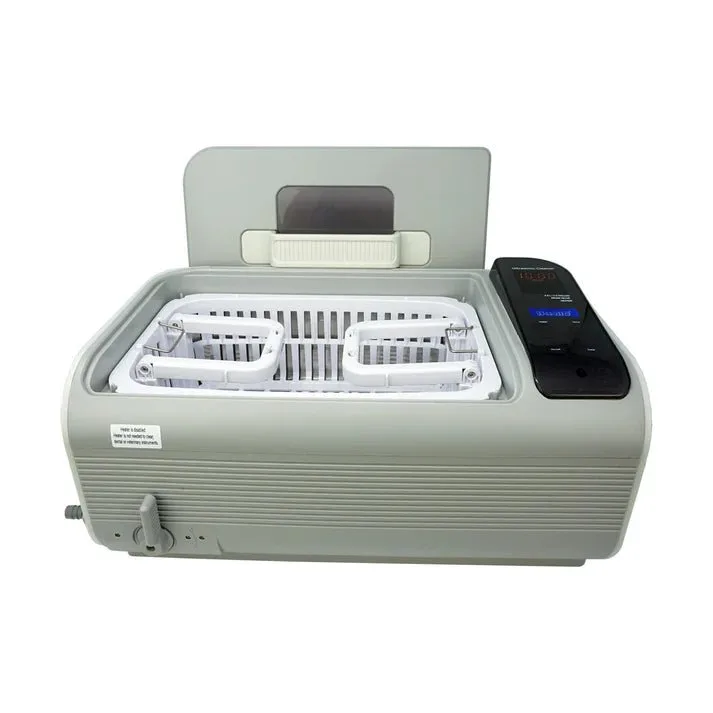
iSonic P4861 Commercial Ultrasonic Cleaner
-
iSonic P4861 Commercial Ultrasonic Cleaner: Includes a 30-minute full-range timer, suspensible plastic basket, and degas feature. The timer lets you set short cleaning cycles for delicate parts. The basket keeps small nozzle pieces from falling to the tank bottom. The degas feature helps the solution work better from the start.
-
iSonic P4831 Commercial Ultrasonic Cleaner, 120V: 3L/3.2qt stainless steel tank, tank size 9.8"x6.9"x3.1", with a 100W ceramic heater and three temperature settings. The heater warms the cleaning solution, which can help loosen dried acrylic or enamel paint. The compact tank fits easily on a hobby bench.
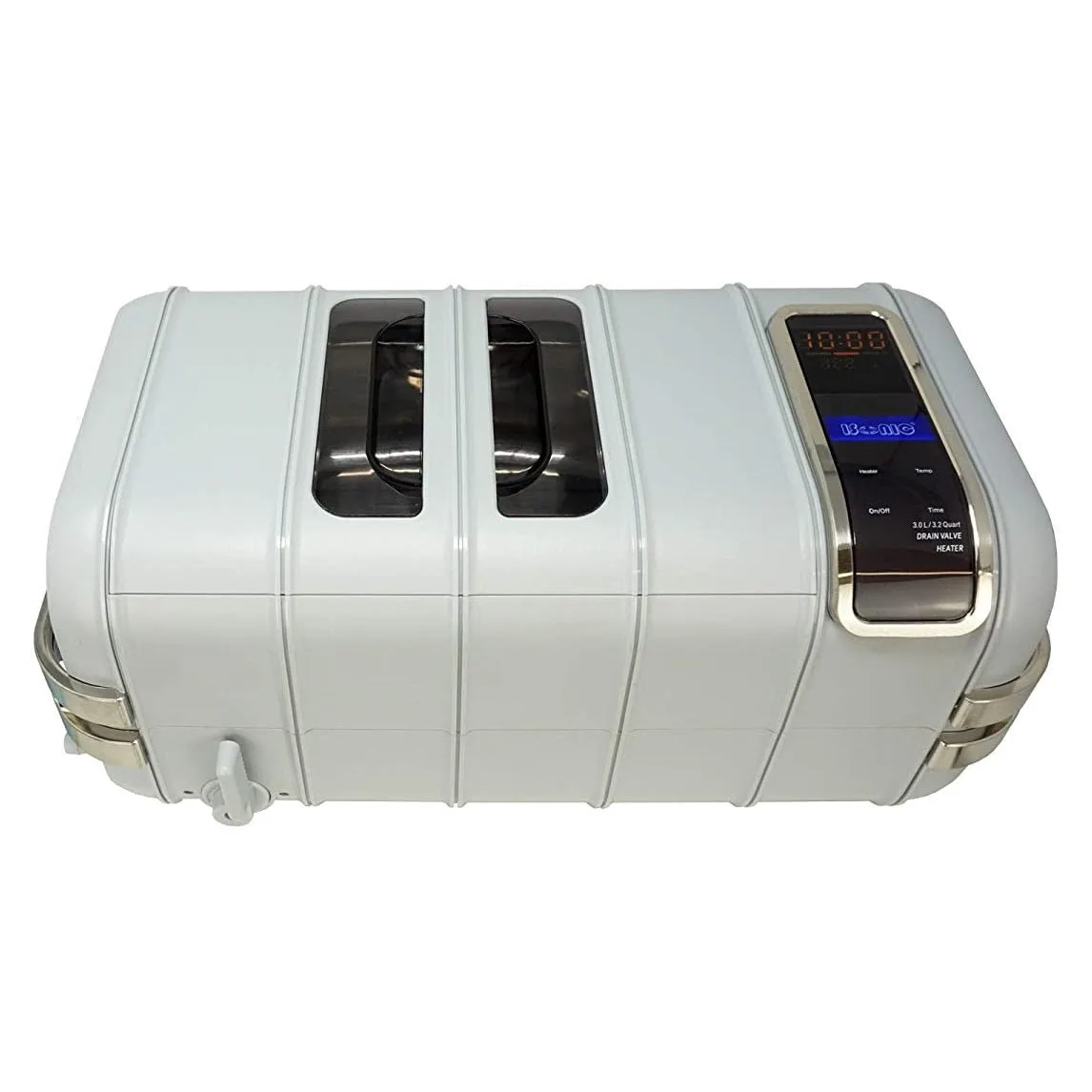
iSonic P4831 Commercial Ultrasonic Cleaner, 120V
-
iSonic P4831 Commercial Ultrasonic Cleaner, 120V: 80W supersized ultrasonic stack transducer and a 30-minute quick timer. The 80W transducer provides reliable cleaning power for hobby-scale parts. The timer lets you run short cycles without monitoring.
What the Catalog Does Not Settle
The supplied product records do not include manufacturer instructions for specific cleaning solution types, recommended cycle times for airbrush parts, or whether all airbrush materials (e.g., rubber seals, plated brass) are safe for ultrasonic cleaning. Always check your airbrush manual before submerging any part. Start with the shortest cycle and cool or room-temperature water to avoid damaging delicate components.
If you need to clean multiple airbrushes or large batches of parts, the larger tank of the P4861 may be more convenient. If you prefer heated cleaning for tougher residues, the P4831 offers that option in a compact footprint.