Why Bib Care Matters
Baby bibs take a daily beating from pureed carrots, yogurt, and drool. Without regular care, stains set in and silicone can develop a greasy film. A simple routine keeps bibs hygienic and extends their life, saving you money and time.
The two most common bib materials – silicone and cotton – need different approaches. Silicone wipes clean instantly, while cotton absorbs spills and needs more thorough washing. Knowing which care method fits your bib type makes the difference between a bib that lasts and one that gets tossed early.
Daily Cleaning Routine for Silicone Bibs
Silicone bibs are designed for quick cleanup. Their non-porous surface resists stains and odors, but food residue can build up in the pocket or along the neckline if left too long.
- Rinse after each meal: Hold the bib under warm running water and use your fingers or a soft sponge to remove food particles. The large front pocket of silicone bibs like the Bavoir en silicone à motif bateaux or motif planètes catches dropped food – make sure to flip the pocket open and rinse both sides.
- Wash with mild soap: Apply a drop of dish soap to a damp cloth or sponge and wipe the entire bib, including the neck opening. Rinse thoroughly with warm water. Avoid abrasive scrubbers – silicone is durable but can develop micro-scratches that trap residue.
- Air dry or towel dry: Shake off excess water and let the bib air dry on a dish rack, or pat dry with a clean towel. Silicone dries fast and won't hold moisture, so you can reuse it the same day.
Deep Cleaning Silicone Bibs
Over time, silicone bibs may develop a cloudy film from fats or minerals in water. A weekly deep clean restores clarity and freshness.
Fill a sink or bowl with warm water and a few drops of mild dish soap. Submerge the bib and let it soak for a few minutes, then scrub gently with a soft sponge. Rinse well and dry. For stubborn stains, make a paste of baking soda and water, apply it to the stain, let it sit briefly, then rinse. Avoid bleach or harsh chemicals – they can degrade silicone over time.
Caring for Cotton Bibs
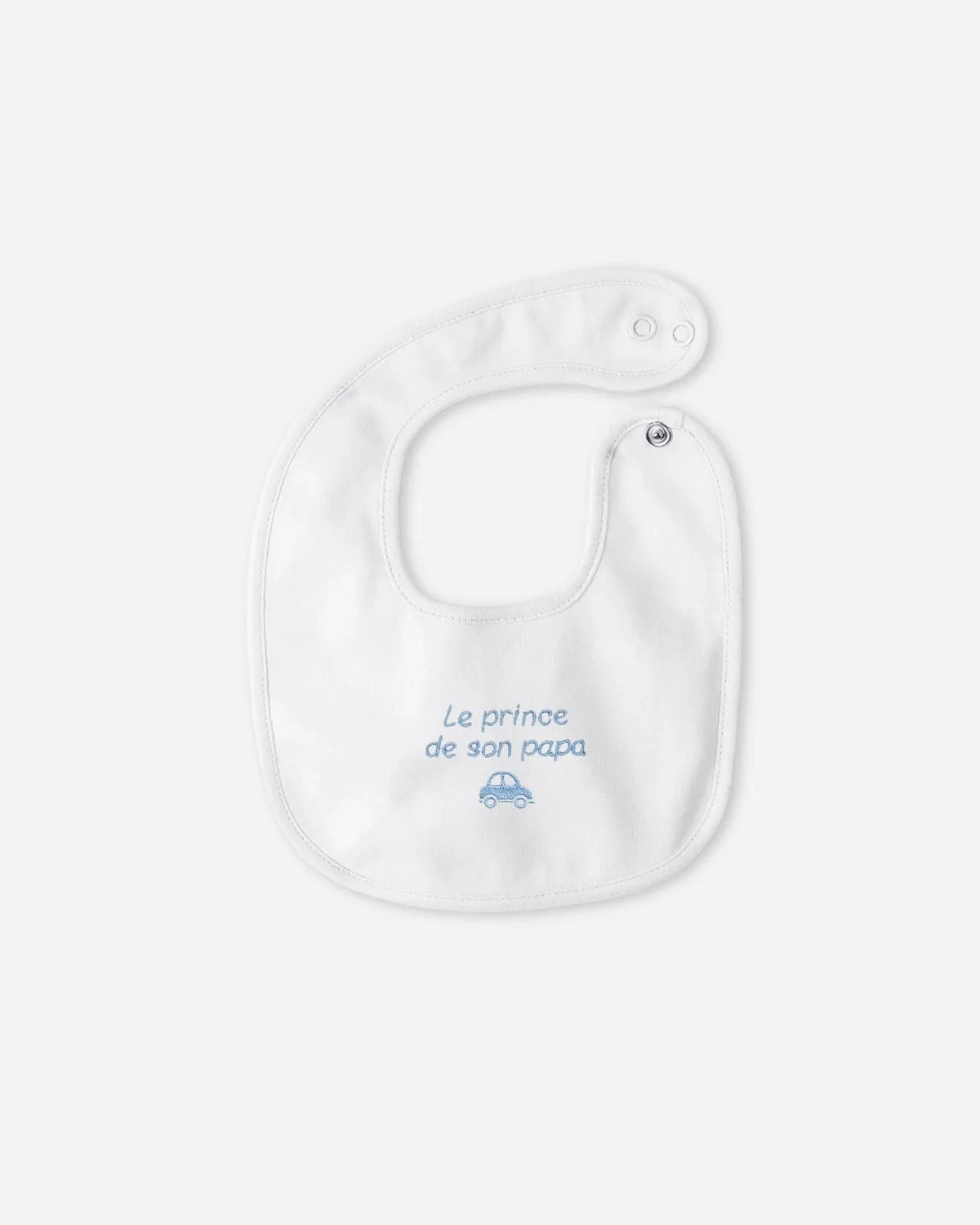
Cotton bibs are soft and absorbent, making them great for heavy droolers or messy eaters, but they need more care to stay bright and stain-free. The Bavoir naissance en coton blanc "Le prince de son papa" is a good example of a cotton bib that benefits from gentle handling.
Pre-treat stains as soon as possible. Rinse the bib under cold water to remove food residue, then apply a small amount of baby-safe stain remover or liquid laundry detergent directly to the stain. Let it sit for a few minutes before washing.
Machine wash cotton bibs in cold or warm water with like colors. Use a gentle cycle and mild detergent. Avoid fabric softeners – they coat the fibers and reduce absorbency. Air drying is best to prevent shrinkage, but tumble drying on low heat is acceptable if the care label allows.
Bib Options at a Glance
-
Bavoir en silicone à motif bateaux: Made from quality silicone with a large front pocket that catches dropped food. Easy to rinse and wipe clean. A silicone bib like this one is ideal for parents who want minimal cleanup – just rinse and dry after each meal.
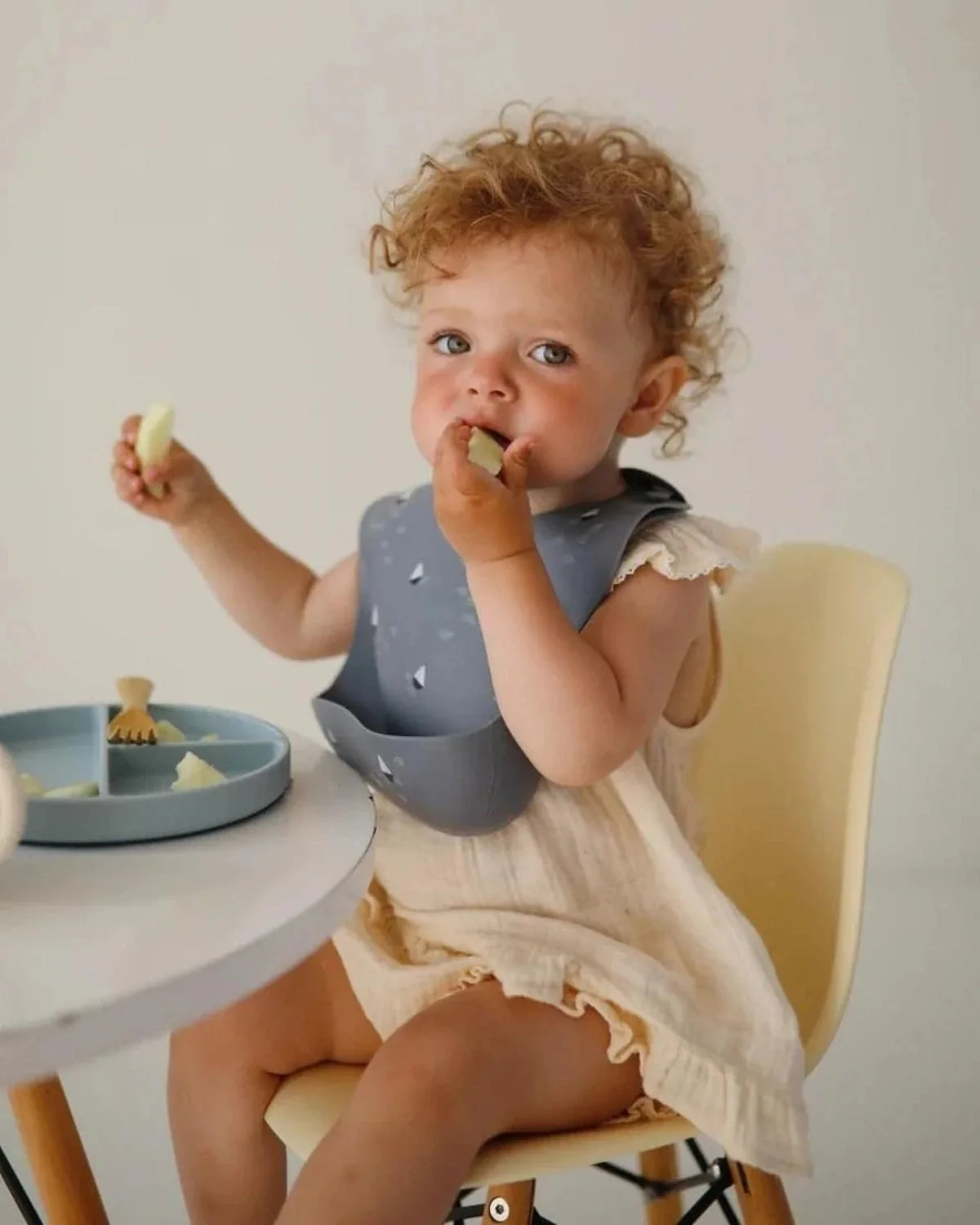
Bavoir en silicone à motif bateaux
-
Bavoir en silicone à motif planètes: Same silicone construction with a planet-themed design. The pocket catches spills and the surface wipes clean quickly. The fun pattern adds personality while keeping the same low-maintenance care routine as other silicone bibs.
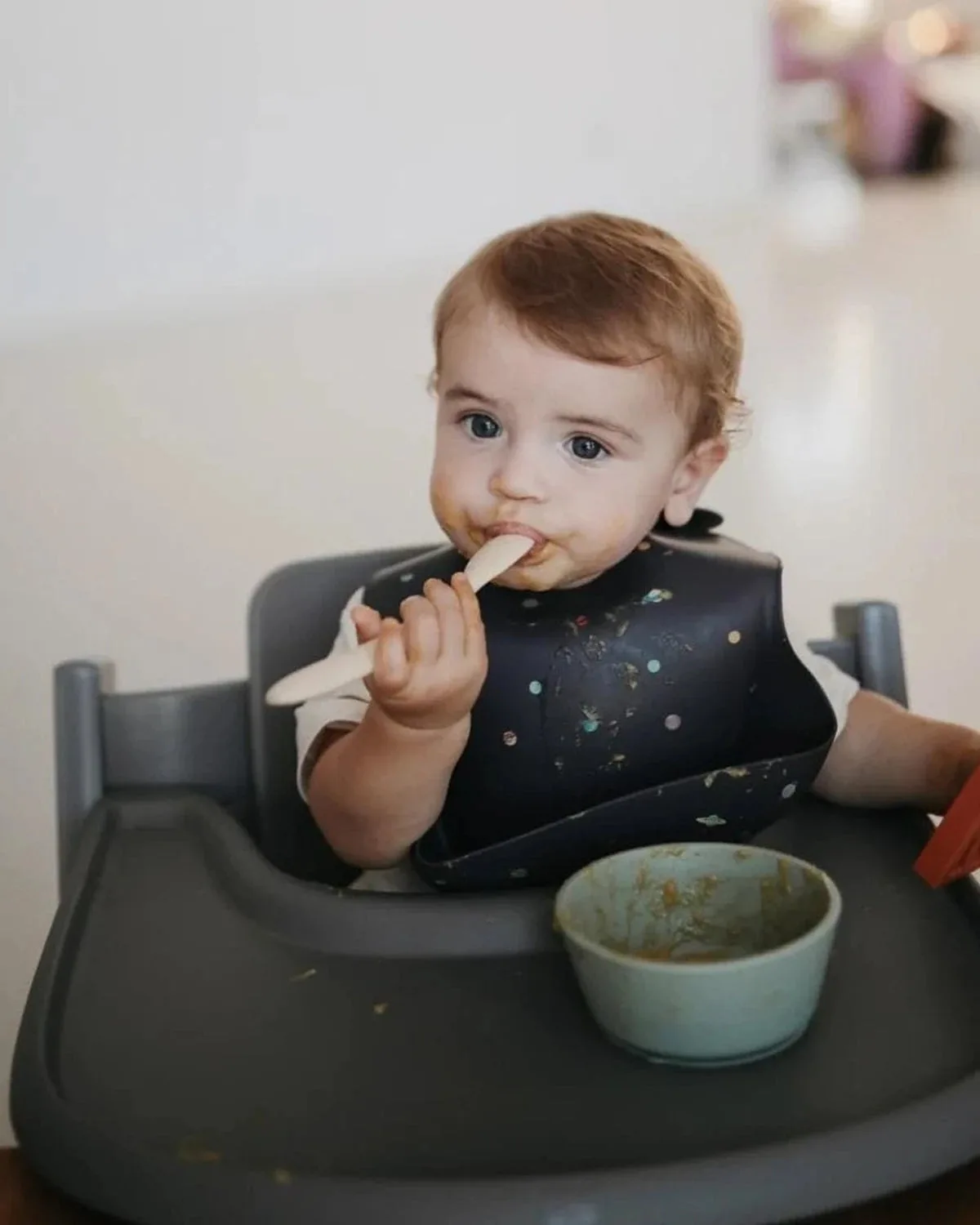
Bavoir en silicone à motif planètes
-
Bavoir naissance en coton blanc "Le prince de son papa": White cotton bib personalized with "Le prince de son papa". Soft and absorbent, suitable for newborns. Cotton requires more careful stain treatment and washing, but offers a classic look and gentle feel for baby's skin.
General Bib Maintenance Tips
No matter the material, a few habits keep bibs in good shape longer. Check bibs regularly for cracks in silicone or frayed edges in cotton – replace any bib that shows signs of wear to avoid choking hazards or leaks.
Store bibs in a clean, dry place. Silicone bibs can be hung on a hook near the high chair for quick access. Cotton bibs should be folded or hung in a drawer to keep them dust-free.
Rotate between two or three bibs so each one gets a full drying period between uses. This reduces the chance of mildew or lingering odors, especially for cotton bibs that absorb moisture.