Quick Answer
To clean chopping boards effectively, wash them with hot, soapy water after each use, then sanitize with a mild bleach solution or vinegar. For wood boards, avoid soaking and apply mineral oil regularly to prevent cracking. For plastic boards, they are dishwasher-safe but can be hand-washed to extend their life.
Chopping boards are a kitchen essential, but they can harbor bacteria if not cleaned properly. Whether you use wood, plastic, or bamboo, knowing how to clean and care for your boards is crucial for food safety and longevity. In this guide, we'll walk you through the best practices for cleaning and maintaining different types of chopping boards.
From daily cleaning to deep sanitizing and conditioning, these steps will help you keep your boards in top condition. We'll also highlight some of our favorite chopping board sets that make organization and care easier.
Why Proper Chopping Board Care Matters
Chopping boards come into contact with raw meat, vegetables, and other foods, making them a hotspot for cross-contamination. Bacteria like Salmonella and E. coli can survive on surfaces if not properly cleaned. Regular and thorough cleaning is essential to prevent foodborne illnesses.
Moreover, proper care extends the life of your boards. Wood boards can crack and warp if not conditioned, while plastic boards can develop deep knife grooves that harbor bacteria. By following the right cleaning and maintenance routines, you can ensure your boards remain safe and durable for years.
Cleaning Wood Chopping Boards
Wood chopping boards are beloved for their durability and knife-friendly surface. However, they require special care to prevent damage. Never soak wood boards in water, as this can cause warping and cracking. Instead, wash them quickly with hot, soapy water and dry them immediately with a towel.
For deep cleaning, you can use a mixture of lemon juice and salt to remove stains and odors. Apply the paste, let it sit for a few minutes, then scrub and rinse. After cleaning, it's important to condition the wood with food-safe mineral oil to keep it hydrated and prevent cracking.
- Avoid putting wood boards in the dishwasher, as the heat and moisture can cause warping.
- Use a separate board for raw meat to minimize cross-contamination.
Cleaning Plastic Chopping Boards
Plastic chopping boards are lightweight, easy to clean, and often dishwasher-safe. However, they can develop deep cuts over time, which can trap bacteria. To clean plastic boards, wash them in hot, soapy water or place them in the dishwasher on a hot cycle.
For sanitizing, you can use a solution of one tablespoon of bleach per gallon of water. Apply the solution, let it sit for a few minutes, then rinse thoroughly. Avoid using abrasive scrubbers that can scratch the surface, as scratches provide hiding spots for bacteria.
- Replace plastic boards when they become heavily scored or warped.
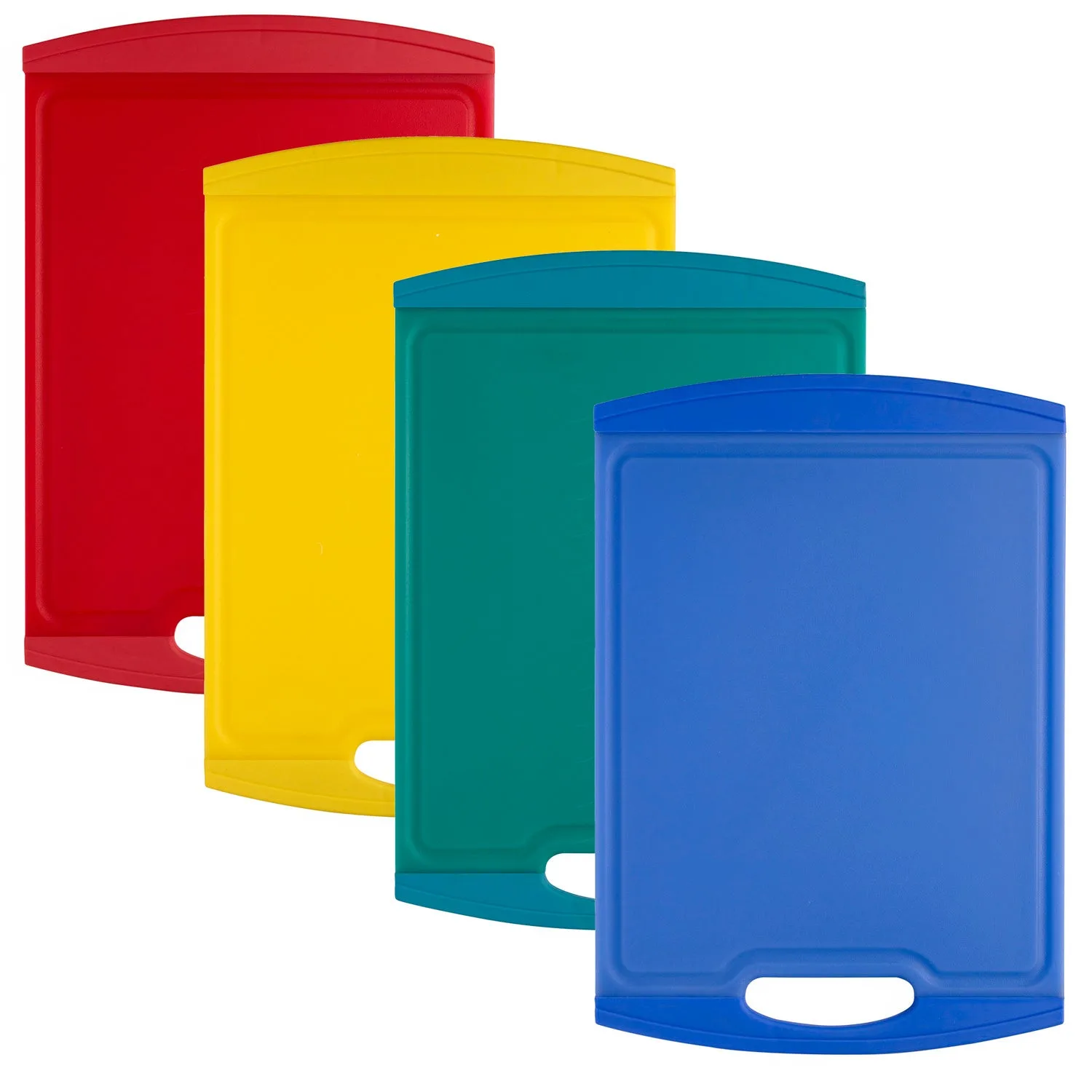
- Consider using color-coded boards to separate raw meat, vegetables, and other foods.
Caring for Other Materials
Bamboo boards are similar to wood but slightly harder and more resistant to moisture. They can be cleaned with hot, soapy water and should be oiled occasionally to maintain their appearance. Glass and stone boards are non-porous and easy to sanitize, but they can dull knives, so they are best for serving rather than chopping.
Regardless of the material, always dry boards thoroughly after washing to prevent moisture damage. Store them in a dry, well-ventilated area, preferably standing upright to allow air circulation.
Step-by-Step Cleaning and Care Routine
- Rinse and wash after each use: Immediately rinse your board under hot water to remove food particles. Use a mild dish soap and a sponge to wash the surface, paying attention to any grooves or cuts. This prevents food residue from drying and becoming harder to remove.
- Sanitize regularly: Once a week, sanitize your board using a solution of one tablespoon of unscented bleach per gallon of water, or a food-safe sanitizer. Apply, let sit for a few minutes, then rinse thoroughly. This kills bacteria that may remain after regular washing.
- Dry immediately and properly: After washing, dry your board with a clean towel or let it air dry upright. Never leave it soaking in water or lying flat where moisture can pool. Proper drying prevents warping, cracking, and bacterial growth.
- Condition wood boards monthly: Apply a thin layer of food-grade mineral oil to wood or bamboo boards once a month. Let it absorb for a few hours or overnight, then wipe off any excess. This keeps the wood hydrated and prevents it from drying out and cracking.
- Replace when worn: Inspect your boards regularly for deep grooves, cracks, or warping. If you see these signs, it's time to replace the board to maintain hygiene. A damaged board can harbor bacteria and is no longer safe to use.
Chopping Boards We Recommend
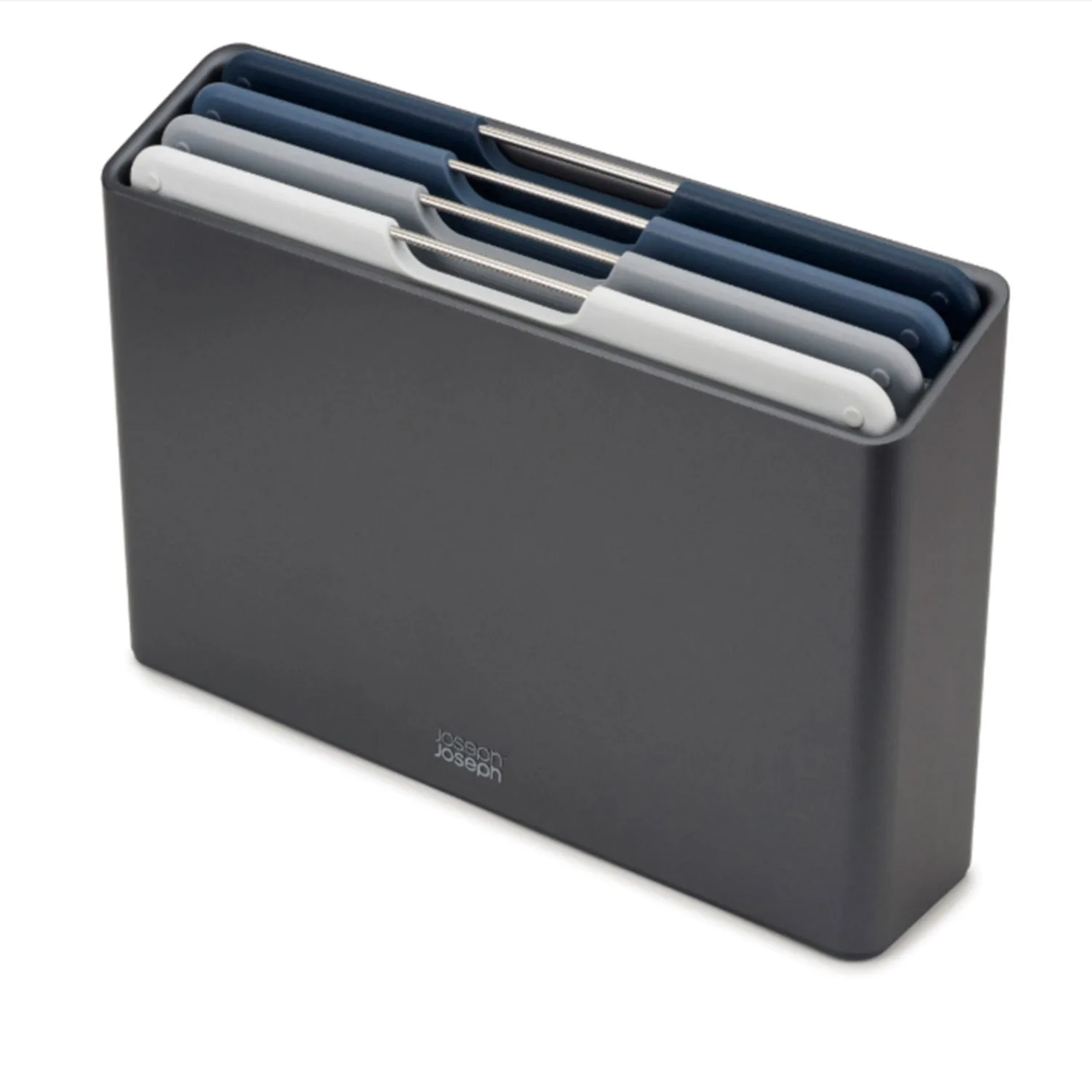
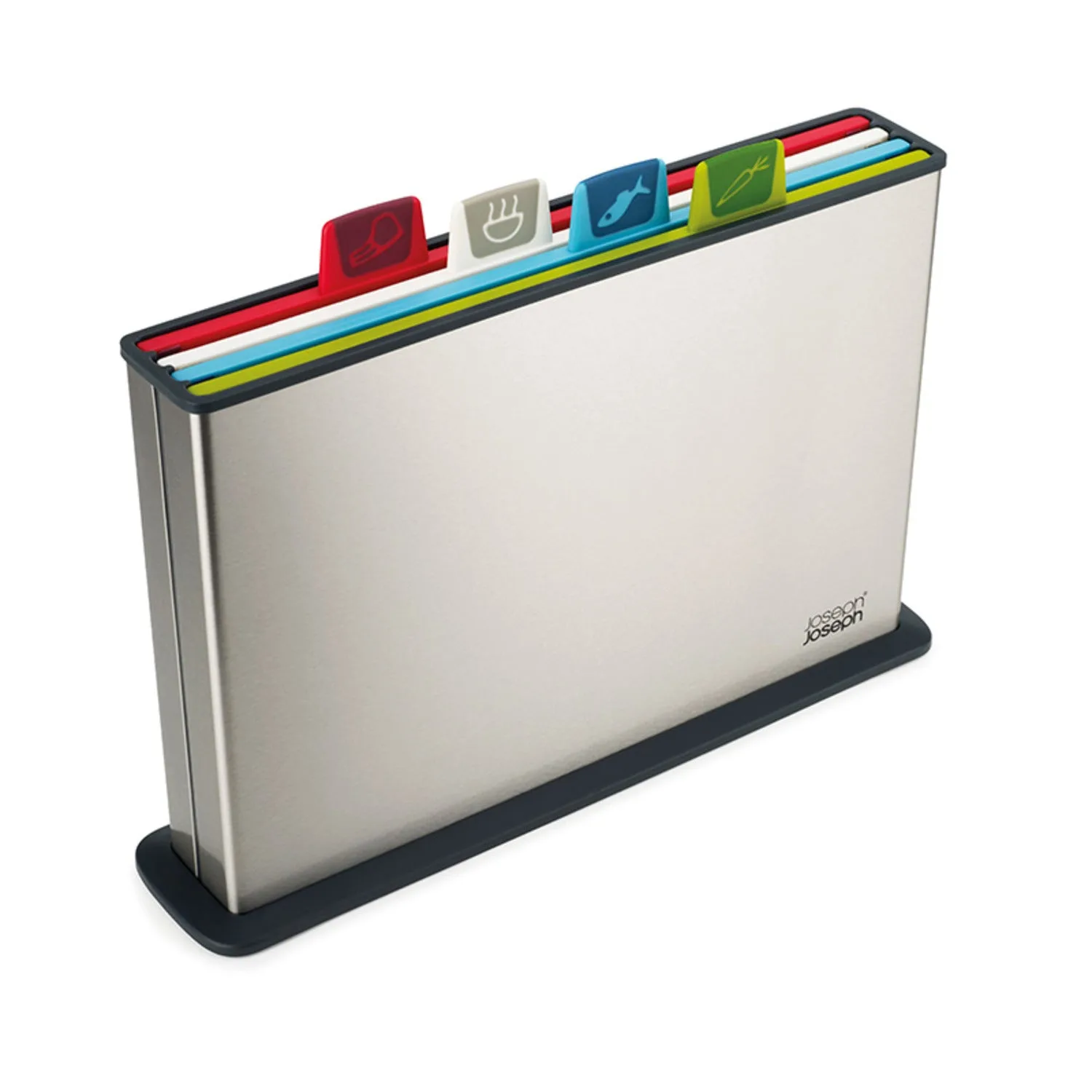
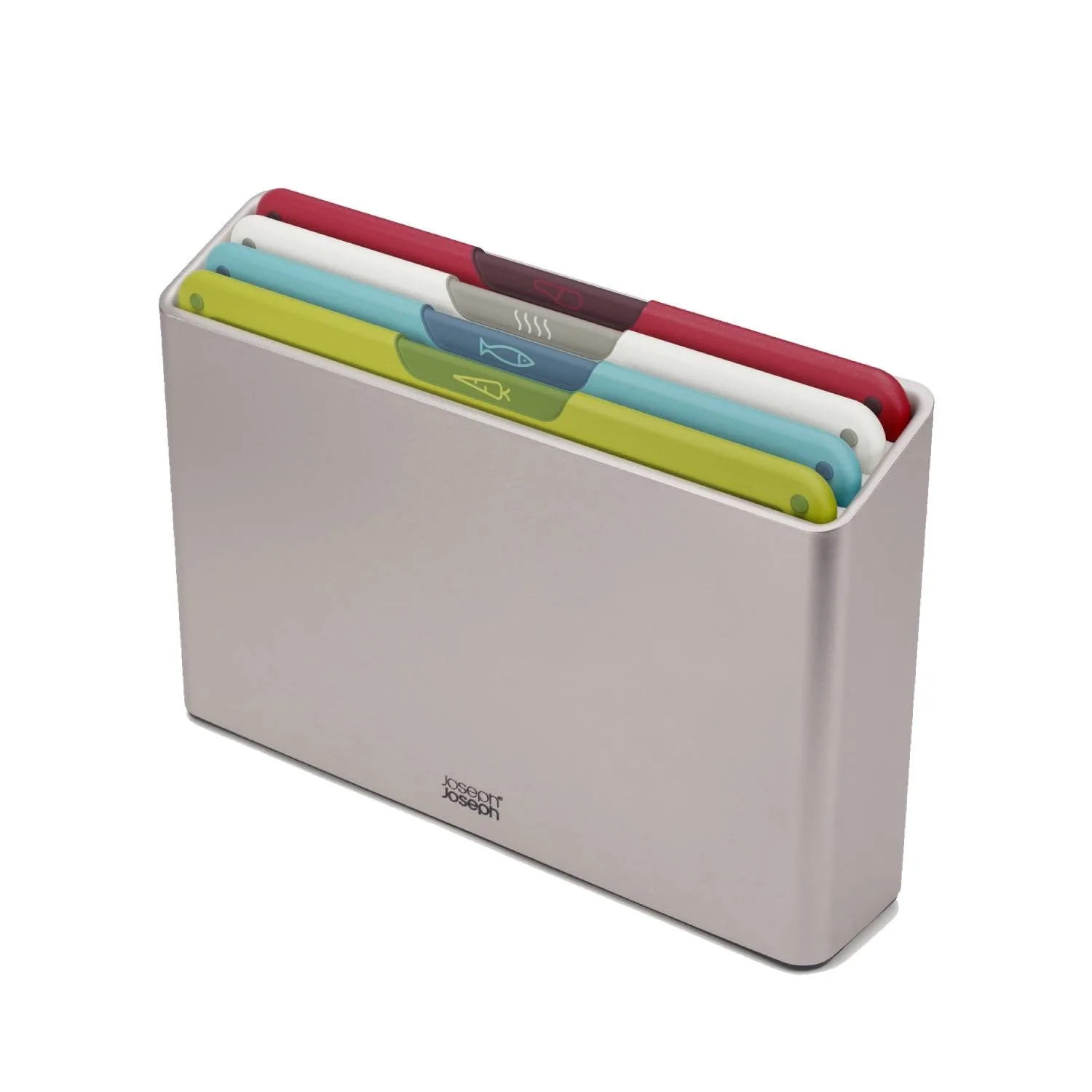
- Joseph Joseph Folio 4-Piece Chopping Board Set – Large Silver: Holds four colour-coded cutting boards in a slimline, silvery-grey case, with knife-friendly, textured cutting surfaces and non-slip feet on both sides. The colour-coded boards help prevent cross-contamination, and the slim case keeps them organized and within reach.
- Joseph Joseph Nest 3-Piece Regular Chopping Board Set: Comes with three colour-coded boards in a compact storage case that holds them separately to allow air circulation. The separate storage promotes drying, reducing the risk of bacteria growth, and the compact design saves space.
Proper cleaning and care of your chopping boards are essential for food safety and longevity. By following these steps, you can keep your boards in great condition. If you're looking for high-quality boards that are easy to maintain, consider the Joseph Joseph Folio 4-Piece Chopping Board Set – Large Silver, which offers excellent organization and durability.