Quick answer
To keep erasable markers working like new, clean the tips regularly with a damp cloth, store them horizontally with caps on, and revive dried tips with a few drops of water—but know when it's time to replace them.
Why markers dry out and how to prevent it
Erasable markers dry out when caps are left off or when ink wicks away from the tip. Storing them horizontally with caps on slows evaporation and keeps ink flowing to the tip.
Toddler art sessions can be messy, but a few simple habits—like capping markers immediately after use and cleaning tips after each session—can make your set last much longer.
Cleaning tips and surfaces safely
For marker tips, gently wipe with a damp cloth or paper towel to remove lint and dried ink. Avoid soaking the tip in water, as it can dilute the ink and shorten the marker's life.
On non-porous surfaces like a craft mat or whiteboard, use a dry erase eraser or a soft cloth. For stubborn marks, a little isopropyl alcohol on a cloth can help, but test on an inconspicuous area first.
When to replace rather than repair
If a marker tip is frayed, the cap is cracked, or the ink has completely dried despite your best efforts, it's time to replace it. Trying to revive a marker with too much water can make it leak or produce weak, inconsistent lines.
For young toddlers, safety is key: always choose non-toxic, washable markers (like the Erasable Markers from Lalo) and supervise use to avoid ingestion or drawing on unintended surfaces.
Diagnose and fix your marker problems
- Symptom: Marker skips or leaves faint lines: Likely cause: The tip is dry or clogged with lint. Corrective action: Wipe the tip with a damp cloth, then test on scratch paper. If still faint, add one drop of water to the tip and let it sit for a minute. Always cap markers immediately after use to prevent drying.
- Symptom: Ink smears or wipes off too easily: Likely cause: Too much moisture on the tip or surface. Corrective action: Let the marker air-dry with the cap on for a few hours, and clean the surface with a dry cloth before drawing. Avoid over-wetting tips; a slightly damp cloth is enough.
- Symptom: Marker leaves stains on skin or surfaces: Likely cause: Using non-washable markers or pressing too hard. Corrective action: Switch to non-toxic, washable markers designed for toddlers, and use gentle pressure. For skin, wash with soap and water; for surfaces, use a mild cleaner. If stains persist or the marker is damaged, replace it—don't risk a mess.
Product spotlight
-
Erasable Markers: A set of 8 non-toxic, dry erase markers sized for small hands The non-toxic formula and small size make them safe and easy for toddlers to grip, reducing mess and encouraging independent art sessions.
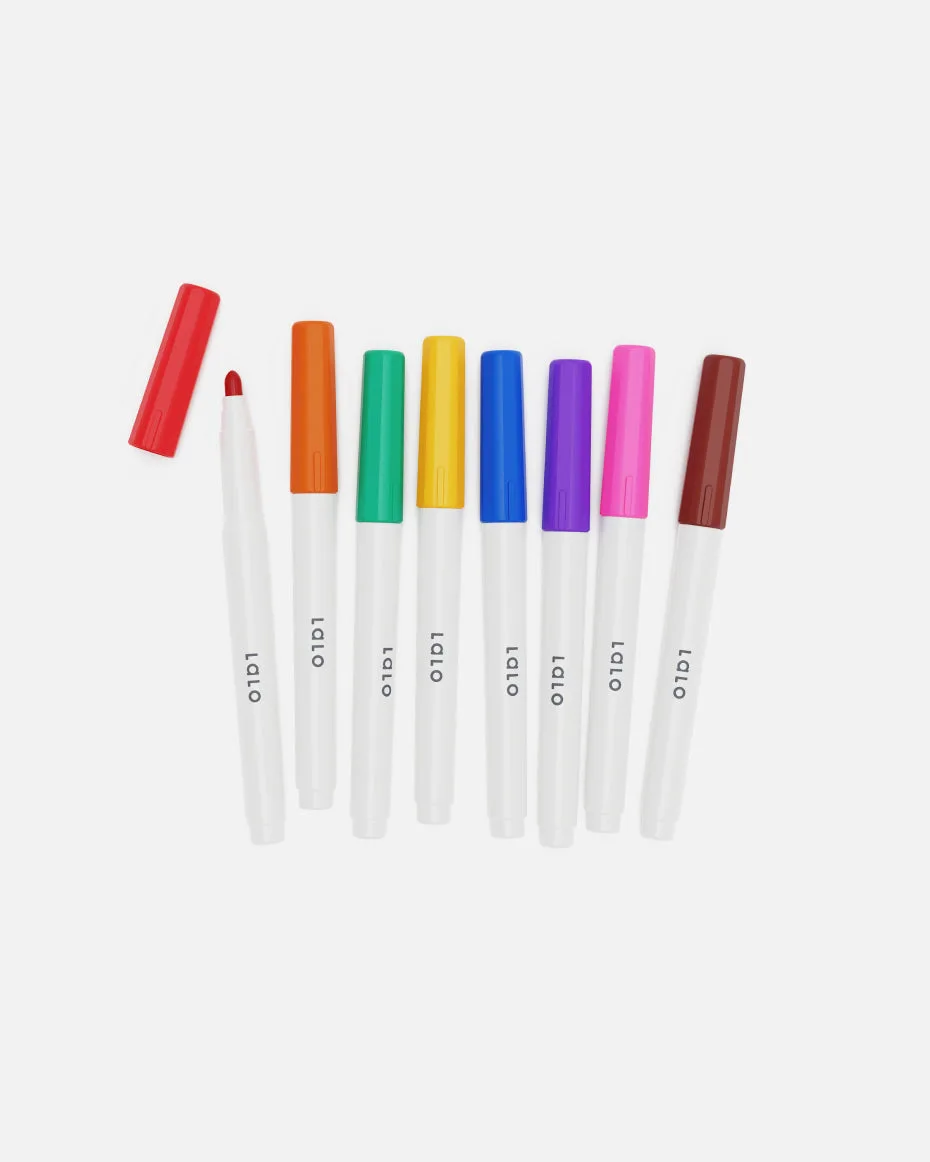
Erasable Markers