Why Silicone Utensils Need Special Care
Silicone utensils are a favorite in many kitchens because they are gentle on nonstick cookware and heat resistant. But even though silicone is durable, proper cleaning and storage help it stay in good shape for years. A little routine care keeps your tools free from stains, odors, and wear.
Everyday Cleaning for Silicone Utensils
After each use, wash silicone utensils with warm, soapy water and a soft sponge or cloth. Silicone is naturally nonstick, so food usually rinses off easily. For stubborn residue, soak the utensil in warm soapy water for a few minutes before scrubbing gently. Avoid abrasive scrubbers or steel wool, as they can scratch the surface over time.
Most silicone utensils are dishwasher safe, but placing them on the top rack away from the heating element helps prolong their life. If you prefer hand washing, it’s just as effective.
Removing Stains and Odors
Silicone can sometimes absorb odors from strong foods like garlic or tomato sauce, and it may develop light stains. A simple paste of baking soda and water can help. Apply it to the utensil, let it sit for the time recommended in the product instructions, then rinse thoroughly. For persistent smells, a short soak in white vinegar and water (equal parts) works well, followed by a rinse with clean water.
These gentle methods keep the silicone surface intact without damaging its heat-resistant properties.
What the Public Goods Silicone Utensils Offer
-
Silicone Utensils: Built with a stainless steel core and food-grade silicone shell that is heat resistant, durable, and safe for nonstick cookware. The stainless steel core adds strength while the silicone shell protects your pans from scratches. Heat resistance means you can use them for stirring hot foods without worry.
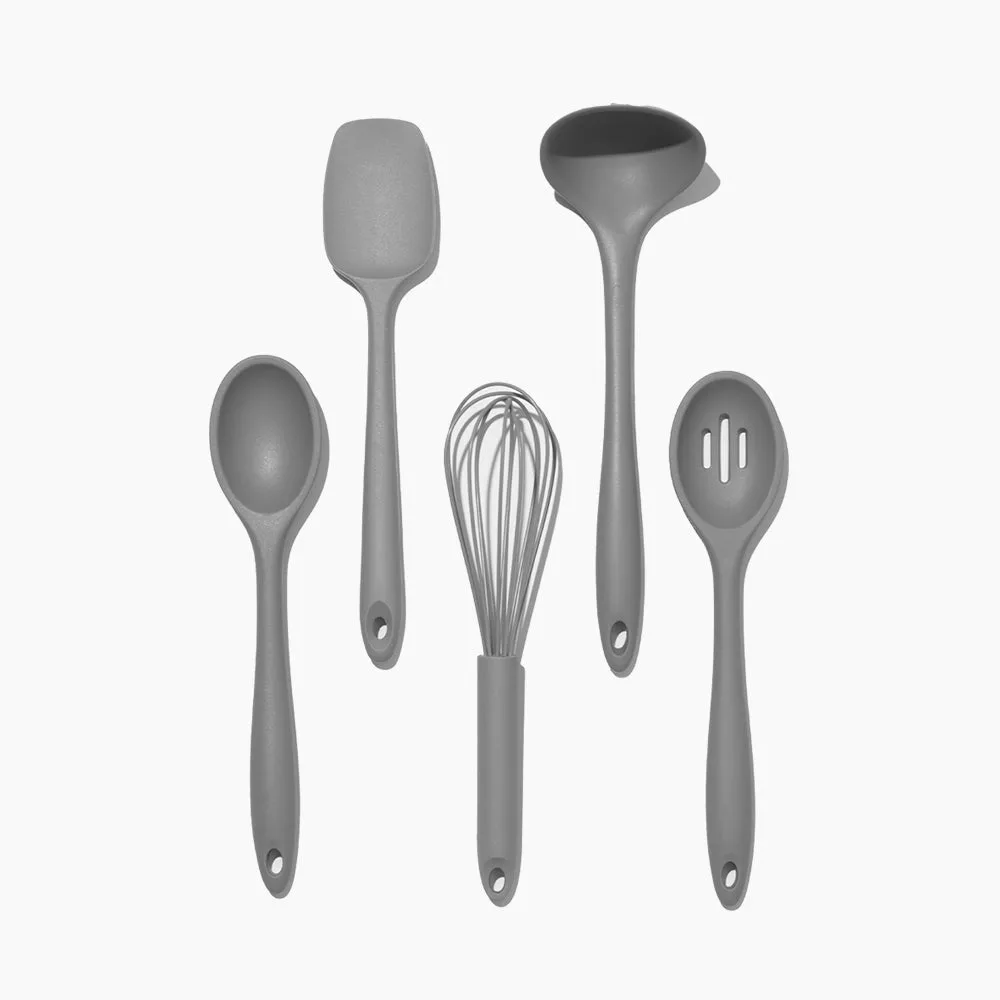
Silicone Utensils
Storage Tips to Prevent Damage
Store silicone utensils in a drawer or utensil holder where they are not pinched or bent. Avoid placing heavy items on top of them for long periods, as this can cause the silicone to deform. If you have a set with multiple pieces, keeping them separated helps prevent surface scuffs.
For the 5ct set (Spoon & Whisk), a dedicated drawer or holder keeps the whisk tines from getting bent and the spoon heads from rubbing against each other.
What to Avoid
While silicone is heat resistant, it is not meant for direct contact with open flames or extremely high heat sources like broilers. Also, avoid using sharp knives or cutting directly on silicone surfaces, as they can cut or tear the material. Stick to using these utensils for stirring, mixing, and serving.
By following these simple care steps, your silicone utensils will stay clean, odor-free, and ready for everyday cooking.