Quick Answer
Wash your stainless steel mixing bowls with warm soapy water and a soft sponge after each use, then dry immediately to prevent water spots. For stubborn stains or dullness, use a paste of baking soda and water or a dedicated stainless steel cleaner.
Why Stainless Steel Bowls Need Special Care
Stainless steel is durable and non-reactive, but it can show water spots, fingerprints, and heat discoloration if not dried promptly. Acidic foods like tomato sauce or citrus can also leave temporary rainbow stains. The good news: these marks are almost always removable with the right technique, and they don't affect the bowl's performance.
What Not to Use on Stainless Steel
Avoid abrasive scrub pads, steel wool, and harsh chlorine bleach, which can scratch the surface or damage the protective oxide layer. Stick to soft sponges, microfiber cloths, and non-abrasive cleaners. Even if a scratch doesn't affect use, it creates tiny crevices where bacteria can hide and makes future cleaning harder.
Step-by-Step Cleaning and Maintenance Routine
- Rinse Immediately After Use: Rinse the bowl with warm water right after you finish mixing or serving. This prevents food from drying and sticking, which makes scrubbing harder later. Don't let food dry on the surface; a quick rinse saves time.
- Wash with Mild Soap and a Soft Sponge: Apply a drop of mild dish soap to a soft sponge or microfiber cloth and wash the bowl in warm water. Use circular motions to lift residue. For stuck-on bits, let the bowl soak in warm soapy water for 10 minutes before scrubbing. Avoid abrasive pads — they leave micro-scratches that trap dirt and dull the finish.
- Dry Immediately with a Lint-Free Cloth: After rinsing, dry the bowl thoroughly with a clean, soft towel. Do not let it air-dry, because mineral deposits in tap water create cloudy spots and water rings. Hand-drying is the single most effective habit for keeping bowls shiny.
- Remove Stains with Baking Soda Paste: For rainbow discoloration or stubborn food stains, mix 2 tablespoons of baking soda with enough water to form a thick paste. Apply it to the stained area and gently rub with a soft sponge in the direction of the grain. Rinse and dry. Baking soda is mildly abrasive but safe for stainless steel — test on a small area first if you're unsure.
- Polish for Extra Shine (Optional): Once a month, apply a small amount of stainless steel polish or a drop of olive oil to a microfiber cloth and buff the exterior of the bowl. This restores luster and creates a protective layer that resists fingerprints. Only polish the outside; the interior should stay bare to avoid affecting food contact.
- Store Properly to Prevent Scratches: Stack bowls with a soft cloth or paper towel between them to prevent metal-on-metal contact. If your bowls nest inside each other, the silicone base on the Dash bowls helps cushion them, but an extra layer adds protection. Separating bowls prevents surface scratches that accumulate over time.
Products That Make Cleaning Easier
-
Stainless Steel Mixing Bowls: Dash Stainless Steel Mixing Bowls have silicone bases and built-in handles for a secure grip, plus measurement markings inside each bowl. The silicone base keeps the bowl steady while you scrub, and the interior markings mean you don't have to transfer ingredients to a measuring cup, reducing the number of items to clean.
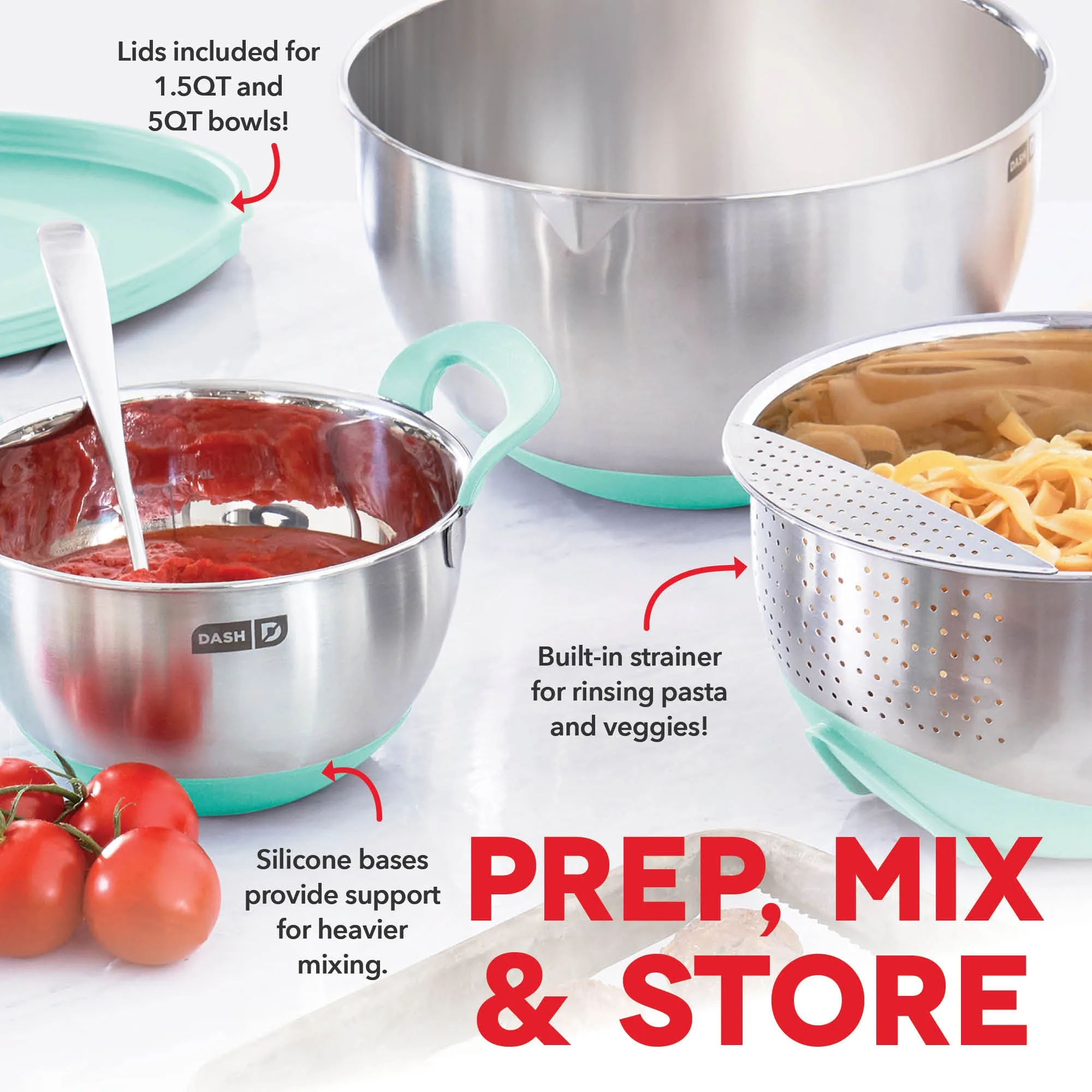
Stainless Steel Mixing Bowls