Quick Answer
To keep baby feeding jars safe, wash them thoroughly after each use, dry completely, and store them with lids off in a clean, dry place.
Why Proper Cleaning and Storage Matter
Babies have developing immune systems, so even tiny amounts of leftover food or bacteria can cause illness. Proper cleaning removes food residue and harmful germs, while correct storage prevents recontamination and maintains the quality of the jars.
Glass jars, like those from Keababies, are durable and easy to sanitize, but they still need careful handling to avoid chips or cracks that could harbor bacteria.
Glass vs. Plastic: Cleaning Considerations
Glass jars are generally easier to clean thoroughly because they don't absorb odors or stains like plastic can. However, they require gentle handling to avoid breakage.
Always inspect glass jars for chips or cracks before each use. A damaged jar can break during feeding or cleaning, posing a safety risk.
Step-by-Step Guide to Safe Cleaning and Storage
- Rinse Immediately After Use: Rinse the jar with warm water right after feeding to remove food residue before it dries. This prevents stubborn stains and makes cleaning easier. Don't let food dry on the jar; it can be harder to clean and may harbor bacteria.
- Wash Thoroughly with Soap and Warm Water: Use a bottle brush to scrub all surfaces, including the threads and under the rim. You can also place jars on the top rack of the dishwasher if they are dishwasher-safe. Pay extra attention to the lid and rim where food can get trapped.
- Sanitize Regularly: For extra safety, especially for babies under 6 months, boil the jars (if glass) for 5 minutes or use a steam sterilizer. Check the manufacturer's instructions first. Don't boil jars with plastic lids; remove them and sanitize separately.
- Dry Completely: Air-dry jars upside down on a clean drying rack, or dry them with a clean towel. Ensure there is no moisture left, as dampness can promote mold growth. Never store jars while still wet.
- Store with Lids Off: Place jars in a clean, dry cabinet with lids removed or loosely placed on top. This allows air circulation and prevents moisture buildup inside the jar. Storing with lids off prevents odors and keeps jars fresh for next use.
- Inspect Before Each Use: Before filling, check for any cracks, chips, or signs of wear. If damaged, discard the jar to avoid injury or contamination. A quick inspection can prevent accidents and ensure safety.
Product Facts
-
Keababies Glass Food Storage Jars Individual & 12-Pack: These food prep jars are dishwasher-safe, freezer-safe, and microwavable, with airtight, leak-proof lids. You can clean them in the dishwasher and store leftovers in the freezer or reheat directly, making meal prep convenient and safe.
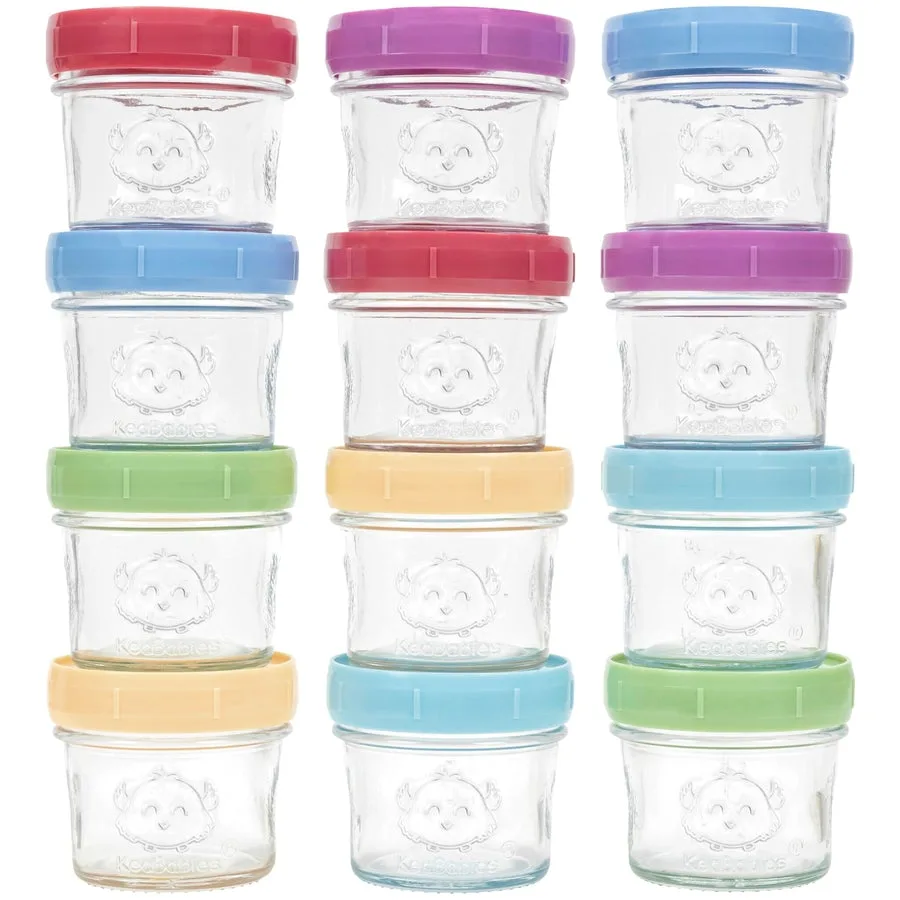
Keababies Glass Food Storage Jars Individual & 12-Pack