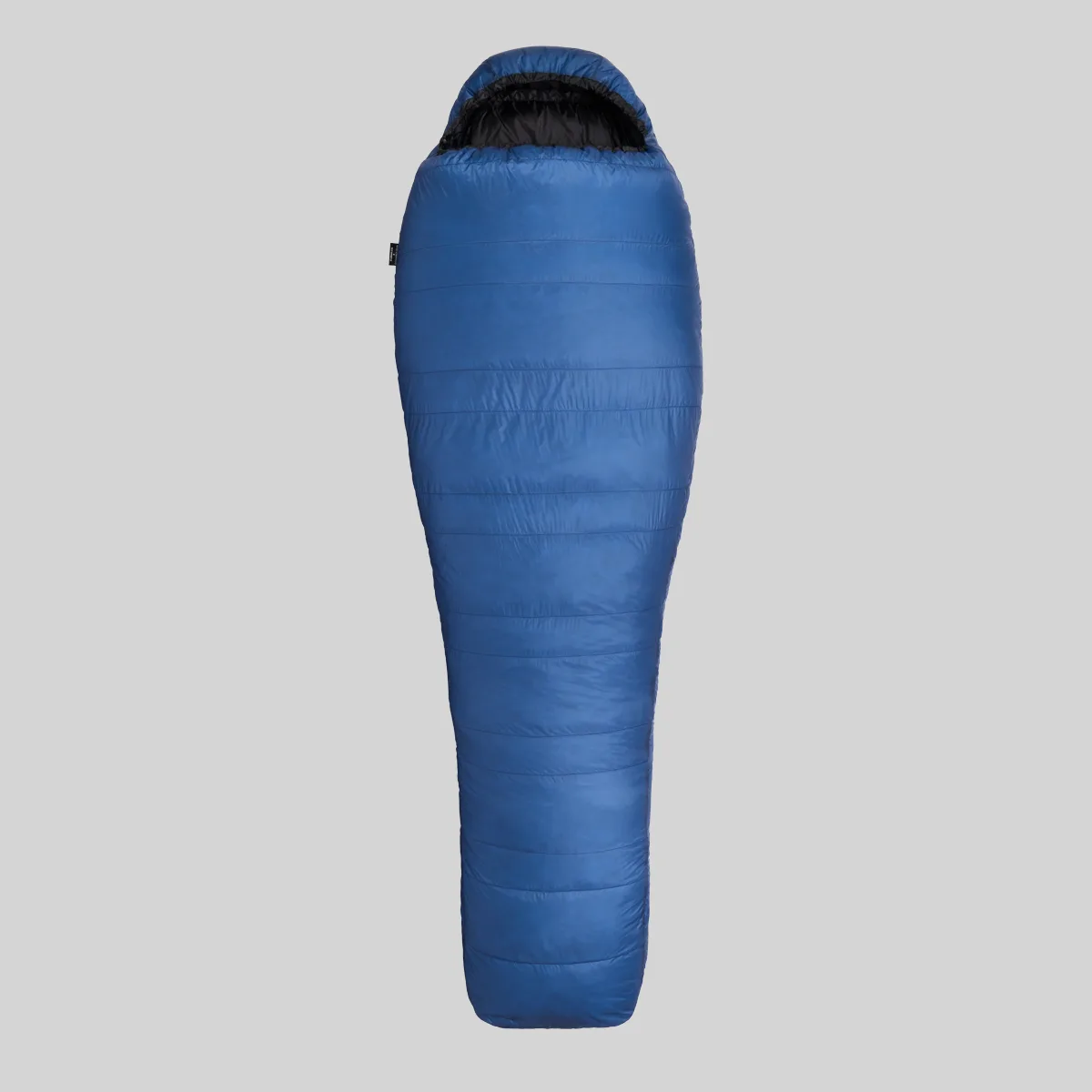
Quick answer
Wash your sleeping bag only when it is genuinely dirty, using a front-loading washer on a gentle cycle with a down-specific cleaner, then dry it on low heat with dryer balls until it is completely dry. Store it loose in a large cotton or mesh sack, never compressed in its stuff sack, and keep it somewhere dry and out of direct sun.
Most sleeping bags do not wear out from use. They wear out from being washed too often, dried too little, or jammed into a stuff sack for months at a time. Get those three things right and a quality bag can stay warm and lofty for many seasons.
This guide walks through the full care cycle in order: prep, wash, dry, and store. It applies to down and synthetic fills, with a few differences called out where they matter. If you own a quilt-and-sheet system rather than a traditional bag, the same logic applies to each piece.
Before you wash: decide if it actually needs it
Body oils and sweat are what actually kill loft, not dirt alone. If your bag smells fine and still puffs up quickly when you shake it, spot-clean the collar and foot area instead of running a full wash. A damp cloth with a little mild soap handles most of it.
Wash when the bag looks flat, feels clammy, or smells noticeably. Over-washing strips natural oils from down and breaks down synthetic fibers faster than normal use does. For most weekend campers, one full wash per season or every 20 to 30 nights is plenty.
- Common mistake: washing after every trip out of habit. Loft loss, not dirt, is the real signal.
- Checkpoint: squeeze a handful of the bag. If it springs back fast, hold off.
Prep the bag and the machine
Close every zipper and fasten all hook-and-loop closures so they do not snag the shell or liner during the cycle. Check pockets and seams for debris, and pre-treat any stained spots with a small amount of down wash or mild soap worked in with your fingers.
Use a front-loading machine, or a top-loader without a center agitator. Agitators tear baffles and stress seams. Choose a gentle or delicate cycle with cool water, and add a second rinse if your machine allows it, since leftover soap residue reduces loft.
- Common mistake: using regular laundry detergent. It leaves residue that clumps down and dulls synthetic fill.
- Checkpoint: if your only option is an agitator machine, hand-wash in a bathtub instead.
Wash with the right cleaner
Use a cleaner made for down or technical insulation, not household detergent, fabric softener, or bleach. These products coat the fibers and the residue is very hard to rinse out. Follow the dose on the bottle rather than guessing.
Run the gentlest cycle your machine offers. Do not add other laundry. If you are washing a quilt-and-sheet system, wash the quilt on its own and the sheet separately so the lighter piece is not crushed by the heavier one.
- Common mistake: cramming the bag in with towels to 'cushion' it. Extra bulk stresses the drum and the bag.
- Checkpoint: after the cycle, the water should run clear. If it is still cloudy, run another rinse.
Dry it completely, then dry it some more
This is the step people rush and regret. Down clumps when damp, and a bag that feels dry on the outside can still hold moisture deep in the baffles. Tumble dry on low heat with two or three clean dryer balls or tennis balls to break up clumps and restore loft.
Expect it to take several cycles. Pull the bag out every 20 to 30 minutes, shake it, feel for cold or lumpy spots, and put it back. Synthetic fills dry faster but still need the same low-heat, break-up-the-clumps approach.
- Common mistake: stopping when the shell feels dry. Damp down is the number one cause of mildew and permanent loft loss.
- Checkpoint: no clumps, no cold spots, no damp smell. If in doubt, run one more cycle.
Store it loose, not compressed
Once fully dry, move the bag into a large cotton or mesh storage sack and hang it or lay it flat in a dry closet. Compression is for carrying, not for keeping. A bag left compressed for months loses loft and takes much longer to recover, if it recovers at all.
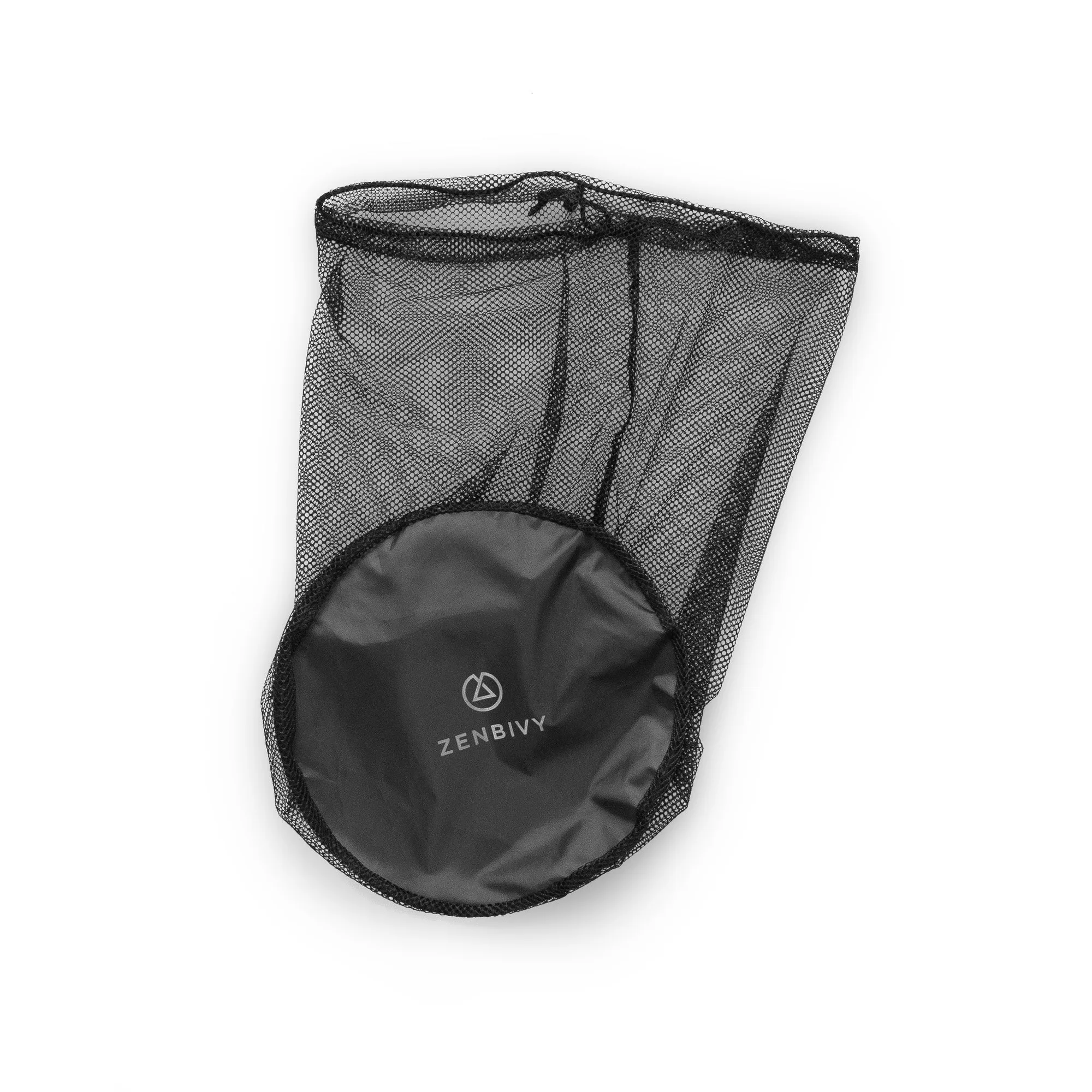
mesh storage sack
Keep storage space dry and out of direct sunlight, which degrades shell fabrics over time. If you live somewhere humid, add a desiccant pack nearby and check the bag every few months. For quilt-and-sheet systems, store each piece loose as well rather than nesting them.
- Common mistake: storing the bag in its stuff sack because it is tidy. Tidiness costs loft.
- Checkpoint: the bag should look puffy and relaxed in storage, not flat.
Your sleeping bag care routine, step by step
- 1. Spot-clean first: Wipe the collar and foot area with a damp cloth and mild soap after trips. This removes the oils that cause most loft loss without a full wash. If the bag still smells fresh and springs back, stop here.
- 2. Zip up and pre-treat: Close all zippers and closures, empty pockets, and work a small amount of down wash into any stains before the machine cycle. Open zippers snag shells and tear baffles in the drum.
- 3. Wash on gentle with down cleaner: Use a front-loader or an agitator-free top-loader, cool water, a delicate cycle, and a cleaner made for down or technical insulation. Skip detergent, softener, and bleach. Run an extra rinse if the water does not come out clear.
- 4. Dry low and long with dryer balls: Tumble on low heat with two or three dryer balls, shaking the bag out every 20 to 30 minutes until there are no clumps or cold spots. Damp down is the most common cause of permanent loft loss.
- 5. Store loose and dry: Move the fully dry bag into a large cotton or mesh sack and keep it flat or hanging in a dry, shaded spot. Never leave it compressed in a stuff sack. Check it every few months in humid climates.
How the right system makes care easier
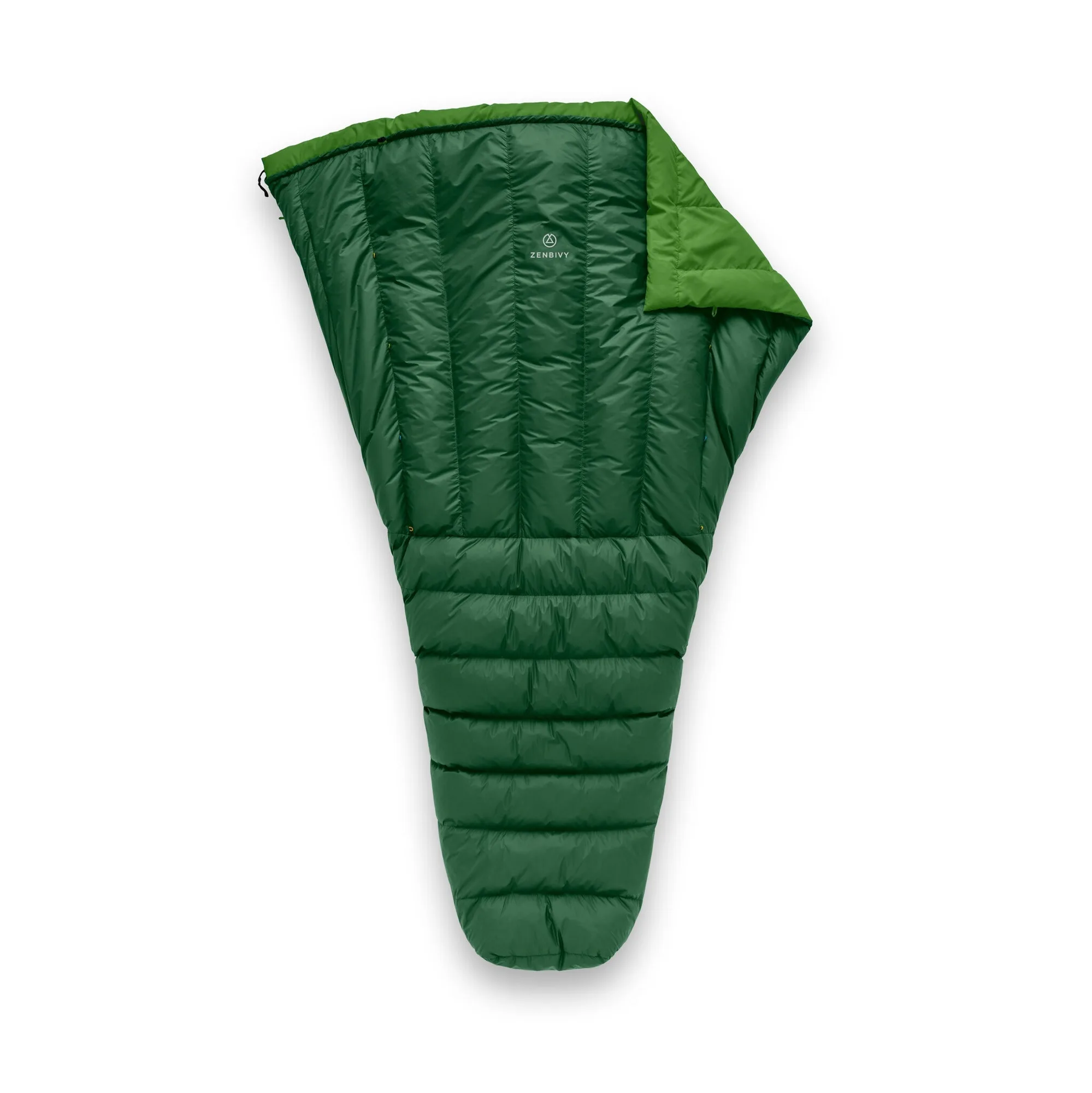
- Core Quilt: The Zenbivy Core Quilt is our simplest, softest, and most affordable backpacking quilt, featuring our legendary soft 50D Pongee lining. A quilt is easier to wash and dry than a full bag because there is less fabric and fill to manage, so it dries faster and clumps less.
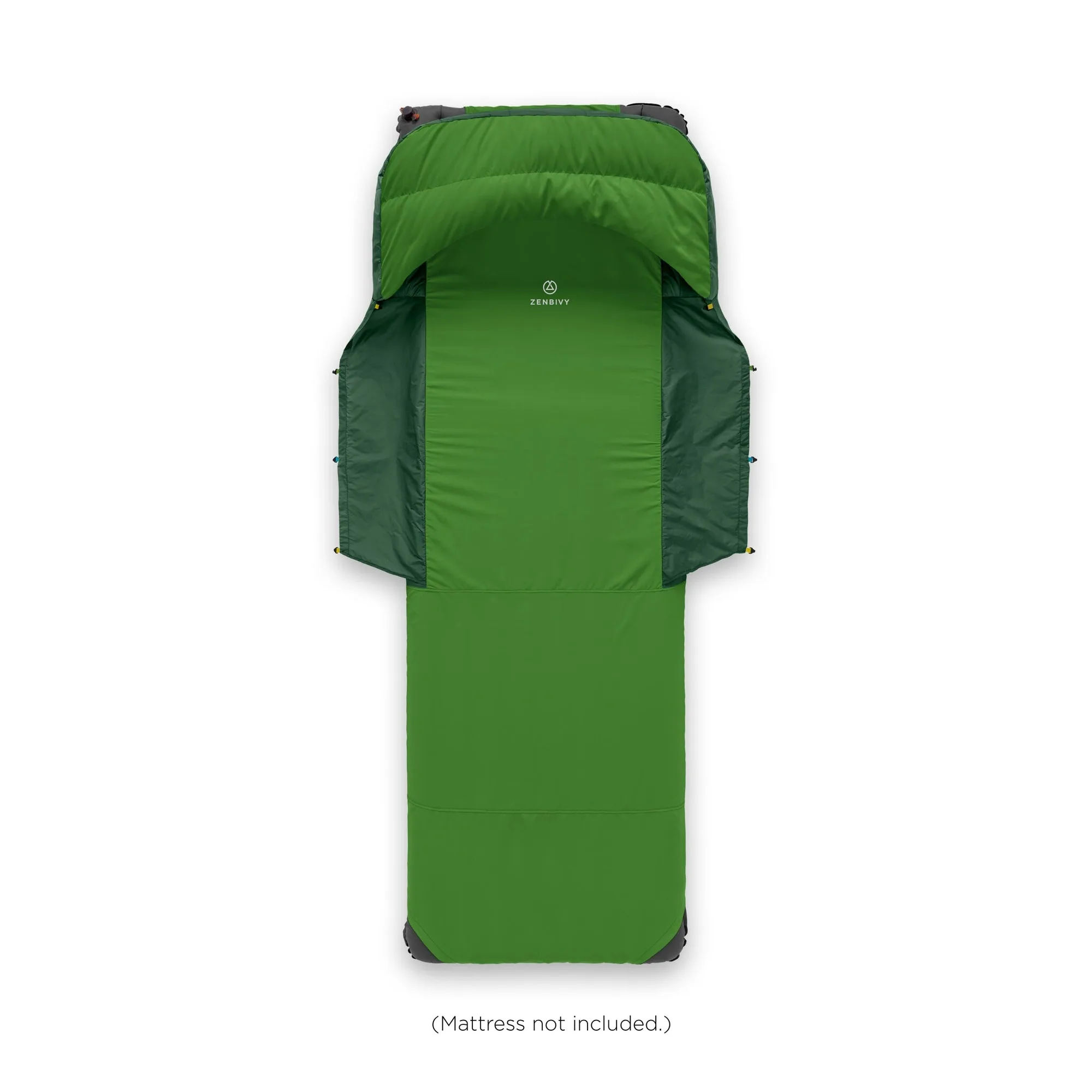
- Core Sheet: The Zenbivy Core Sheet features our legendary soft 50D Pongee lining and pairs with the Core Quilt to block drafts, eliminate constriction, and keep your pillow securely in place. Because the sheet sits against your body, it collects most of the oils and sweat. Wash the sheet more often and the quilt far less, which extends the life of the insulated piece.
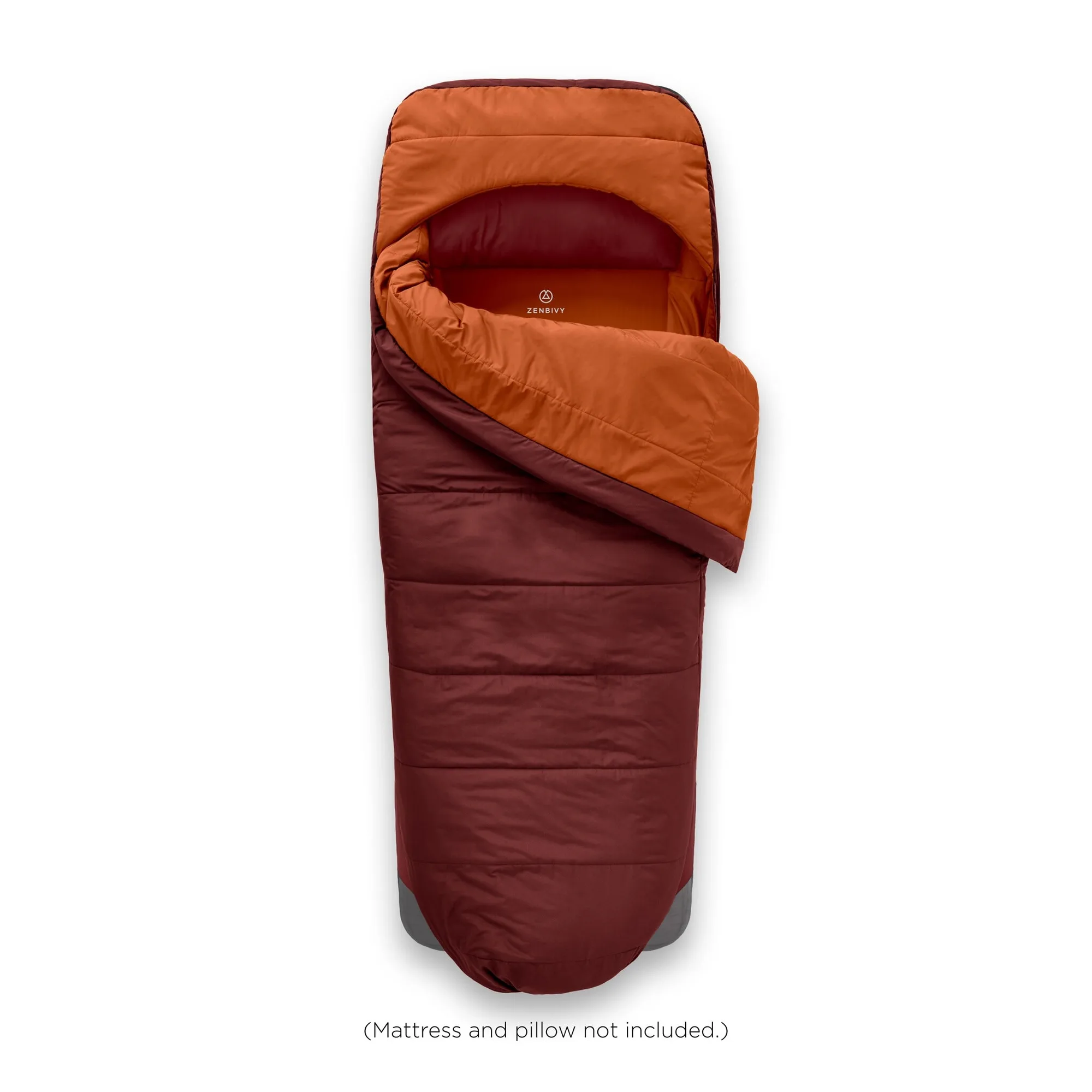
- Overland ZipBed: The Zenbivy Overland ZipBed is optimized for car camping, built with soft 50D Pongee fabrics, and its wide, fully rectangular zippered convertible quilt offers maximum room to move. Larger, roomier bags hold more fill and take longer to dry, so plan on extra dryer cycles and check the deep baffles before calling it done.
Wash less often than you think, dry longer than feels necessary, and store your bag loose rather than compressed. Those three habits do more for sleeping bag life than any product you can buy. If you use a quilt-and-sheet system, wash the sheet often and the insulated piece rarely, and both will last noticeably longer.