Quick answer
Clean your outdoor jacket with a technical wash, then restore its water repellency using a wash-in proofer or a spray-on treatment to keep water beading off.
Why cleaning before proofing matters
Dirt and oils block the pores of a DWR (Durable Water Repellent) coating. If you apply a proofer over a dirty jacket, the treatment won't bond evenly and water will soak through faster. Always wash first, even if the jacket looks clean.
Wash-in vs. spray proofer: which to use
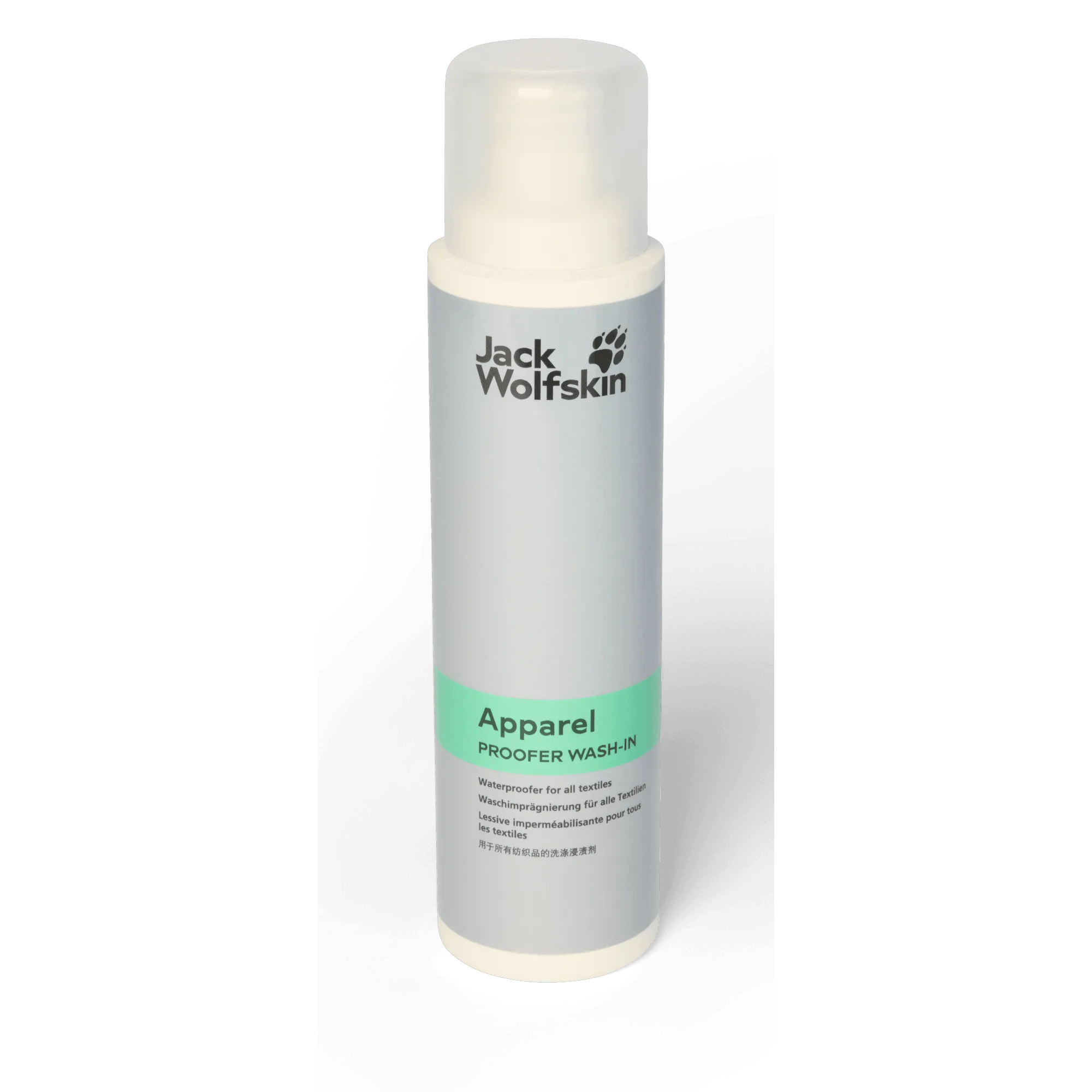
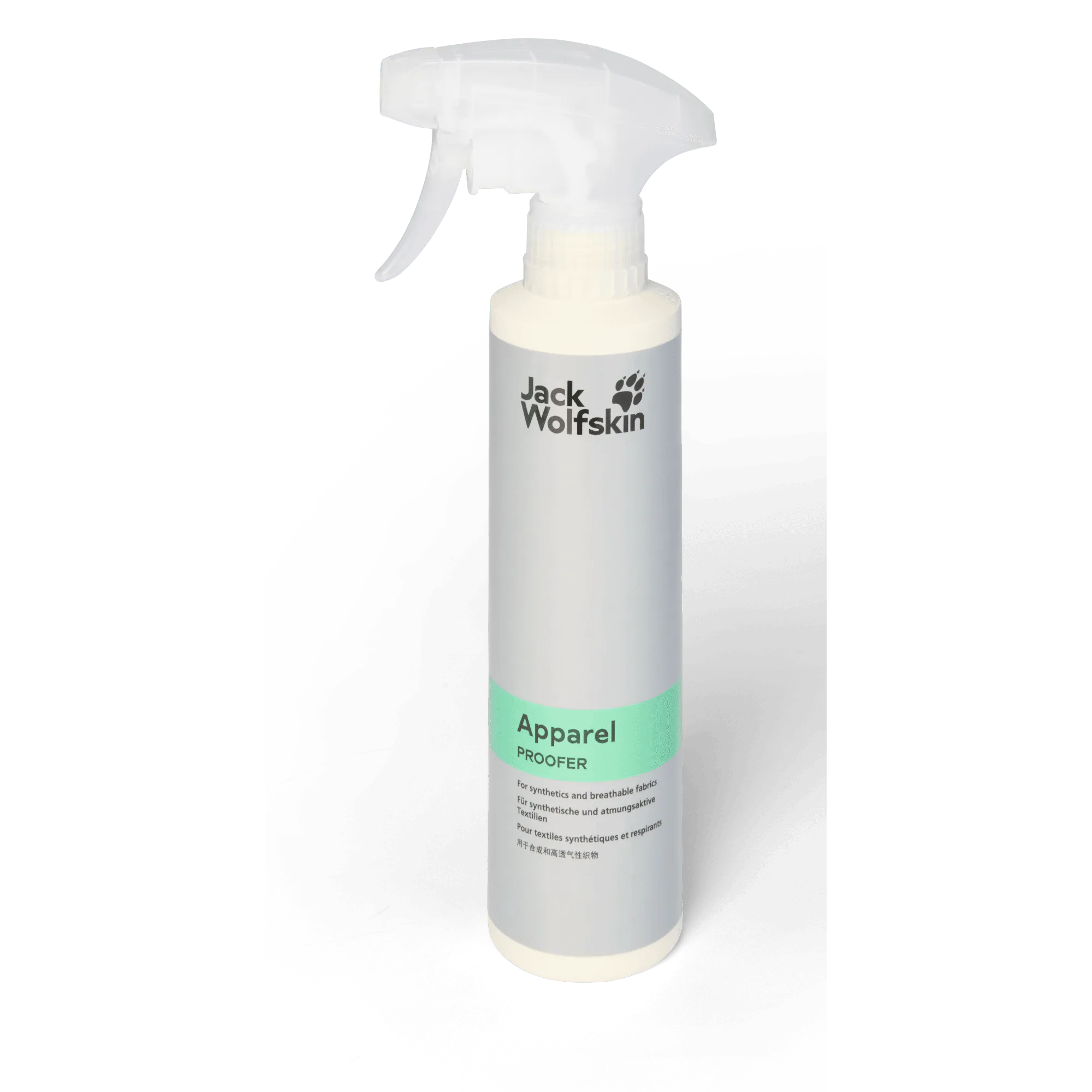
A wash-in proofer like the APPAREL PROOFER WASH IN treats the entire garment during a wash cycle, making it ideal for heavily used jackets or pants that need a full refresh. A spray proofer, such as the APPAREL PROOFER, lets you target specific areas like shoulders and hoods, which is useful for spot-treating or for gear that still has some repellency left.
How to clean and waterproof your outdoor apparel
- 1. Check the care label: Read the garment's care tag for temperature limits and washing instructions. Most outdoor jackets can be machine-washed on a gentle cycle with cold or warm water. Common mistake: Using hot water can damage the membrane or DWR. Stick to the recommended temperature.
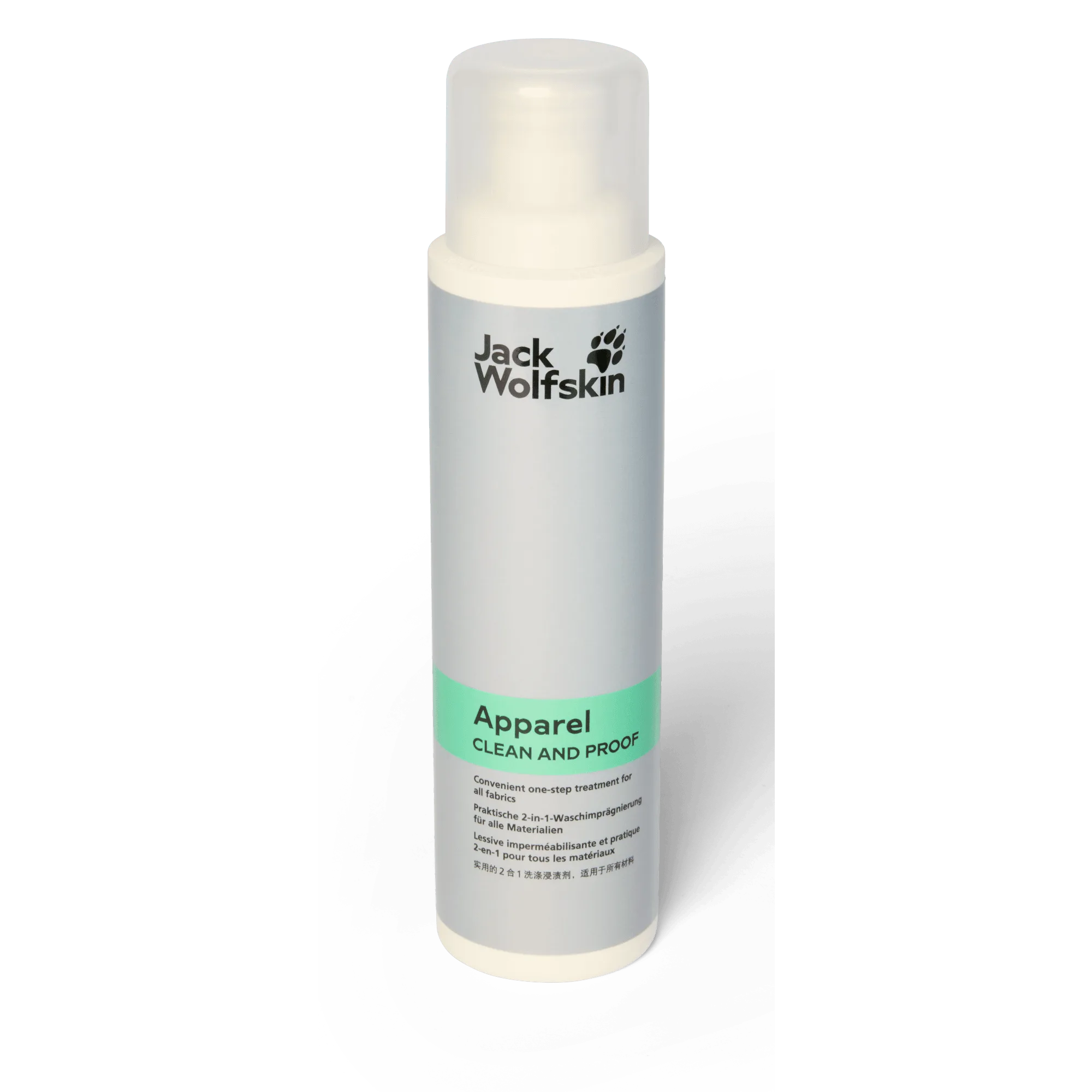
- 2. Wash with a technical cleaner: Use a specialized outdoor cleaner like APPAREL CLEAN & PROOF 300 if you want to clean and reproof in one go. Otherwise, use a gentle, liquid detergent without fabric softener or bleach. Run a rinse cycle to remove all soap residue. Checkpoint: Fabric softener clogs pores and ruins water repellency. Never use it on technical gear.
- 3. Apply the waterproofing treatment: For a full refresh, add a wash-in proofer like APPAREL PROOFER WASH IN to the wash cycle. For spot treatment, spray APPAREL PROOFER onto damp fabric from 15–20 cm away, then tumble dry on low heat or air-dry according to the product instructions. Common mistake: Applying proofer to a dry garment can cause uneven coverage. Damp fabric helps the treatment spread evenly.
- 4. Heat-activate the DWR: Most DWR treatments require heat to bond. Tumble dry the garment on low heat for 20–30 minutes or use a warm iron (with a cloth barrier) on low settings. Skip this step and the proofer may wash off quickly. Checkpoint: If your jacket still looks wet after drying, reapply the proofer and heat-activate again. Some fabrics need two coats.
- 5. Test and maintain: Sprinkle a few drops of water on the treated fabric. If they bead up and roll off, the DWR is working. If they soak in, repeat the treatment. Reapply the proofer every 3–5 washes or when you notice wetting out. Common mistake: Waiting until the jacket is fully soaked before reproofing. Treat it at the first sign of wetting out for the best results.
Product facts
-
APPAREL PROOFER WASH IN: The APPAREL PROOFER WASH IN is a PFC-free, silicone-free wash-in treatment that restores water repellency to functional clothing. It covers every seam and panel evenly, so you don't miss spots, and it's bluesign® certified for a lower environmental impact.
APPAREL PROOFER WASH IN
-
APPAREL PROOFER: The APPAREL PROOFER spray restores water repellency by applying directly from the bottle to synthetic clothing. It lets you focus on high-wear areas like shoulders and cuffs without needing to wash the whole garment, saving time and product.
APPAREL PROOFER
-
APPAREL CLEAN & PROOF 300: The APPAREL CLEAN & PROOF 300 is a double-action product that cleans and reproofs waterproof technical fabrics in one step. It saves a step if your jacket is only lightly soiled, and it leaves no residue or perfume, which is ideal for sensitive skin or mixed-use gear.