Quick answer
Wash your cotton muslin crib sheet in cold water on a gentle cycle with a small amount of mild liquid detergent, then tumble dry low or line dry. Cold water protects the loose muslin weave from shrinkage, and low heat keeps the fibers from roughening. Treat stains before washing, and skip fabric softener and dryer sheets, which coat the cotton and reduce breathability.
Why muslin needs a gentler routine than standard crib sheets
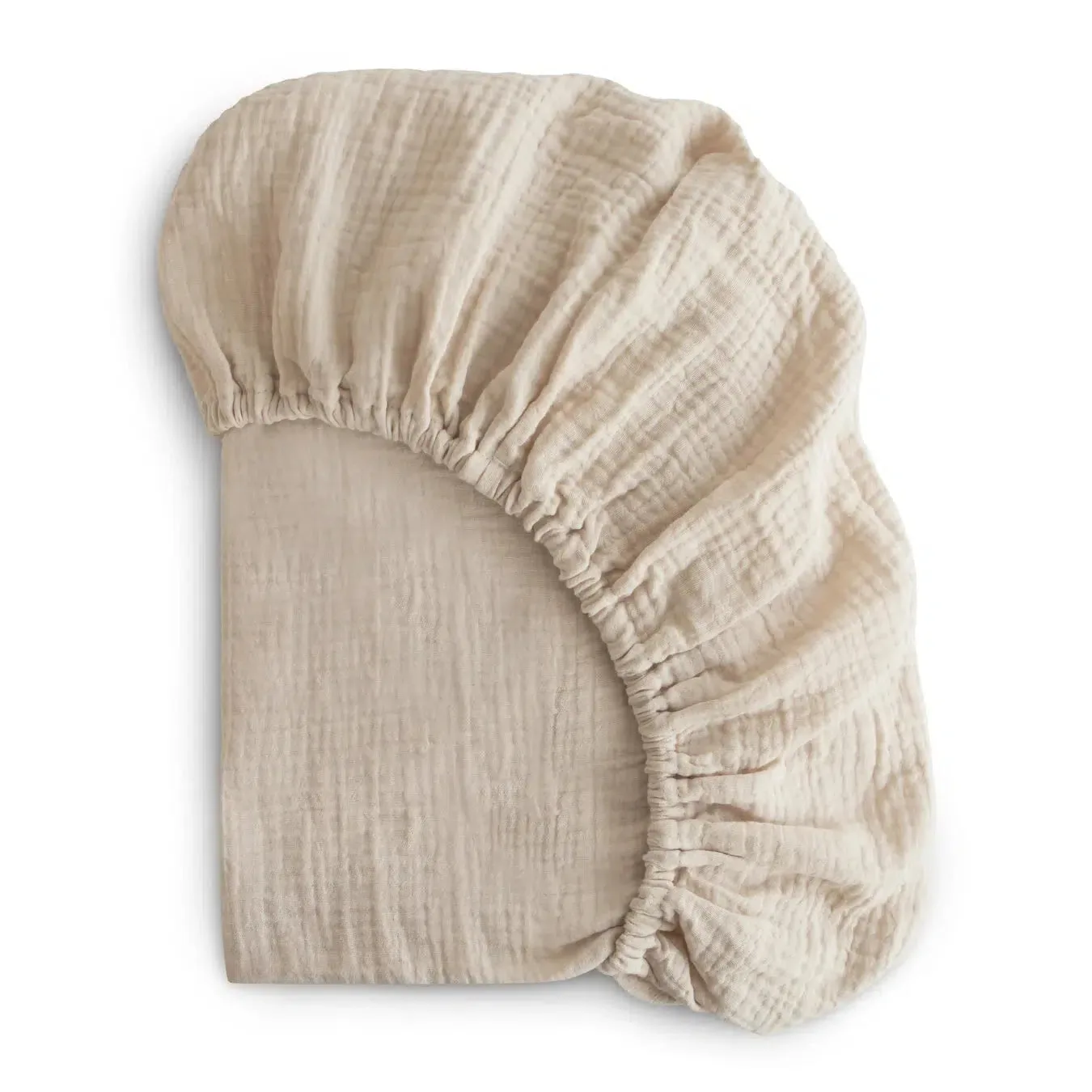
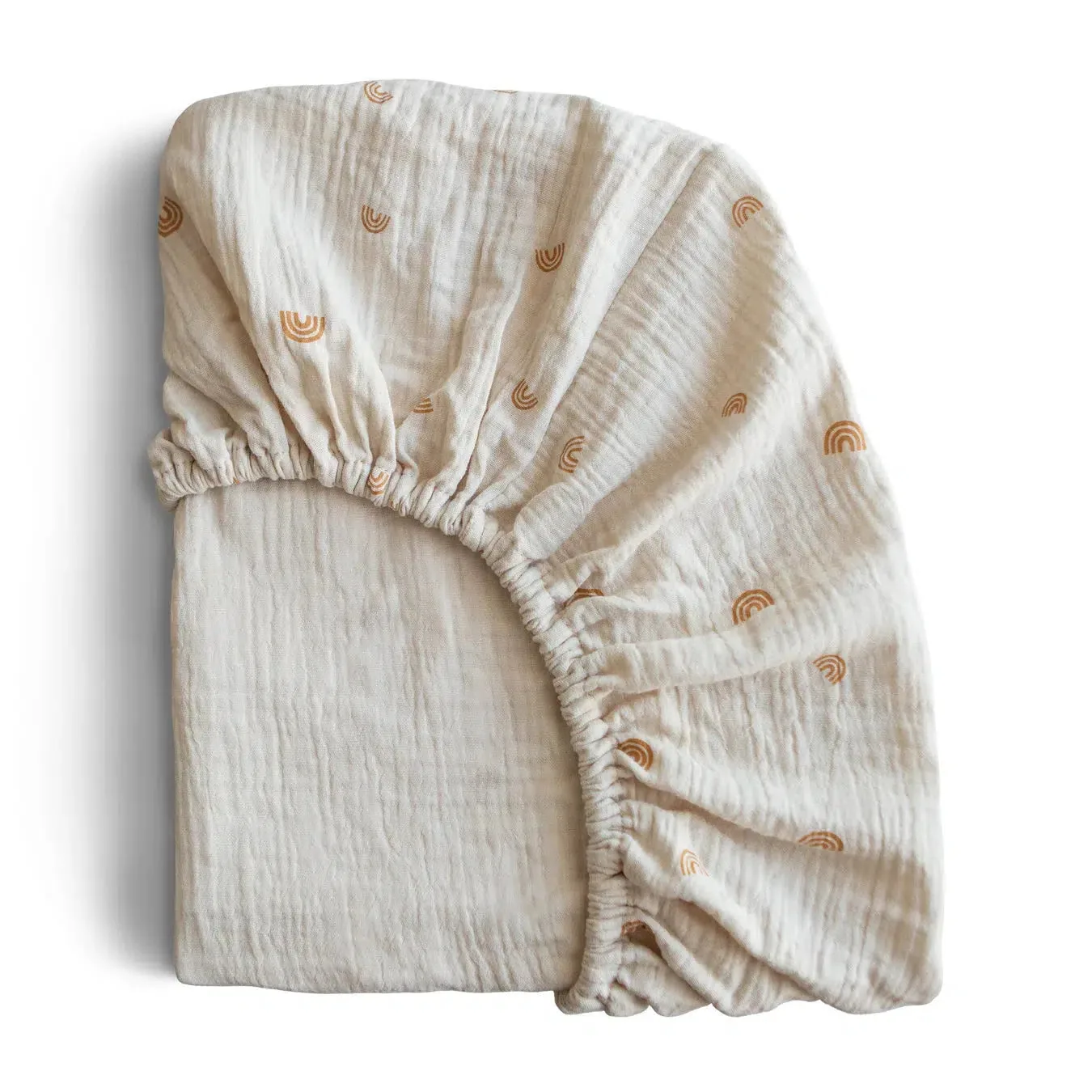
Cotton muslin is woven with a loose, open structure that allows air to move through the fabric. That same openness makes the yarns more vulnerable to agitation, high heat, and harsh chemicals than a tightly woven percale or jersey sheet. If you wash muslin the way you wash towels, the weave can tighten, the surface can pill, and the sheet may no longer fit the mattress corners securely.
The goal is to clean the sheet thoroughly without collapsing the airy structure that makes it comfortable. That means shorter cycles, lower temperatures, and detergents that rinse out completely.
Pre-treat stains before they set
Muslin is absorbent, so spit-up, diaper leaks, and diaper cream sink into the weave quickly. If you let a stain dry, the pigment binds to the cotton fibers and becomes much harder to remove without bleach. Rinse the stained area with cold water as soon as you strip the sheet from the crib, then work a small amount of mild liquid detergent or a fragrance-free stain remover into the fabric with your fingers.
Let it sit for 10 to 15 minutes before washing. Avoid rubbing aggressively with a brush, which can distort the muslin weave.
Choose the right water temperature and cycle
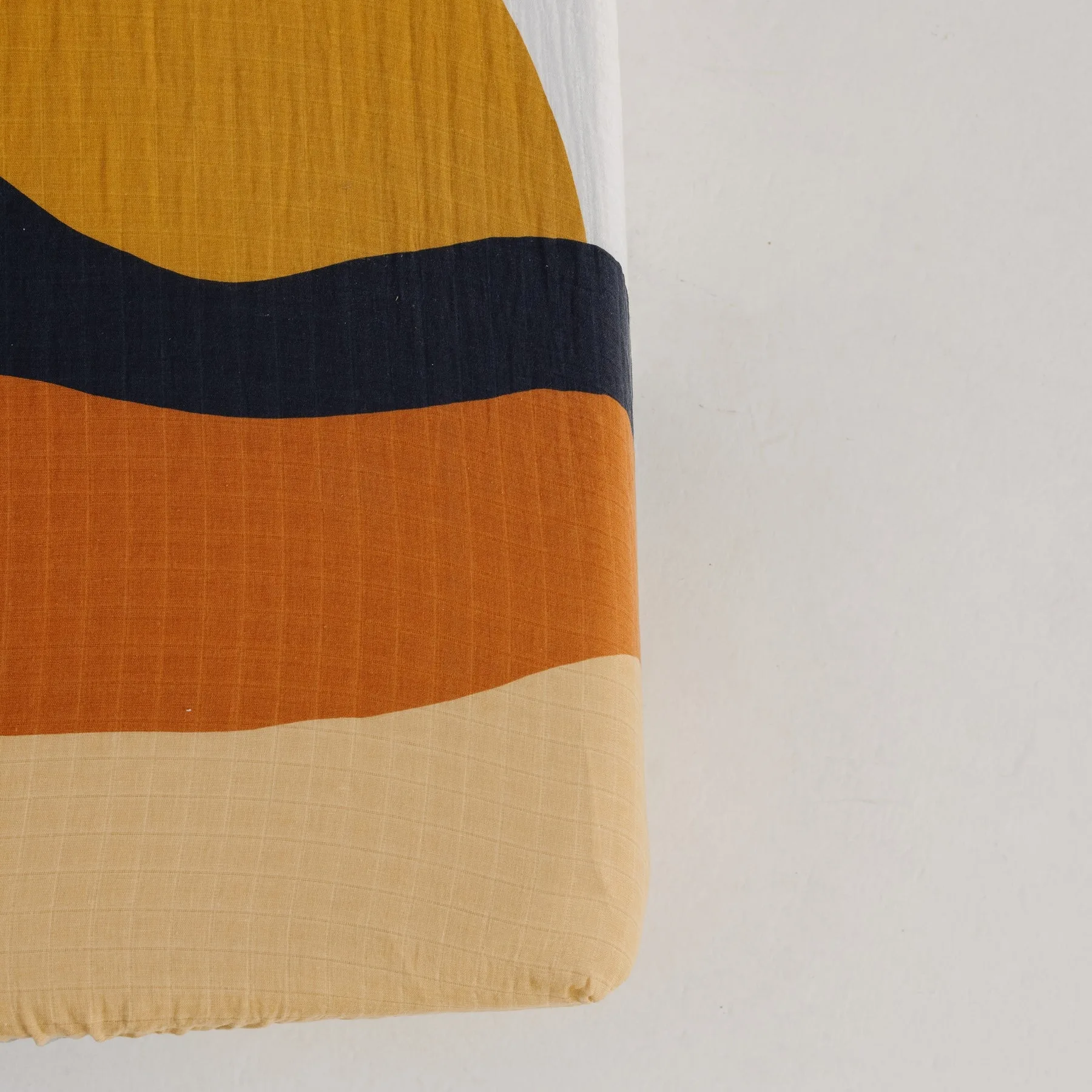
Cold water is the safest default for cotton muslin. Hot water can shrink the sheet and fade printed designs, especially on styles like the Clementine Kids muslin crib sheet with its bird print. Use a gentle or delicate cycle with a low spin speed to reduce friction.
If your baby is sick or the sheet has been exposed to bodily fluids, you can wash in warm water, but check the care label first. Some muslin sheets are pre-shrunk and tolerate warm water, while others are not.
Skip fabric softener and dryer sheets
Fabric softener and dryer sheets leave a waxy residue on cotton fibers. On muslin, that residue fills the gaps in the loose weave and reduces airflow, which defeats the purpose of using a breathable sheet. It can also make the fabric feel slick rather than soft.
If you want extra softness, add half a cup of white vinegar to the rinse cycle. The vinegar helps strip detergent residue without leaving a scent.
Dry low or air dry to protect the weave
Tumble dry on low heat and remove the sheet while it is still slightly damp. High heat is the fastest way to shrink a muslin crib sheet and make it feel rough. If you have the space, line drying or laying the sheet flat over a drying rack is even gentler.
Avoid hanging a wet muslin sheet by one corner for a long time, as the weight of the water can stretch that corner out of shape.
Store and rotate sheets to extend their life
Keep at least two crib sheets in rotation so you are not washing the same one every day. Alternate them so each sheet gets a rest between washes. Store clean sheets folded flat in a dry linen closet, not in a damp bathroom or laundry room.
If you use a waterproof mattress protector under the sheet, you will rarely need to wash the mattress itself, which cuts down on heavy cleaning.
Step-by-step muslin crib sheet care
- Rinse stains immediately with cold water: Hold the stained area under cold running water to flush out spit-up or diaper leakage before it dries. Work a drop of mild detergent into the stain with your fingertips. Checkpoint: if the stain is still visible after rinsing, apply a fragrance-free stain remover and wait 10 minutes before washing.
- Wash on a gentle cycle in cold water: Use a small amount of mild liquid detergent. Avoid bleach, which weakens cotton fibers, and skip fabric softener. Keep the load small so the sheet has room to move without excessive friction. Common mistake: overloading the machine, which causes pilling and uneven wear on the muslin.
- Tumble dry low or line dry: Dry on the lowest heat setting and remove the sheet while it is still slightly damp. If air drying, lay it flat or drape it over two lines to distribute the weight evenly. Checkpoint: the sheet should feel soft and flexible, not stiff or shrunken, when it comes out of the dryer.
- Put the sheet back on the mattress while slightly damp: A barely damp sheet stretches over the mattress corners more easily and dries smooth, reducing wrinkles. Make sure all four elastic corners are fully seated. Common mistake: forcing a dry, shrunken sheet onto the mattress, which strains the elastic and the seams.
- Rotate between at least two sheets: Alternate your muslin crib sheet with a second sheet each week. This gives the fabric time to recover between washes and extends the life of the elastic. Next step: store the clean sheet flat in a dry closet, not in the laundry room where humidity can encourage mildew.
Product facts
- Clementine Kids - Cotton Muslin Crib Sheet - Birds: Clementine Kids - Cotton Muslin Crib Sheet - Birds is made from 100% cotton muslin with a breathable loose weave and elastic corners. It fits standard crib and toddler bed mattresses. The elastic corners make it easy to remove and replace for washing, and the muslin weave needs the cold-water, low-heat routine described above to stay breathable.
- Snuz - SnuzPod5 Mattress Protector: Snuz - SnuzPod5 Mattress Protector has a brushed cotton exterior around a waterproof polyurethane membrane, designed to fit the SnuzPod5 bassinet mattress. A waterproof protector under the sheet catches leaks and spit-up, so you can wash the muslin sheet less often and keep the mattress itself clean.