Quick answer
Clean fluorite with lukewarm water, a drop of mild soap, and a soft brush, then pat dry. Avoid heat, acids, salt, and ultrasonic cleaners. Store pieces separately with padding to prevent scratches, and keep them out of prolonged sunlight.
Why fluorite needs gentler care than quartz
Fluorite ranks 4 on the Mohs hardness scale, so it scratches easily and can be chipped by harder stones like quartz or topaz. It also has perfect cleavage in four directions, meaning a sharp knock can split a specimen along a flat plane. Heat and sudden temperature changes can cause cracking, and some colors fade with long sun exposure.
That means the usual "scrub it with a brush and leave it in the window" approach is risky. Treat fluorite more like a soft mineral specimen than a tumbled pocket stone.
Everyday dusting and handling
Dust fluorite with a dry, soft microfiber cloth or a clean makeup brush. If you handle pieces often, wash your hands first; skin oils and grit are the main causes of dull surfaces. For display pieces, a quick pass with a dry cloth once a week is enough.
One common mistake: using the same cloth on quartz and fluorite. Grit from harder stones can stay in the fibers and scratch fluorite the next time you use it. Keep a separate cloth for soft minerals.
Deep cleaning chips and chunks
For fluorite chips and chunks, place them in a bowl of lukewarm water with one drop of mild dish soap. Swish gently with your fingers for 30 seconds, then rinse under lukewarm running water. Never use hot water, and never pour water directly onto a specimen with a strong stream; the pressure can dislodge fragile edges.
If you need to dislodge dirt in crevices, use a soft-bristle toothbrush with light pressure. Avoid scrubbing back and forth over the same spot. Rinse and pat dry with a soft towel, then let the pieces air-dry completely before storing.
What never to use on fluorite
Skip ultrasonic cleaners, steam cleaners, vinegar, lemon juice, bleach, ammonia, and any acidic or abrasive cleaner. These can etch the surface or worsen existing fractures. Salt is also a poor choice for cleansing fluorite; it can scratch and leave residue in cracks.
If you use a commercial crystal cleaner, check that it is labeled safe for soft stones (Mohs 4 or below). When in doubt, plain lukewarm water and a soft cloth are enough for routine care.
Storage that prevents scratches and chips
Store fluorite separately from harder stones. Use a padded box, a soft pouch, or a compartmented tray with foam or fabric lining. For larger specimens, place them on a shelf with a felt pad underneath and leave space between pieces so they cannot knock together.
Humidity is less of a concern than physical contact, but avoid damp basements where mold can grow on cloth. A dry, stable room with moderate temperature is ideal.
Display and sunlight
Fluorite can fade with prolonged direct sunlight, especially green and blue varieties. Display it in a spot with indirect light, or rotate pieces so they are not constantly exposed. LED display lighting is a safer choice than halogen or direct sun.
If you want to keep the color vivid, treat sunlight like a limited resource: a few hours for photography is fine, but months on a sunny windowsill is not.
Step-by-step fluorite cleaning routine
- Preparation: Clear a soft workspace with a towel. Gather lukewarm water, mild dish soap, a soft brush, and a microfiber cloth. Keep hard stones away from the area. Checkpoint: no quartz, topaz, or other hard items on the same surface.
- Pre-rinse: Rinse fluorite briefly under lukewarm water to remove loose dust. Do not use hot water or high pressure. Mistake to avoid: using hot water, which can crack fluorite.
- Wash: Add one drop of mild soap to a bowl of lukewarm water. Swish pieces gently with your fingers or a soft brush for 30 seconds. Checkpoint: no scrubbing force; let the soap do the work.
- Rinse and dry: Rinse with lukewarm water, then pat dry with a soft towel. Air-dry completely before storage. Mistake to avoid: leaving water spots by letting pieces drip-dry in direct sun.
- Store: Place dry fluorite in a padded pouch or compartmented box, separate from harder stones. Checkpoint: pieces cannot touch each other or harder minerals.
Products mentioned in this guide
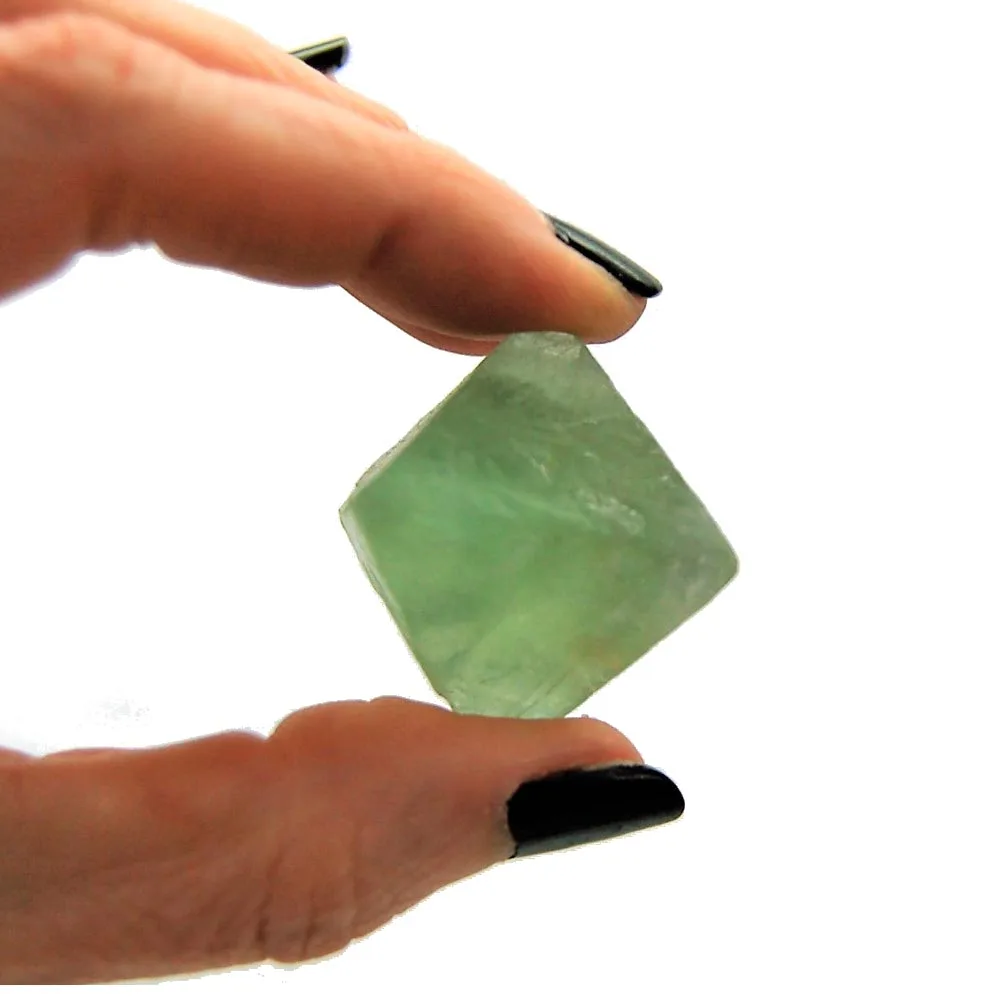
- Fluorite - Green Fluorite Octahedron Crystals (China)- Green Fluorite: Green Fluorite Octahedron Crystals from China, with a distinct octahedron shape and natural green color. The octahedron shape has flat faces and sharp edges, so store it separately and dust gently to avoid chipping the points.
- DISCONTINUE- Fluorite (Mixed Colors) Chips/Chunks (China): Fluorite chips and chunks in mixed colors from China; this listing is discontinued. If you already own these chips, the same gentle cleaning rules apply. Because they are discontinued, replacements may be limited, so handle them carefully.
- CLEARANCE - Topaz - Topaz Chips/Chunks (Pakistan): Natural Topaz chips and chunks from Pakistan, offered in raw, unpolished form as a clearance item. Topaz is harder than fluorite (Mohs 8), so store it away from fluorite to prevent scratches. This is a good example of why hardness matters in storage.