Quick answer
Wash your Jellystone chew pendant with warm water and a little mild dish soap, rub the beads or pendant with your fingers, rinse thoroughly, and air dry. Do this daily for a pendant in heavy use, and check the necklace cord and safety clasp every time you clean it. Skip boiling, bleach, and the dishwasher unless the care instructions for your specific pendant say otherwise.
What you need before you start
You do not need a cabinet full of specialty products. A mild, fragrance-free dish soap, warm running water, a soft cloth, and a clean towel cover almost every situation. A soft-bristled baby bottle brush or a clean toothbrush helps reach the crevices around the cord and the clasp, where saliva and lint collect.
Avoid anything abrasive or antibacterial-heavy: scouring pads, bleach sprays, alcohol wipes, and essential-oil blends can degrade silicone over time or leave residue a child may chew. If you use a soap that leaves a strong scent, rinse longer — food-grade silicone can hold onto fragrance.
Daily wash vs. deep clean
For a pendant that goes to school, therapy, or daycare every day, a quick daily wash is the simplest habit: a few seconds under warm water with a drop of soap, a rub between your fingers, a full rinse, and air dry on a clean rack. This removes saliva, food residue, and the oils that make silicone feel tacky.
A deeper clean once a week — or any time the pendant has been dropped outside, shared, or used during illness — follows the same steps but adds a soft brush around the cord, the clasp, and any textured details. Rinse until the water runs clear and no suds remain, then let it dry completely before it goes back around a neck.
Skip the dishwasher, boiling water, microwave sterilizing bags, and bleach solutions unless the care information for your specific pendant explicitly allows them. High heat and harsh chemicals are the fastest way to shorten the life of a chew necklace.
Cord, clasp, and storage checks
The pendant is only as safe as the cord holding it. Each time you clean the necklace, run the cord through your fingers and look for fraying, thinning, or a stiff, discolored patch. Check that the safety clasp still separates with a gentle pull — that breakaway feature is the reason these necklaces are designed for kids, and it should release under light tension, not require a hard yank.
Store pendants hanging or laid flat, away from direct sun and heat. Do not leave one in a hot car, and keep it out of reach of pets, who find silicone very chewable. If you rotate between two pendants, each one gets a rest day and lasts longer.
Your step-by-step chew pendant cleaning routine
- 1. Remove the pendant and check the cord: Take the necklace off your child before cleaning. Run the cord between your fingers and look for fraying, thinning, or stiff spots, and give the safety clasp a gentle pull to confirm it still separates. Checkpoint: if the cord is frayed or the clasp no longer releases, stop using the necklace.
- 2. Wash with warm water and mild soap: Add one drop of mild, fragrance-free dish soap to warm running water. Rub the pendant and beads with your fingers, then use a soft brush around the cord, clasp, and any textured areas. Common mistake: using hot water, bleach, or an abrasive pad, which can damage silicone.
- 3. Rinse until the water runs clear: Hold the pendant under running water and rinse away all suds, including the soap that hides where the cord meets the pendant. Fragrance and soap residue can linger on silicone. Checkpoint: no slippery feel and no soap smell before you move on.
- 4. Air dry completely: Lay the pendant flat on a clean towel or hang it to air dry. Do not put it back on a child while it is still damp, and do not use a hot hairdryer or radiator to speed things up. Common mistake: storing it damp in a bag, which encourages odour and mildew on the cord.
- 5. Store it out of heat and reach: Keep the dry pendant hanging or flat, away from direct sunlight, hot cars, and pets. If your child uses more than one pendant, rotate them so each one gets a rest. Next step: set a weekly reminder to repeat the deeper clean.
Pendant details that affect cleaning
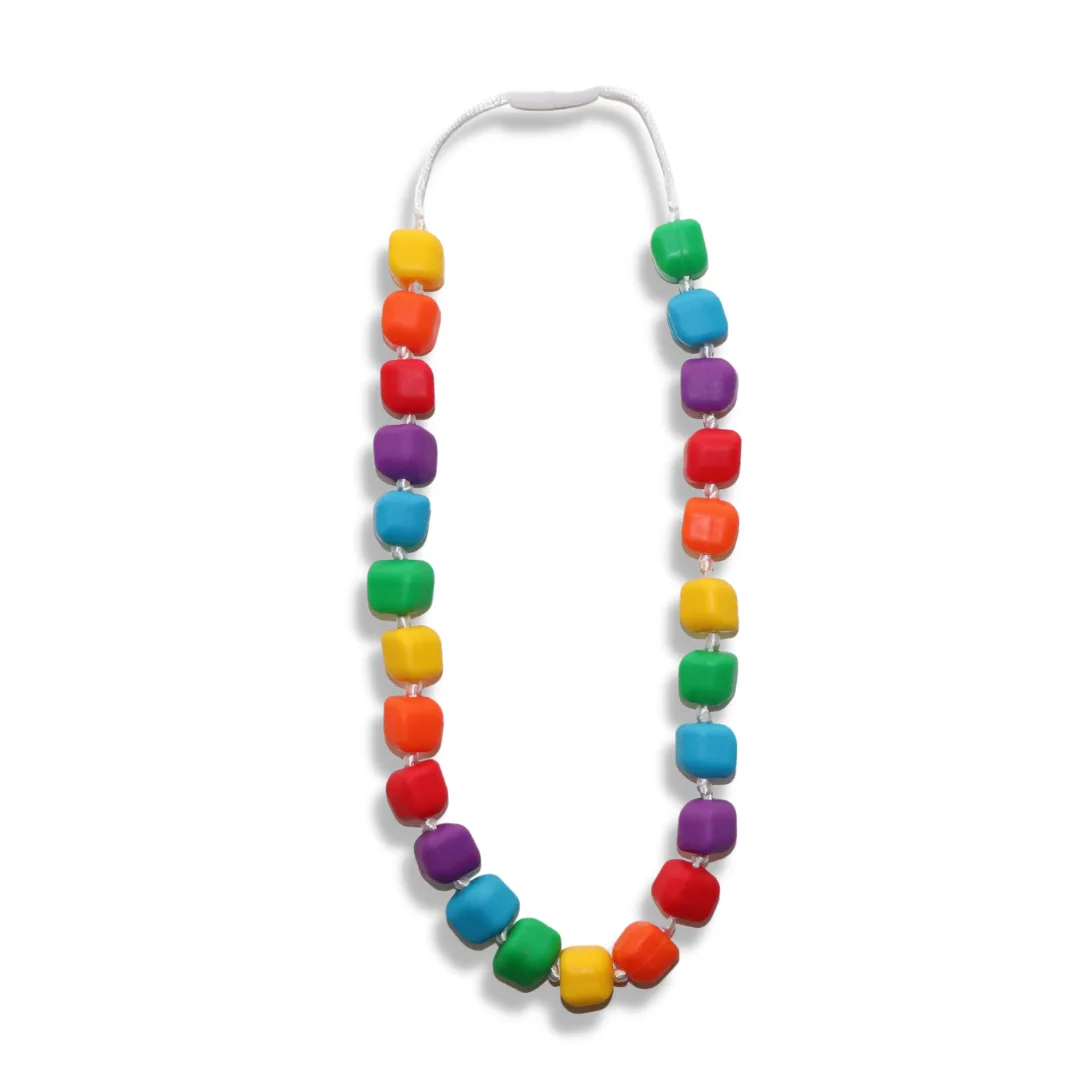
- Princess & the Pea Necklace: Princess & the Pea Necklace is made from food-grade silicone beads in different colours and doubles as a sensory tool. Multiple beads mean more crevices where saliva and lint collect, so a soft brush around each bead is worth the extra minute.
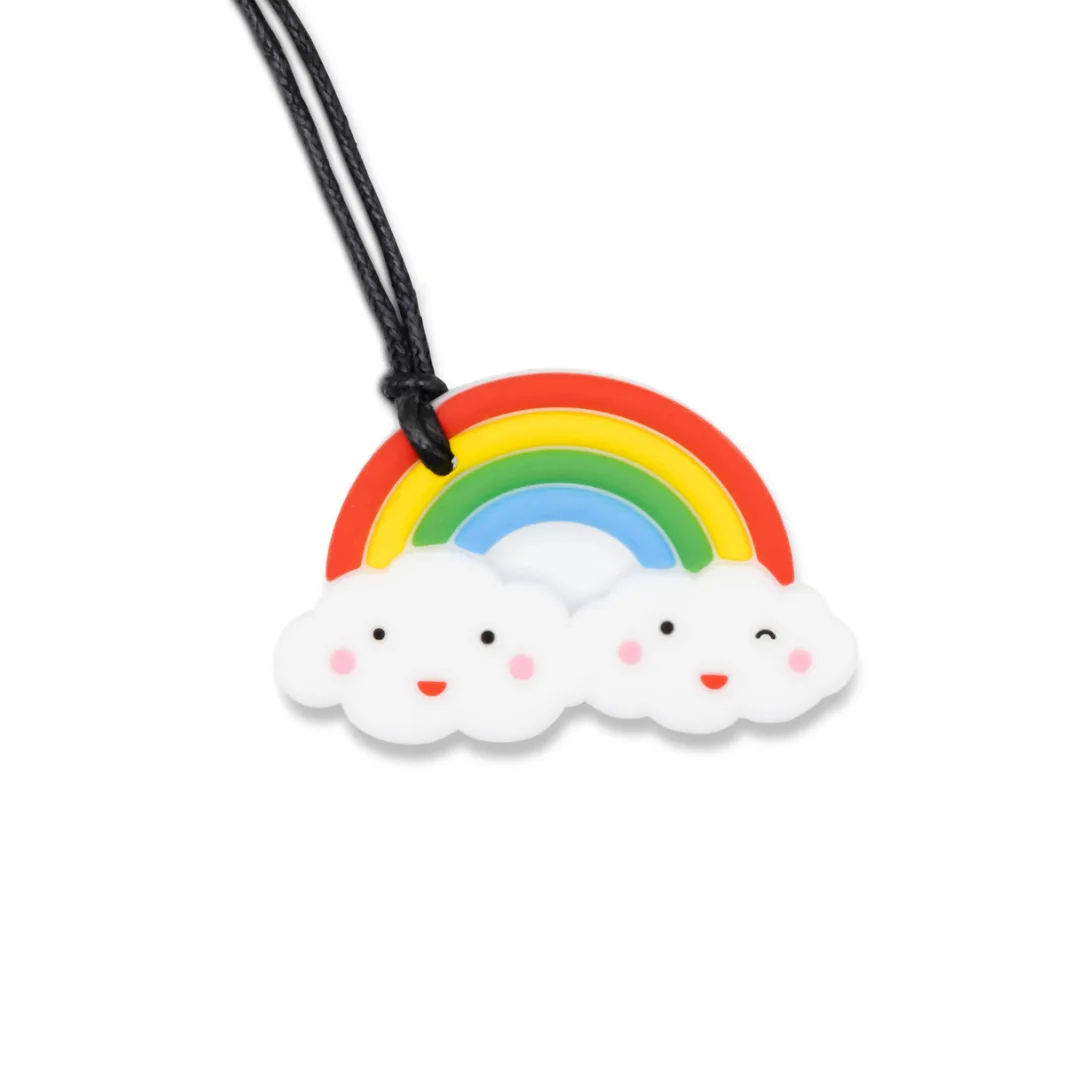
- Rainbow Pendant: Rainbow Pendant uses a BPA-free, non-toxic food-grade silicone pendant on a black cord with a custom safety clasp that separates easily when gently pulled. The clasp is a safety feature, not a defect — test it during every wash and stop using the necklace if it no longer releases.
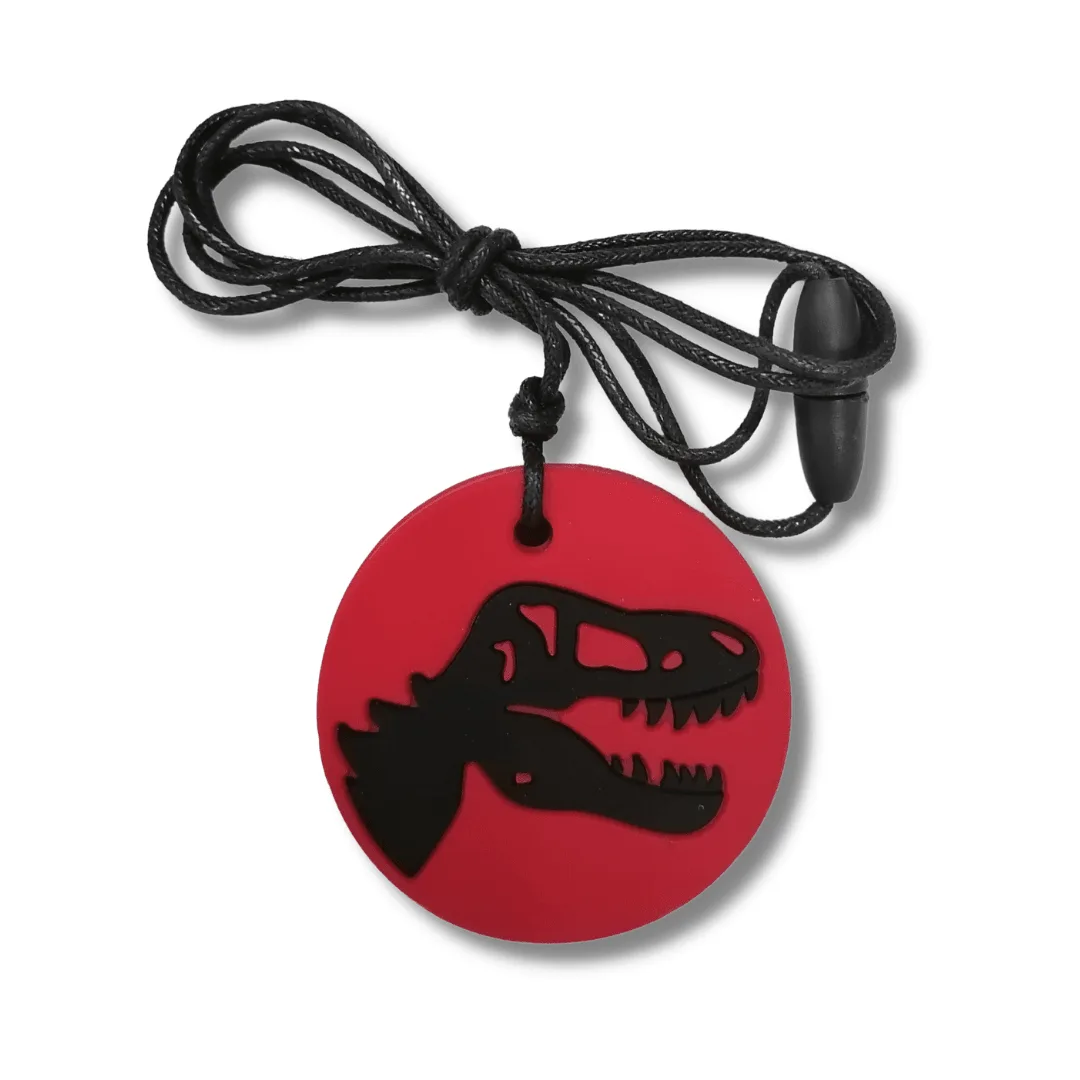
- Dino Pendant: Dino Pendant is a silicone chew pendant recommended by Occupational Therapists as a comforting tool for kids. A pendant used during emotional regulation gets heavy chewing, so it needs the daily wash and weekly deeper clean more than an occasional-use necklace.