Quick answer
Use a carpet brush with drill attachment to agitate dirt and stains from car carpets and upholstery in seconds, but only after vacuuming and with the right aggressiveness setting.
Why use a drill brush for car carpets
A carpet brush drill attachment turns a standard power drill into a fast scrubbing tool. Instead of scrubbing by hand, the rotating bristles loosen embedded dirt, mud, and stains from carpet fibers in a fraction of the time. This is especially useful for high-traffic floor mats and heavily soiled areas.
The main trade-off is control. A drill spins fast, so you need to match the brush aggressiveness to the fabric. Soft upholstery or delicate carpet can fray if you use too stiff a brush or press too hard. Always test on a hidden spot first.
How to clean car carpet with a drill brush attachment
- 1. Vacuum thoroughly first: Remove all loose dirt and debris from the carpet using a shop vac or strong handheld vacuum. This prevents the drill brush from grinding grit deeper into the fibers. Skipping vacuuming is the most common mistake — it turns the brush into a dirt-spreader.
- 2. Choose the right brush aggressiveness: Select a brush aggressiveness that matches your carpet. Soft bristles for delicate or plush carpets, medium for standard automotive carpet, and stiff for heavy-duty floor mats. The Carpet Brush with Drill Attachment is available in different aggressiveness options. Using a stiff brush on soft carpet can leave visible scuff marks or frayed fibers.
- 3. Apply carpet cleaner or stain remover: Spray a dedicated carpet cleaner or stain remover onto the stained area. Let it sit for 1-2 minutes to break down the dirt. Do not soak the carpet — excess moisture can lead to mold or slow drying. Too much liquid makes the brush slip and reduces scrubbing effectiveness.
- 4. Attach the brush to a drill: Insert the brush attachment shank into your drill chuck and tighten it securely. Set the drill to a low to medium speed (around 1000-1500 RPM) for most carpets. High speed can fling cleaner everywhere and damage fibers. Always start at a lower speed and increase only if needed.
- 5. Scrub in overlapping passes: Place the brush flat against the carpet and move it in overlapping passes, working from one edge of the stain to the other. Apply light pressure — let the brush do the work. For tough stains, switch to a circular motion for a few seconds. Pressing too hard can stall the drill or wear down the carpet pile unevenly.
- 6. Blot or extract the loosened dirt: Use a clean microfiber towel or a wet/dry vacuum to remove the dirty cleaner and dissolved grime. Blot the area if using a towel, or vacuum with a crevice tool. Repeat steps 3-6 if the stain remains. Leaving dirty cleaner in the carpet will attract new dirt once it dries.
- 7. Dry the carpet completely: Leave the car doors open or use a fan to air-dry the carpet. Do not close the car until the carpet feels dry to the touch. Damp carpet can develop odors or mildew within 24 hours. Rushing this step is the number one cause of musty smells after a deep clean.
Product used in this guide
-
Carpet Brush with Drill Attachment: Carpet Brushes with Drill Attachment are the fastest, most efficient and thorough way to remove tough stains across carpet, upholstery, and fabric with powerful scrubbing action. This brush saves you time and elbow grease, but you must choose the right aggressiveness level for your carpet type to avoid damage.
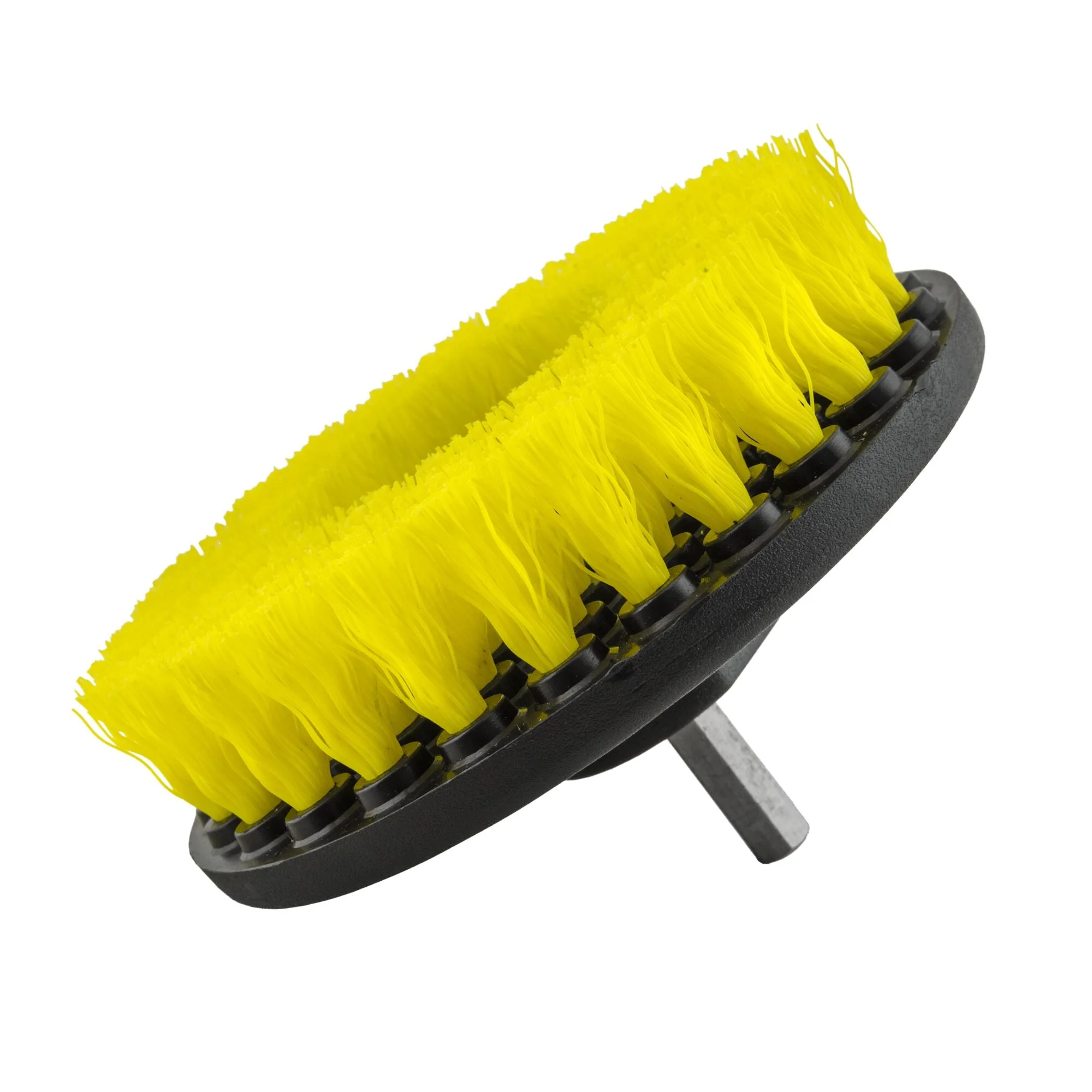
Carpet Brush with Drill Attachment