Why Regular Cleaning Matters
A clean water bottle is essential for your small pet's health. Algae and bacteria can build up quickly in the moist environment, especially if the bottle sits in sunlight. The Classic Crystal Deluxe Small Animal Water Bottle is designed with a leak-resistant system and a gnaw-resistant angle cap assembly, but it still needs regular cleaning to keep the water fresh and the bottle working properly.
This guide covers how to clean the bottle safely, what to watch for with the stainless steel twin ball joint sleeves, and tips to prevent algae growth.
Classic Crystal Deluxe Water Bottle at a Glance
-
Classic Crystal Deluxe Small Animal Water Bottles: The bottle is made from recycled material that is practically unbreakable, withstanding any amount of batting or gnawing. It features a gnaw-resistant angle cap assembly and a stainless steel twin ball joint sleeve. The durable construction means you can clean it with standard dish soap and a bottle brush without worrying about cracking. The twin ball joint sleeve requires gentle handling to avoid damaging the seal.
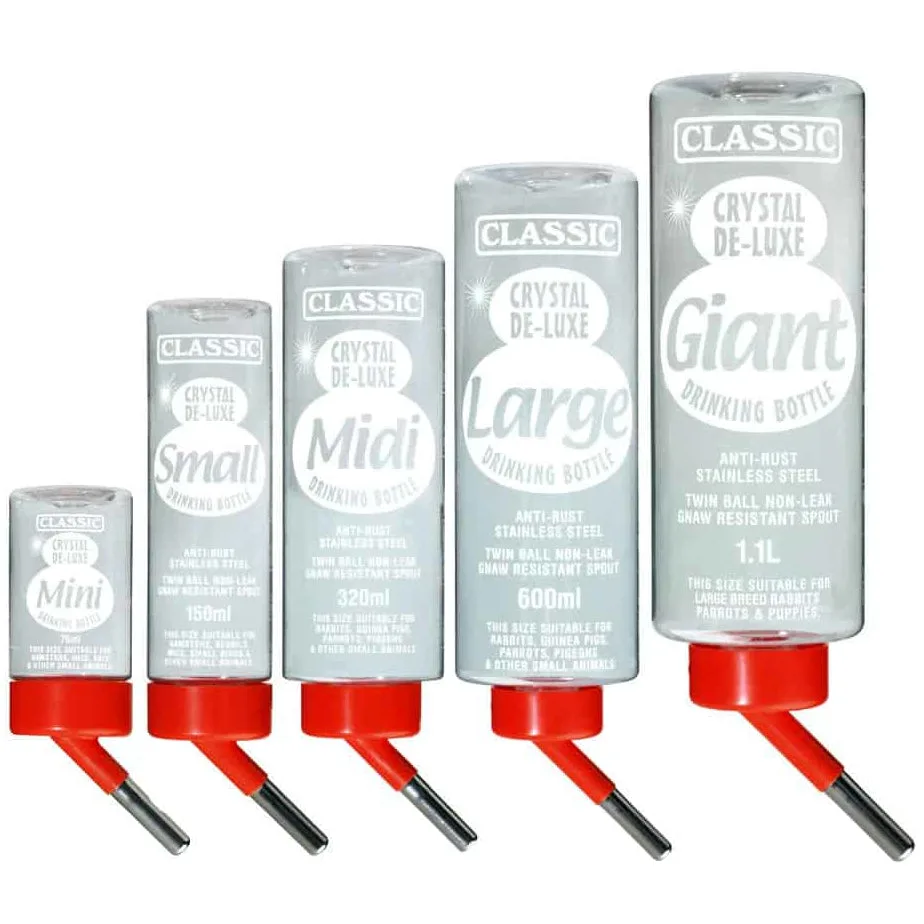
Classic Crystal Deluxe Small Animal Water Bottles
-
Classic Crystal Deluxe Small Animal Water Bottles: Available sizes: Mini 75ml (hamsters, mice), Small 150ml (hamsters, gerbils, mice), Medium 320ml (small rabbits, guinea pigs), Large 600ml (rabbits, guinea pigs), Giant 1100ml (large rabbits). Different sizes mean different cleaning effort. A Mini bottle is easier to rinse thoroughly, while the Giant bottle may need a longer bottle brush and more rinsing to remove soap residue.
Step-by-Step Cleaning Process
These steps apply to all sizes of the Classic Crystal Deluxe bottle. Always empty the bottle before cleaning.
- Disassemble the bottle: Remove the cap assembly from the bottle. Separate the stainless steel twin ball joint sleeve from the cap. This allows you to clean the drinking mechanism separately from the bottle body.
- Wash the bottle body: Use warm water and a mild dish soap. A narrow bottle brush helps reach the bottom and sides. The graduated markings on the side of the bottle are safe to scrub gently. Avoid abrasive sponges that could scratch the recycled plastic.
- Clean the cap and ball joint sleeve: Rinse the cap and the stainless steel sleeve under running water. Use a small brush or pipe cleaner to remove any debris from inside the sleeve. The twin ball design can trap sediment, so check that both balls move freely after cleaning.
- Rinse thoroughly: Rinse all parts with clean water until no soap residue remains. Soap residue can affect water taste and discourage your pet from drinking.
- Dry and reassemble: Allow the parts to air dry completely before reassembling. This prevents mold growth. Once dry, reattach the cap assembly and fill with fresh water.
Preventing Algae and Mineral Buildup
Algae thrives in light and warm water. To slow algae growth, place the bottle away from direct sunlight. The bottle's high-strength colourtone bottle helps block some light, but it's not opaque. If you notice green or brown deposits, clean the bottle more frequently.
Mineral deposits from hard water can also build up inside the bottle. A periodic soak with white vinegar (one part vinegar to three parts water) can dissolve these deposits. Rinse thoroughly afterward. The supplied information does not specify a soaking duration, so check the bottle after a few minutes and rinse well.
What to Keep in Mind
The bottle is designed to fit on the outside of the cage, which makes it easy to remove for cleaning. The leak-resistant design relies on a proper seal, so ensure the cap is screwed on tightly after cleaning.
The gnaw-resistant angle cap assembly is tough, but the plastic parts can still wear over time. Inspect the cap and sleeve for cracks or wear during cleaning. Replace any damaged parts to maintain a leak-free seal.
The supplied information does not include a recommended cleaning schedule. As a general rule, clean the bottle at least once a week, or more often if you see algae or if your pet's water consumption is high.