Quick answer
Wash your insulated bottle daily with warm water, a drop of unscented dish soap, and a bottle brush, then let it air dry upside down with the lid off. Once a week, or whenever a taste or smell lingers, soak it for 30 to 60 minutes with one tablespoon of baking soda per cup of warm water, scrub the lid and gasket, and rinse until the water runs neutral. Never put a vacuum-insulated bottle in the dishwasher or fill it with boiling water.
A bottle that tastes like yesterday's coffee or last week's electrolyte mix is usually not ruined, just under-cleaned. The residue that causes odor hides in three places: the bottom seam, the threads, and the lid gasket. Cleaning all three on a schedule is what keeps stainless steel tasting like nothing at all.
This routine works for any vacuum-insulated bottle, including wide-mouth Nalgene-style bottles like the Argali Icon Nalgene Water Bottle. It takes about two minutes on a normal day and half an hour on a deep-clean day.
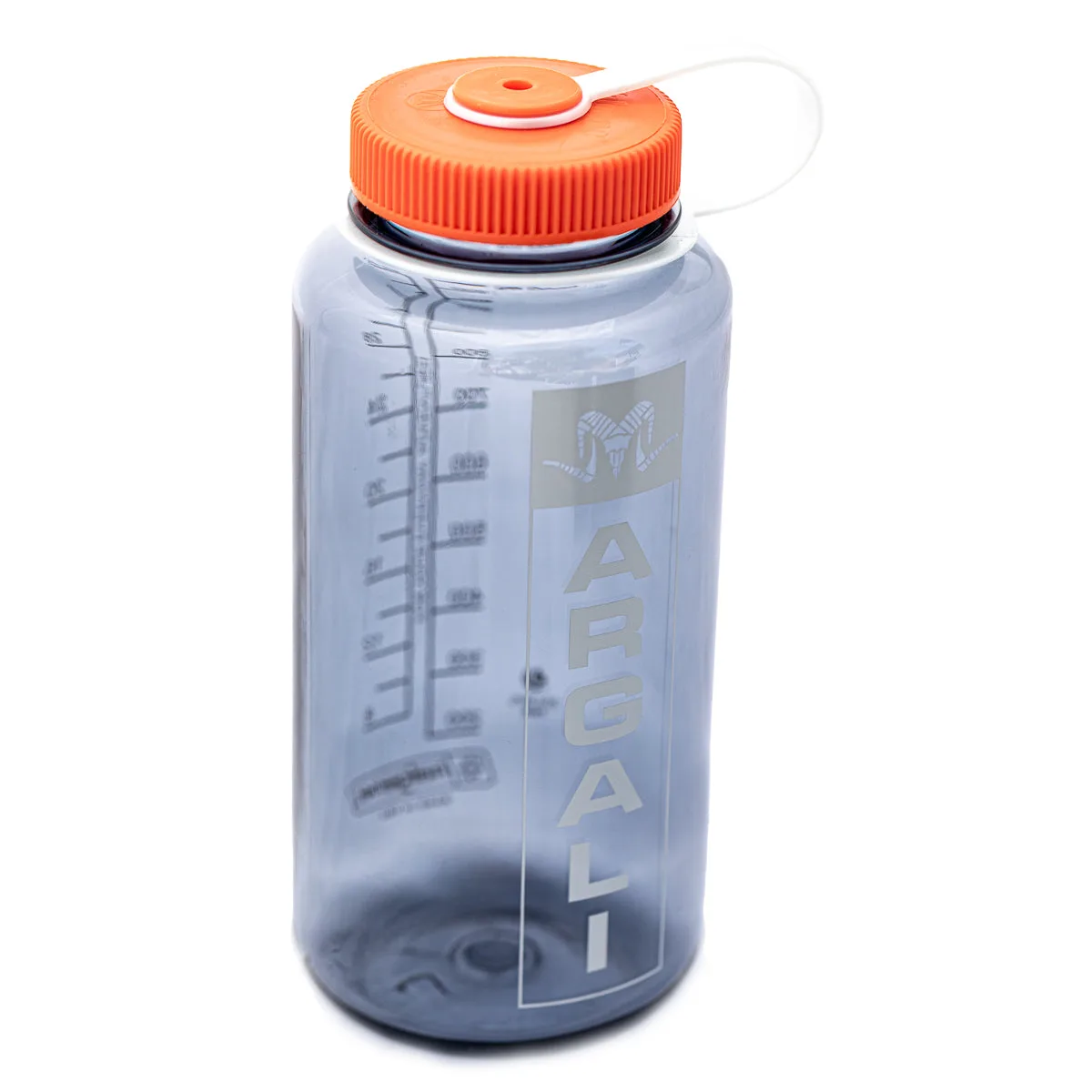
Argali Icon Nalgene Water Bottle
What you need before you start
You do not need a cabinet of specialty products. Warm water, unscented dish soap, a long-handled bottle brush, a small detail brush for the lid and threads, and baking soda cover almost every situation. White vinegar is a useful second option for mineral film, but it leaves its own smell if you do not rinse thoroughly afterward.
Skip scented soaps, bleach on a routine basis, and anything abrasive. Scented soap leaves perfume oils behind that transfer to the next fill, and abrasive pads scratch the interior finish, which gives residue more places to cling. A soft brush does the job without damaging the surface.
- Unscented dish soap only; scented soap is a common cause of lingering taste
- A dedicated bottle brush reaches the bottom seam where residue collects
- Baking soda for odor, white vinegar for mineral film, never both at once
Daily wash: the two-minute routine
Fill the bottle about a third full with warm water, add one drop of unscented dish soap, and scrub the interior with the bottle brush, paying attention to the bottom corners. Scrub the threads on the outside of the bottle and the inside of the lid with the small brush. Rinse with warm water until no suds remain, then set the bottle upside down on a drying rack with the lid off.
The most common mistake here is closing the lid while the bottle is still damp. Trapped moisture plus a warm truck cab is exactly how a musty smell starts. If you are filling up and heading straight out, at least dry the threads and gasket with a clean cloth first.
- One drop of soap is enough; excess soap is hard to rinse out of a narrow mouth
- Dry the gasket and threads, not just the bottle body
Weekly deep clean to remove taste and odor
Once a week, or any time water tastes flat or slightly sour, do a baking soda soak. Add one tablespoon of baking soda per cup of warm water, fill the bottle, and let it sit for 30 to 60 minutes with the lid off. The baking soda neutralizes the acids and oils left by coffee, drink mixes, and sports drinks rather than just masking them.
After soaking, pour the solution out and scrub the interior again, then wash the lid and gasket separately in warm soapy water. Rinse everything with warm water, then fill the bottle with plain water and taste it. If you can still taste anything, repeat the soak once. If the taste persists after two soaks, the gasket is usually the culprit, not the steel.
- Do not mix baking soda and vinegar in the bottle; they cancel each other out
- Taste plain water after rinsing as your checkpoint before calling it clean
Cleaning the lid, gasket, and threads
The lid is where most odor problems actually live. Remove the gasket if your lid allows it, wash both parts in warm soapy water, and use the small brush to get into the groove where the gasket seats. If the gasket is stained, cracked, or stretched, replace it; no amount of cleaning fixes a degraded seal.
While the lid is off, scrub the bottle threads with the same small brush. Residue builds up in those grooves and transfers to your mouth every time you drink. Rinse the lid thoroughly and let every part air dry completely before reassembling.
- A stained or cracked gasket is a replacement item, not a cleaning problem
- Reassemble only after all parts are fully dry
What not to do with an insulated bottle
Vacuum-insulated bottles have a sealed void between the inner and outer walls. Dishwashers, boiling water, and freezing can compromise that seal or warp the lid, and once the vacuum fails the bottle stops holding temperature. Hand washing is the safe default unless the manufacturer explicitly states otherwise.
Also avoid storing anything but water in the bottle long term. Coffee, juice, and drink mixes are fine to carry, but they should come out the same day. Leaving them in overnight is the single fastest way to create an odor that takes multiple soaks to remove.
- No dishwasher, no boiling water, no freezer
- Empty and rinse the same day after coffee, juice, or drink mixes
Storage and long-term care
Store bottles clean, completely dry, and with the lid off or loosely set on top. A sealed, damp bottle in a gear bin over the off-season will smell like a locker room by opening day. Keep them out of direct sun and away from hot vehicles for long stretches, which is hard on gaskets and plastic lids.
A bottle you actually carry is the one that stays clean. The Argali Icon Nalgene Water Bottle is BPA-free, leak-proof, and works with hot or cold liquids, so it handles both a morning coffee run and an afternoon refill without needing a separate bottle for each.
- Store dry and open, never sealed and damp
- Rotate bottles so none sit unused for months at a time
The cleaning sequence
- 1. Empty and rinse immediately: Pour out whatever is left and rinse with warm water as soon as you get back to camp or the truck. Do not let coffee, juice, or drink mix sit overnight. Checkpoint: if the bottle still smells after rinsing, go straight to the baking soda soak.
- 2. Wash with unscented soap and a brush: One drop of unscented dish soap, warm water, and a long-handled brush. Scrub the bottom seam and the threads with a small detail brush. Common mistake: using scented soap, which leaves perfume oils behind that transfer to the next fill.
- 3. Deep clean with baking soda weekly: One tablespoon of baking soda per cup of warm water, soak 30 to 60 minutes with the lid off, then scrub and rinse. Checkpoint: taste plain water after rinsing. Still off? Repeat once, then inspect the gasket.
- 4. Clean the lid and gasket separately: Remove the gasket if possible, wash both parts in warm soapy water, and scrub the gasket groove. Replace any gasket that is stained or cracked. Most persistent odors trace back to the lid, not the stainless steel.
- 5. Air dry fully before storing: Set the bottle upside down with the lid off and let every part dry completely. Store open and dry, away from heat and direct sun. Common mistake: sealing a damp bottle, which is how musty smells start.
Bottle details worth knowing
- Argali Icon Nalgene Water Bottle: The 32 ounce Argali Icon water bottle made by Nalgene is rugged, durable and made for any adventure. It is leak-proof, BPA-free, wide mouth, can hold hot or cold liquids, is made in the USA and comes with a lifetime guarantee. A wide mouth makes brushing the interior far easier than a narrow sport cap, and the ability to hold hot or cold liquids means one bottle covers coffee and water without a flavor crossover if you rinse between uses.
Two minutes a day and one baking soda soak a week is the whole routine. Do that and a stainless steel bottle keeps tasting like nothing, which is exactly what you want when the only water around is the water you carried in.