Quick answer
To keep your cat's scratch post in good condition, vacuum loose debris weekly, spot-clean stains with mild soap and water, and trim any frayed sisal fibers to prevent unraveling.
Why regular maintenance matters
A clean scratch post encourages your cat to keep using it instead of your sofa or curtains. Over time, fur, dust, and oils build up, which can make the post less appealing. Routine care also extends the post's life and helps you spot wear before it becomes a safety issue.
When to replace vs. repair
If the sisal rope is completely worn down or the post wobbles dangerously, it's time for a new one. For minor fraying or loose threads, trimming or spot-gluing can buy you more months of use. The Rosewood Dijon Scratch Post, for example, is compact and sturdy for kittens and small cats, but its rope post will eventually show wear with heavy use.
Step-by-step maintenance guide
- Vacuum the post: Use a brush attachment on your vacuum to remove loose fur, dust, and debris from the sisal rope and any carpet or fabric covering. Pay special attention to crevices and the base. Skipping this step allows oils and dirt to build up, making the post less appealing to your cat.
- Spot-clean stains: Mix a small amount of mild dish soap with warm water. Dampen a clean cloth (not soaking wet) and gently blot any soiled areas. Avoid soaking the rope or base, as moisture can cause mold or weaken the structure. Using harsh chemicals or soaking the post can damage the sisal and deter your cat.
- Trim frayed sisal fibers: Use sharp scissors to carefully cut any loose or frayed sisal threads flush with the rope. This prevents the post from unraveling and keeps it safe for your cat's claws. Pulling on loose threads can cause more damage; always trim, never yank.
- Rotate or reposition the post: If the post has a removable base or can be turned, rotate it occasionally to distribute wear evenly. Moving it to a different spot can also rekindle your cat's interest. Cats often scratch in the same spot repeatedly, so rotating helps the post last longer.
- Check stability and tighten hardware: Periodically inspect the post for wobbling. Tighten any screws or bolts, and ensure the base is flat against the floor. If the post is unstable, your cat may avoid it. A wobbly post can startle your cat and lead to furniture scratching.
Product spotlight
-
Rosewood Dijon Scratch Post: The Rosewood Dijon Cat Scratcher is a compact, stylish grey and cream scratching post designed for kittens and small cats, with a rope post that encourages natural scratching instincts. Its compact size makes it easy to place in multiple rooms, and the rope construction responds well to regular cleaning and spot repairs.
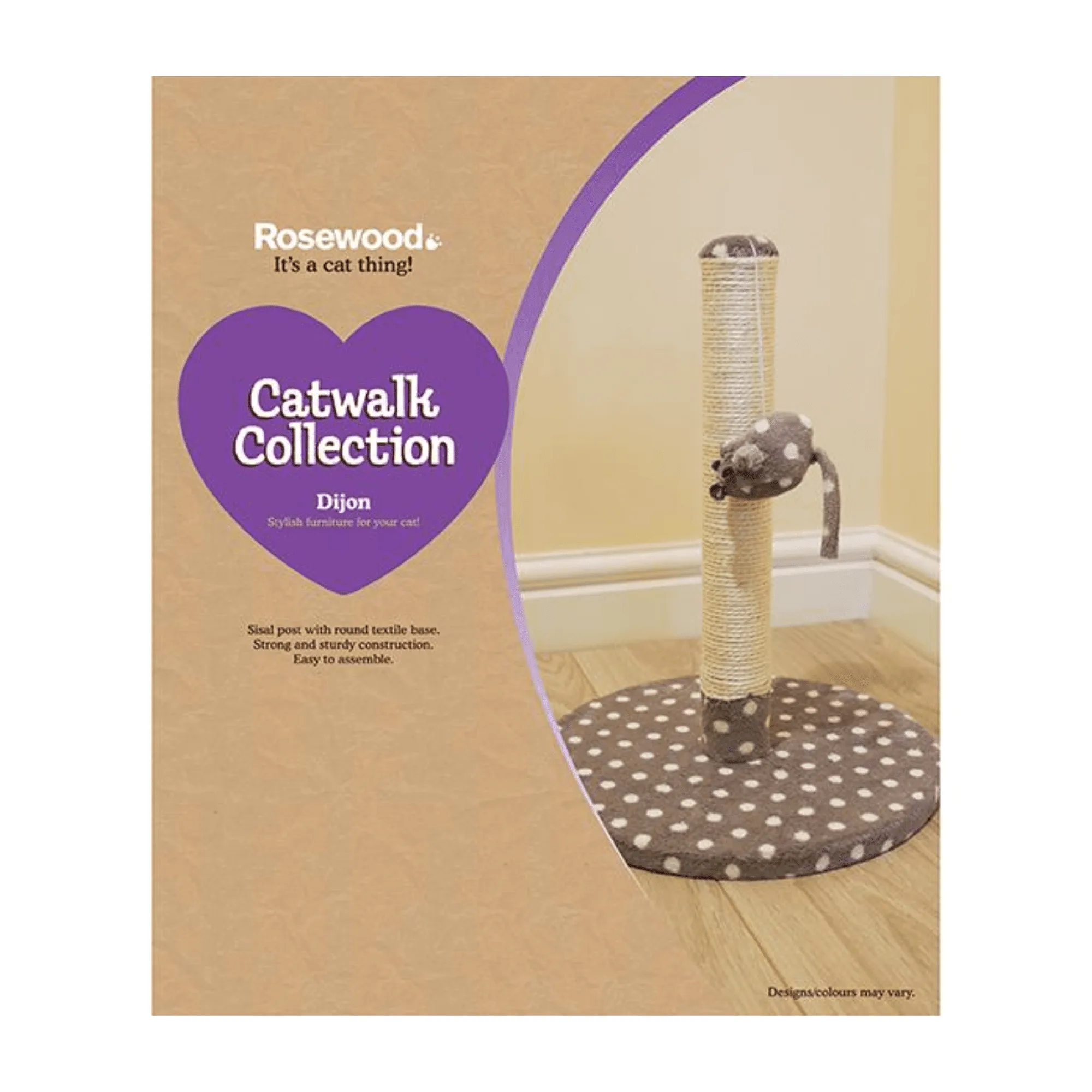
Rosewood Dijon Scratch Post