Quick answer
Rinse your frothing pitcher and wipe the steam wand with a damp cloth immediately after every use, then wash the pitcher with warm water and a little dish soap before it dries. Once a week, or whenever you notice milk film or a sour smell, use Rinza milk cleaning tablets to break down residue in the wand, valves, and tubes.
Why milk residue is different from coffee residue
Milk contains proteins and fats that set into a sticky film as they cool. That film can harbor bacteria and clog small steam passages if left on the wand or inside an auto-frother. Coffee residue is mostly soluble oils and grounds, but milk residue needs both a mechanical wipe and, periodically, a detergent designed for dairy soils.
A quick rinse handles fresh milk well. Dried or baked-on milk is harder to remove and may require a longer soak or a dedicated milk cleaning product. The routine below separates the daily wipe-down from the deeper cleaning step so you do not over-clean or under-clean.
When to use Rinza milk cleaning tablets
Rinza M61 tablets are formulated for auto-frothers and milk circuits, not for hand-washing a pitcher. Use them according to your machine manufacturer's instructions for the steam wand, valves, and tubes. For a manual pitcher, warm water and dish soap are usually enough, but if you notice a persistent milk film or off-odor, a dedicated milk cleaner can help.
Do not substitute Rinza tablets for daily rinsing. They are a periodic deep-clean step, and the tablets are water-soluble so they dissolve into a cleaning solution. Keep the packaging for dosage guidance and store tablets dry.
After-use cleaning steps
- Purge the steam wand immediately: After steaming, wipe the wand with a damp cloth and briefly open the steam valve to clear milk from the tip. Common mistake: letting milk dry on the wand while you drink your coffee. Keep a dedicated cloth near the machine so the wipe becomes automatic.
- Rinse the pitcher with warm water: Fill the pitcher partway with warm water and swirl it to loosen milk film, then pour it out. Avoid very hot water on a coated pitcher if the manufacturer warns against it. Rinse before the milk dries; dried film takes more effort to remove.
- Wash with dish soap and a soft sponge: Add a drop of dish soap and warm water, then wipe the interior and spout with a soft sponge or cloth. Rinse thoroughly until no soap remains. Skip abrasive pads on coated pitchers to protect the finish.
- Dry completely before storing: Turn the pitcher upside down on a rack or towel-dry it. Do not nest it inside another pitcher while damp. Trapped moisture can encourage odors and water spots.
- Deep-clean milk circuits weekly: If your machine has an auto-frother or milk tube, follow the manufacturer's instructions with a milk cleaning product such as Rinza tablets. Soak or run the solution through the circuit as directed, then rinse. Set a weekly reminder so the deep clean does not get skipped.
Products mentioned in this guide
-
Urnex Rinza M61 Acid Formula Milk Cleaning Tablets 120ct: Urnex Rinza M61 Acid Formula Milk Cleaning Tablets, 120 Ct, are 4g water-soluble tablets formulated with cationic surfactants for milk residue in steam wands, valves, and tubes. A dedicated milk cleaner is useful when plain rinsing leaves a film or odor, especially on machines with auto-frothers.
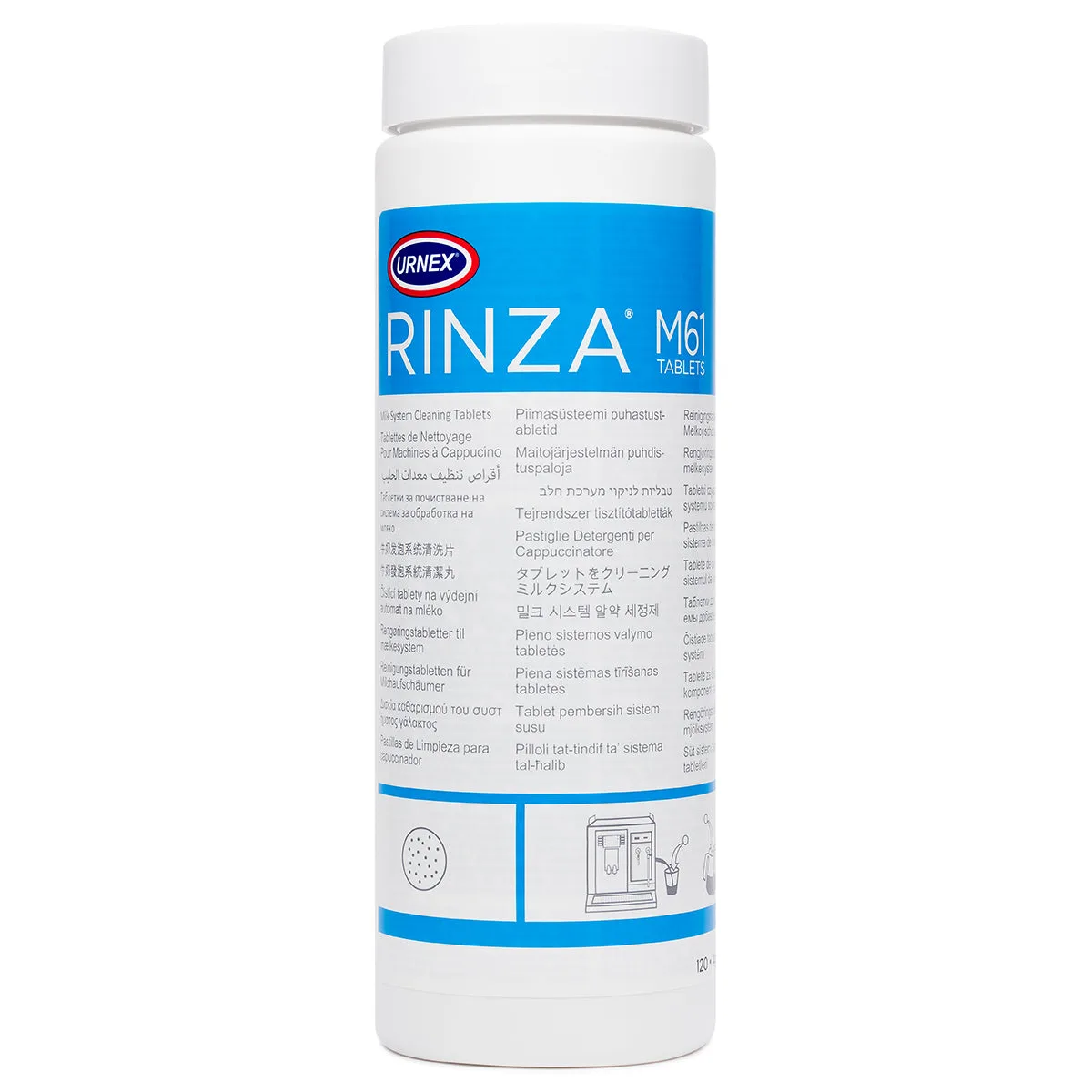
Urnex Rinza M61 Acid Formula Milk Cleaning Tablets 120ct
-
Revolution Matte Black Steaming Pitcher - 12 Oz: The Revolution Matte Black Steaming Pitcher - 12 Oz has a proprietary Teflon coating and a matte black finish. A coated pitcher is easier to wipe clean, but avoid abrasive scrubbers that could damage the coating.
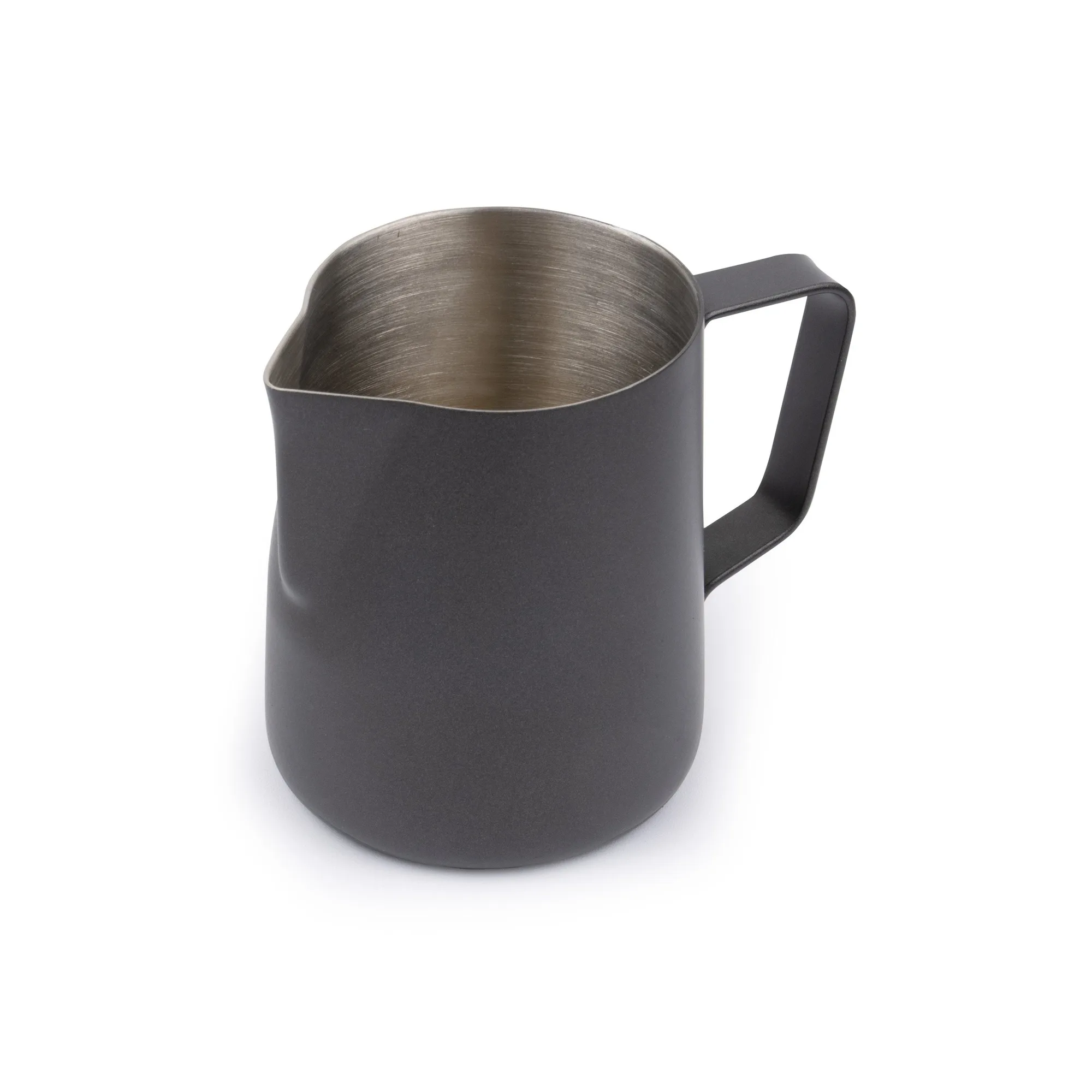
Revolution Matte Black Steaming Pitcher - 12 Oz