Why Stainless Steel Changes the Cleaning Routine
If you're used to scrubbing plastic litter trays, switching to a stainless steel box like the Fussy Cat Round Stainless Steel Litter Box changes how you clean. The non-porous surface means bacteria and odors have nowhere to hide, so you don't need harsh chemicals or endless scrubbing. A quick rinse and light soap is usually all it takes.
Daily Cleaning Routine
The supplied care instructions are refreshingly simple. Here's the recommended daily process:
- Scoop waste as usual: Remove clumps and solid waste with a scoop. The round shape and high 30cm sides make this straightforward.
- Rinse with water: A quick rinse under running water is often enough to remove any remaining litter dust or residue. The smooth, non-porous surface doesn't trap particles.
- Wipe with light soap: Just wiping the surface by hand with a light soap is all that's needed. No harsh bleach or smelly chemicals required.
- Dry thoroughly: Because the 201-grade steel is slightly less corrosion-resistant than premium 304-grade, drying after cleaning and avoiding standing moisture helps maintain its appearance over time.
What Not to Use
The Fussy Cat litter box doesn't need bleach or strong chemical cleaners. The non-porous stainless steel naturally resists odor and bacteria buildup, so harsh cleaners are unnecessary and can be unpleasant for your cat. Stick to mild soap and water.
Key Cleaning Facts for the Fussy Cat Stainless Steel Litter Box
-
Fussy Cat - The Litter Box (201-Grade Stainless Steel): Non-porous stainless steel prevents lingering smells and bacteria build-up. This means you don't need to replace the tray every six months like plastic boxes. A quick clean keeps it fresh.
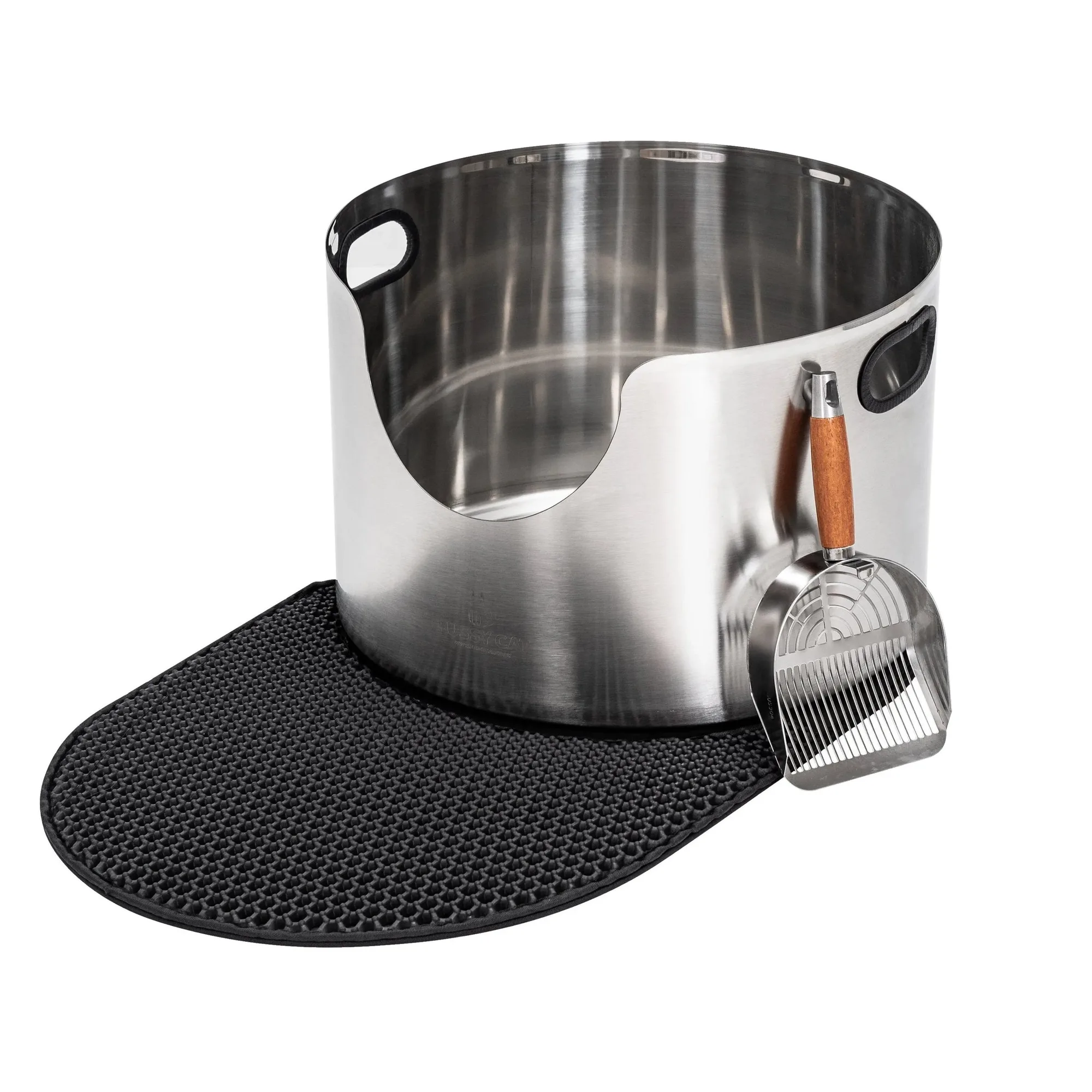
Fussy Cat - The Litter Box (201-Grade Stainless Steel)
-
Fussy Cat - The Litter Box (201-Grade Stainless Steel): A quick rinse and it's spotless — no more scrubbing at clumps stuck to plastic. The smooth surface saves time and effort compared to plastic trays that develop scratches where bacteria hide.
-
Fussy Cat - The Litter Box (201-Grade Stainless Steel): 201-grade steel is slightly less corrosion-resistant than 304-grade, so a little extra care — such as more frequent cleaning, drying after cleaning and avoiding standing moisture — will help maintain its appearance. This is a simple trade-off for the more accessible price point. Regular drying keeps the box looking great for years.
Why Plastic Trays Need More Work
Plastic litter trays are porous and develop scratches over time where bacteria and odors get trapped. The only way to properly eliminate smells is to replace the plastic tray every six months or so. With stainless steel, you avoid that cycle entirely — the non-porous surface means bacteria has nowhere to grow, and the box itself lasts for years.
A Note on the Rubber Handles
The Fussy Cat litter box comes with removable rubber handles. If you prefer a super-clean pure stainless steel brushed finish look, you can take them off. This doesn't affect cleaning — the handles are easy to wipe down if you keep them on.