Why nutsedge is different from other lawn weeds
Nutsedge (also called nutgrass) looks like a grass but behaves like a sedge. It grows faster than your lawn, stands taller after mowing, and spreads through underground tubers called nutlets. Pulling it often leaves those nutlets behind, so the weed comes back. That is why a targeted nutsedge herbicide is usually the more reliable approach.
What a nutsedge killer should do
-
Fertilome Weed-Out Nutsedge Control Ready to Spray 32 OZ: Fertilome Weed-Out Nutsedge Control Ready to Spray 32 OZ contains Sulfentrazone 1.36% and Prodiamine 2.73%, providing pre- and post-emergent control of nutsedge and many other weeds. A combination of pre-emergent (prevents new nutsedge from sprouting) and post-emergent (kills existing weeds) in one product saves you a separate treatment step.
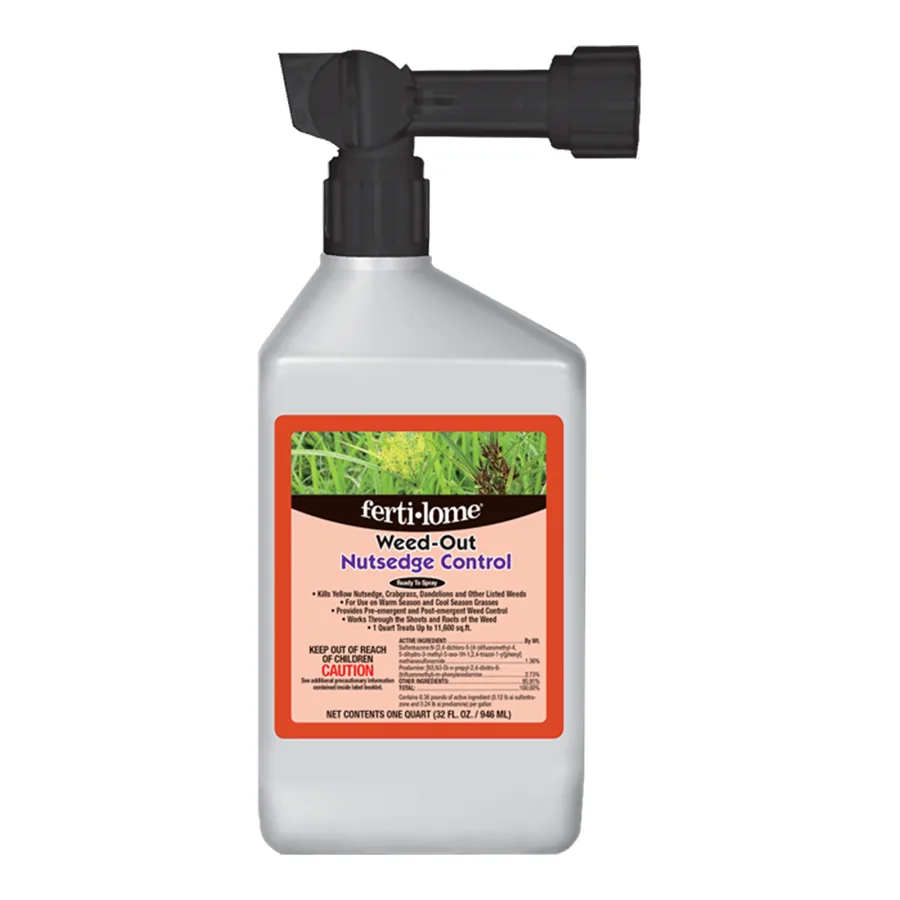
Fertilome Weed-Out Nutsedge Control Ready to Spray 32 OZ
Check your grass type before spraying
Not every herbicide is safe for every lawn. Fertilome Weed-Out Nutsedge Control is suitable for both cool-season grasses (Bluegrass, perennial Rye, fine and tall Fescue) and warm-season grasses (Bahiagrass, Buffalo, Carpet, Centipede, Kikuyu, Zoysia, Bermuda, St. Augustine). That covers most common home lawns, but always confirm your specific grass variety is listed on the label.
Where not to use this nutsedge killer
This product is not recommended for use in landscape beds. If nutsedge is growing among flowers or shrubs, you will need a different product labeled for ornamental beds. For lawn-only nutsedge problems, the ready-to-spray format makes application straightforward.
When to apply for best results
Apply nutsedge herbicide when the weeds are actively growing and the soil is moist. Early summer is often ideal because nutsedge is small and vulnerable. Avoid mowing for a few days before and after treatment so the leaves have enough surface area to absorb the product. Follow the label instructions for mixing and coverage rates.
What to expect after treatment
You may see yellowing or twisting of nutsedge leaves within a week. Full control can take two to three weeks. Because nutsedge tubers can remain dormant in soil, a single treatment may not eliminate every plant. A follow-up application later in the season, if new shoots appear, helps break the cycle.