Quick answer
Cook Edamame & Mung Bean Rigatoni in well-salted boiling water until just al dente, then drain and rinse under cold running water to stop cooking. Toss with a little oil and chill before adding your cold bowl ingredients.
Why rigatoni shape matters for cold bowls
The ridged tubes of Edamame & Mung Bean Rigatoni are designed to capture sauce, which is a real advantage in cold noodle bowls where dressing can pool at the bottom. Unlike long noodles, rigatoni holds its shape after chilling and won't clump as easily, so you get even distribution of ingredients in every bite.
The rinse-and-chill trade-off
Rinsing cooked pasta under cold water removes surface starch that would otherwise make noodles sticky. That's helpful for cold bowls, but it also cools the pasta quickly and can dilute flavor if you don't season the water well. Chilling the pasta before mixing prevents the dressing from being absorbed unevenly and keeps vegetables crisp.
Common mistake: overcooking for cold use
It's tempting to cook pasta longer when you plan to serve it cold, but that leads to mushy rigatoni that falls apart in a bowl. Cook it just to al dente, because the cold rinse stops the cooking process immediately. If you plan to store the bowl for meal prep, slightly undercook it by 30 seconds to account for softening over time.
Step-by-step: cooking and assembling cold rigatoni bowls
- Boil salted water: Bring a large pot of water to a rolling boil and add a generous pinch of salt. Use enough water so the rigatoni has room to move; a crowded pot leads to sticking. Don't skip the salt—it's your only chance to season the pasta itself before chilling.
- Cook rigatoni to al dente: Add the Edamame & Mung Bean Rigatoni and cook until just tender with a slight bite. Start checking a minute before the package time suggests, since altitute and pot size affect timing. Set a timer and taste a piece—overcooked pasta will turn mushy after chilling.
- Drain and rinse under cold water: Pour the pasta into a colander and rinse under cold running water for 30–60 seconds, tossing gently until the pasta is cool to the touch. This stops cooking and removes excess starch. Rinse thoroughly but quickly; prolonged rinsing can waterlog the pasta.
- Toss with a little oil: Drain well, then drizzle with a teaspoon of neutral oil or a light vinaigrette and toss to coat. This prevents clumping while the pasta waits. Use just enough oil to coat—too much will make the dressing slide off later.
- Chill before mixing: Spread the oiled pasta on a tray or transfer to a container and refrigerate for 15–20 minutes, or until cold. Chilled pasta absorbs dressing more evenly and keeps vegetables crisp. If you're short on time, rinse longer under cold water and skip the fridge.
- Assemble your cold bowl: In a large bowl, combine the chilled rigatoni with your choice of vegetables, protein, and dressing. Toss gently until everything is coated, then serve immediately or portion into meal-prep containers. Add delicate ingredients like fresh herbs or avocado just before serving to keep them vibrant.
Product facts
-
Edamame & Mung Bean Rigatoni: Made from a nutrient-rich blend of edamame, mung beans, and brown rice, creating a high-protein and fiber pasta with a balanced flavor. This blend gives the rigatoni a sturdy texture that holds up well when chilled and tossed with dressing, making it a reliable base for cold noodle bowls.
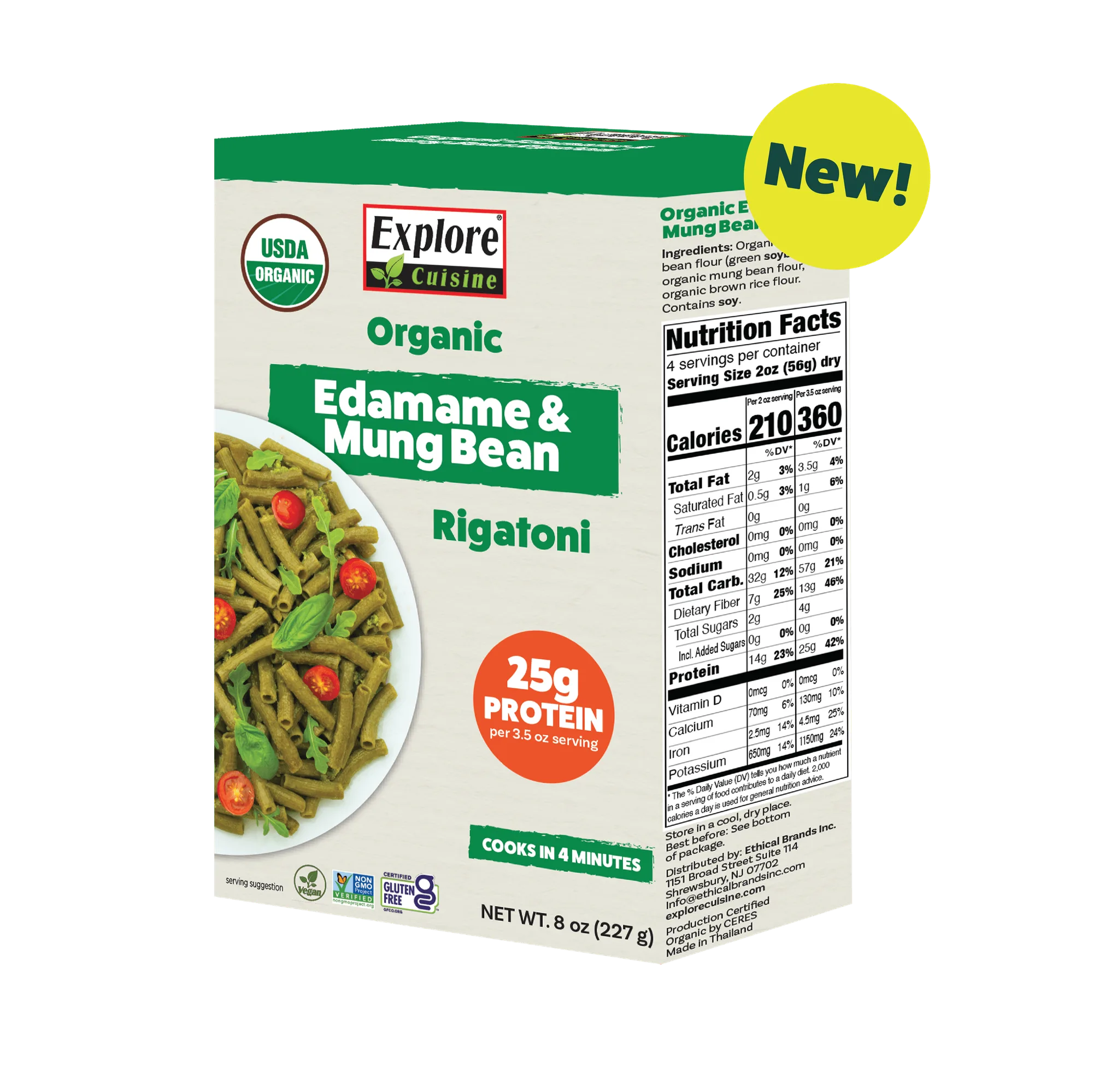
Edamame & Mung Bean Rigatoni
-
Edamame & Mung Bean Rigatoni: The ridged tube shape is perfect for capturing every drop of your favorite sauce. In cold bowls, the ridges help dressing cling to the pasta instead of sinking to the bottom, so each bite is evenly coated.