Quick answer
Start by adding 1/2 to 1 teaspoon of organic turmeric root powder to warm liquids or cooked dishes. Pair it with black pepper and a fat source to help your body absorb curcumin, the active compound.
Why cooking with turmeric is different from using fresh root
Powdered turmeric root is already dried and ground, so it dissolves more easily in liquids than fresh turmeric. However, its flavor is more concentrated and slightly bitter, so start with a small amount and adjust to taste. Unlike fresh turmeric, the powder does not need to be peeled or grated, making it a convenient pantry staple.
The fat and pepper trick for better absorption
Curcumin, the pigment in turmeric, is fat-soluble and poorly absorbed on its own. Always cook turmeric with a fat source such as coconut oil, ghee, or full-fat coconut milk. Adding a pinch of black pepper also enhances absorption because piperine in pepper helps curcumin enter the bloodstream. This is not a gimmick — it is a practical step that makes the turmeric you eat more effective.
How to use organic turmeric root powder in your cooking
- Start with a small amount: Measure 1/2 to 1 teaspoon of turmeric root powder per serving. Stir it into a small amount of hot liquid (water, broth, or milk) to create a slurry before adding it to the full dish. This prevents clumps and uneven color. Too much raw powder can make food taste bitter and stain surfaces. Less is more until you know your preferred strength.
- Cook it with fat and heat: Add the turmeric slurry to a pan or pot that already contains a fat source (coconut oil, ghee, or butter) and cook over medium heat for 2–3 minutes. This activates the curcumin and helps it dissolve into the fat. Do not let it burn — stir frequently. Skipping the fat or adding turmeric at the very end of cooking reduces absorption. The heat-and-fat step is essential.
- Add black pepper and an acidic ingredient: Grind a pinch of black pepper into the dish and add a splash of lemon juice, lime juice, or vinegar. The pepper improves curcumin absorption, and the acid helps preserve the bright yellow color. Stir well and taste before adding more turmeric. If you skip the pepper, your body may absorb very little curcumin. The acid is optional but prevents the dish from turning muddy brown.
- Use it in specific dishes: Stir the prepared turmeric mixture into golden milk (warm plant-based milk with cinnamon and ginger), soups, lentil curries, rice, or scrambled eggs. For smoothies, blend the powder with a fat source such as coconut yogurt or nut butter rather than using water alone. Turmeric stains plastic and porous surfaces. Use a stainless steel or glass container when mixing, and clean spills immediately with a baking soda paste.
Product spotlight
-
Organic Turmeric Root Powder Bundle: This bundle contains organic turmeric root powder with a minimum 4% curcumin content, is USDA Certified Organic, and is labeled as raw, vegan, gluten-free, and non-GMO. The guaranteed curcumin level means you get a consistent amount of the active compound in every teaspoon, which matters when you are cooking for its potential joint health benefits.
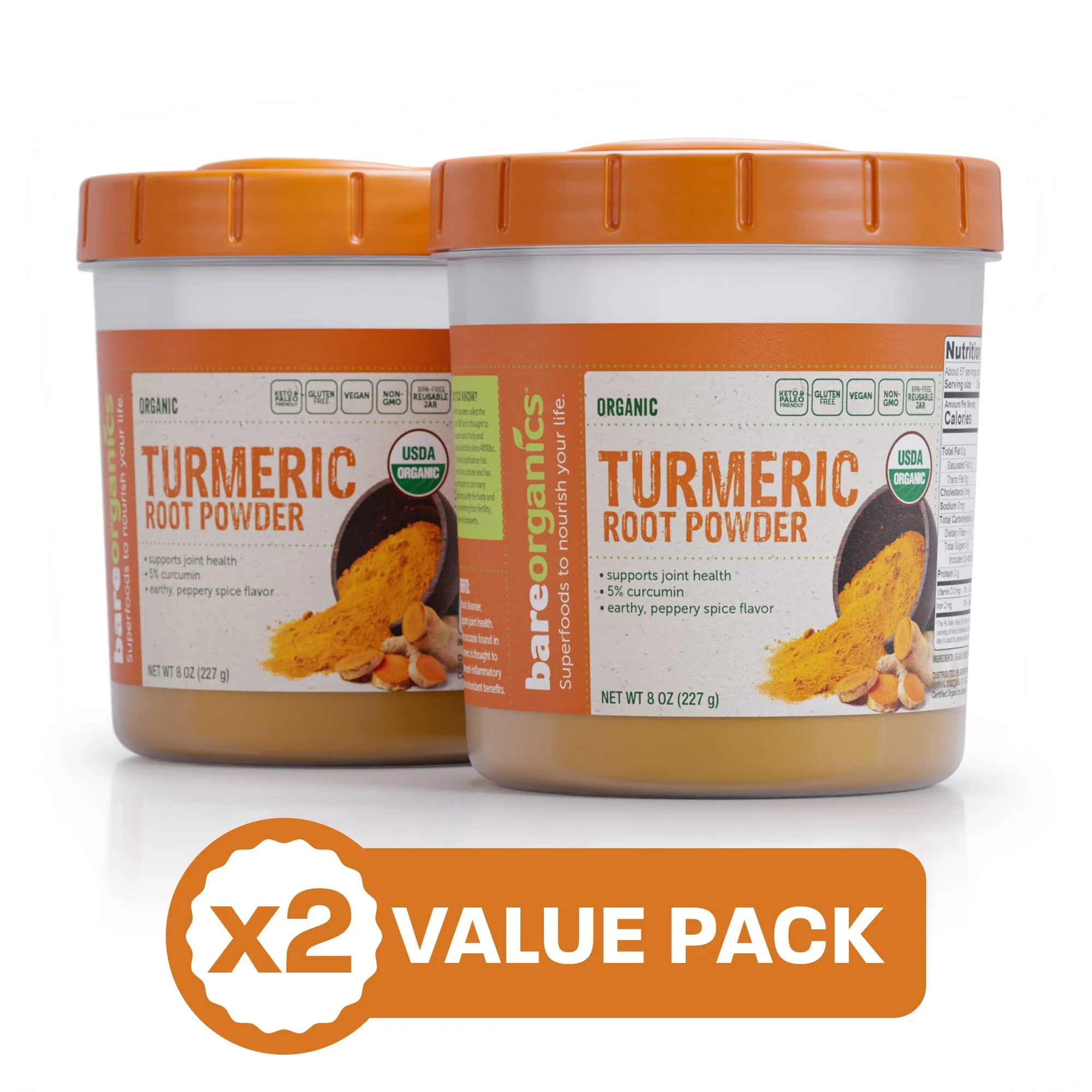
Organic Turmeric Root Powder Bundle