Quick answer
Start with a simple reading tracker, then add one bookmark per current read and a small set of book journal stickers for ratings and moods. Keep the first spread minimal so you actually maintain it. Add more sections only after the habit sticks.
A reading journal should make reading feel more fun, not like homework. The fastest way to build one is to pair a basic reading tracker with the bookmarks and stickers you already use, so every entry has a physical trigger.
This guide walks through a reading journal setup you can finish in one sitting. You will set up a tracker, log books as you finish them, and use bookmarks and stickers to mark progress and reactions without turning the journal into a craft project you abandon by week three.
Choose a notebook and a simple reading tracker
Pick a notebook you will not be afraid to write in. A cheap lined or dot-grid notepad works better than a fancy hardcover you feel pressured to keep perfect. Reserve the first two pages for a reading tracker: one line per book with columns for title, author, start date, finish date, and a quick rating. That is enough to see patterns without tracking every page.
If you already keep a notepad for daily notes, add a dedicated reading section instead of buying a second book. The goal is one place where you log books, so you do not have to remember where you wrote things down.
- Leave the first page blank for a title or a favorite sticker.
- Use a ruler for your tracker columns so the lines stay readable.
- Do not pre-fill 100 rows; 20 is enough to start.
Set up a bookmark system for current reads
A reading journal works best when your bookmark matches your reading status. Use one bookmark for the book you are actively reading, a second for a book you paused, and a third for a library or borrowed book you need to return. This sounds fussy, but it prevents the classic problem of losing your place in three books at once.
For a clean setup, choose bookmarks with a soft touch matte finish and rounded corners. They slide into a journal pocket without catching, and they do not crease the way thin paper does. A 2 in x 6 in bookmark fits standard trade paperbacks and most hardcovers without sticking out awkwardly.
- Write the book title on the back of the bookmark in pencil if you rotate often.
- Keep paused-book bookmarks in a single pocket, not loose in a bag.
- Replace a bookmark the moment it starts to bend; a bent bookmark stops being useful.
Log each finished book with a short entry
When you finish a book, fill in the tracker line and add a short entry on the next open page. Write the title, the date, and two or three sentences: what you expected, what you got, and whether you would read another book by the same author. This takes about two minutes and gives you something worth rereading later.
Do not write a full review unless you want to. The most useful reading journal ideas are the ones you will repeat, and a two-minute entry beats a beautiful page you skip because it takes too long. If a book really lands, give it a full page and add a sticker that captures your reaction.
- Add a one-word mood next to the rating, such as slow, sharp, or comforting.
- Note the format you read: print, ebook, or audio. It affects how you remember the book.
- If you abandoned a book, log it anyway with a one-line reason.
Use book journal stickers for ratings and reactions
Stickers are the fastest way to make a reading journal feel personal without drawing anything. Use small stickers for star ratings, mood markers, or genre tags. A single sticker next to a title communicates more than a paragraph, and it makes flipping back through the journal more enjoyable.
Keep a small sheet of stickers tucked into the back pocket of your journal. When you finish a book, pick one sticker that matches your reaction and place it next to the entry. This turns a plain log into a bookish journal you actually want to open.
- Use one sticker per finished book to avoid clutter.
- Reserve a specific sticker shape or color for five-star reads.
- Do not stick stickers over your writing; place them in the margin.
Add a monthly or seasonal recap page
At the end of each month, spend five minutes on a recap page. List the books you finished, the best one, and the one you would not recommend. This is where a reading tracker becomes useful: you can see whether you read more in certain months and adjust your expectations instead of feeling behind.
If you read seasonally, group recaps by season instead of month. The point is a rhythm you can keep, not a perfect calendar. A single recap page per season is enough for most readers.
- Count only finished books, not pages, to keep the number honest.
- Note one book you want to read next based on this month's reads.
- Leave space for a sticker that sums up the month.
Reading journal setup steps
- Step 1: Pick a notebook and create a 20-row tracker: Use a notepad you already own or a simple lined notebook. Draw columns for title, author, start date, finish date, and rating. Stop at 20 rows. Checkpoint: if you feel resistance, your tracker has too many columns. Cut it to five.
- Step 2: Assign one bookmark per reading status: Choose a bookmark for your current read, one for paused books, and one for borrowed books. Keep paused bookmarks in one pocket. Checkpoint: if you cannot tell which book is active at a glance, your system is not working yet.
- Step 3: Log each finished book in two minutes: Fill in the tracker line, then write two or three sentences on the next open page. Add a one-word mood and the format you read. Checkpoint: if an entry takes more than five minutes, you are writing a review, not a log.
- Step 4: Add one sticker per finished book: Keep a small sticker sheet in the back pocket. Place one sticker in the margin next to the entry. Reserve a specific sticker for five-star reads. Checkpoint: if the page looks cluttered, you are using too many stickers per book.
- Step 5: Write a monthly or seasonal recap: List finished books, pick the best one, and note one book to read next. Leave space for a sticker that sums up the month. Checkpoint: if you skipped a month, do not backfill it. Start with the current month.
Products that fit this setup
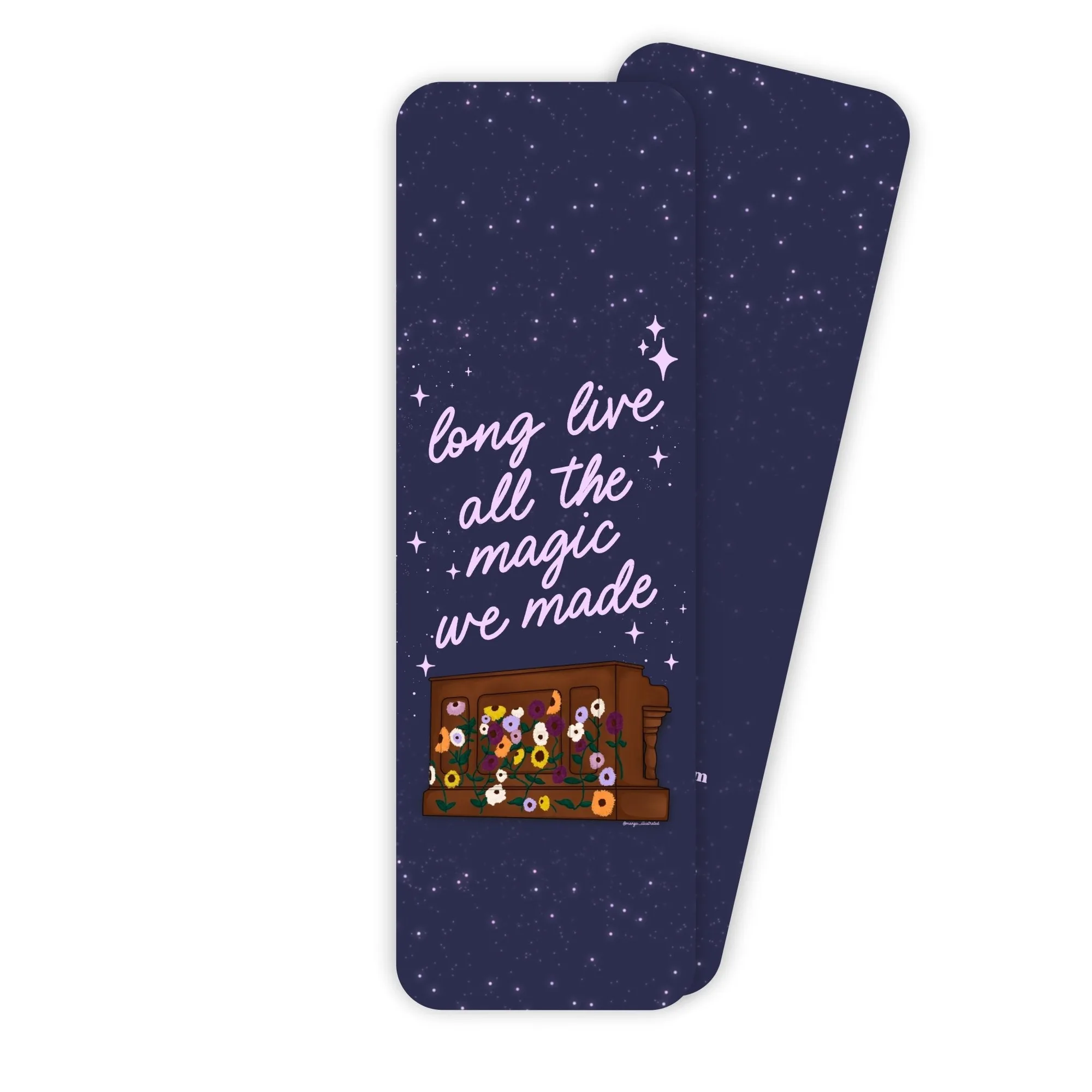
- Long Live Bookmark: Double-sided design with a starry night sky, a piano covered in flowers, and hand lettered script; rounded corners and soft touch matte finish on both sides; measures 2 in x 6 in. The double-sided art gives you a visual cue for which book is your current read, and the 2 in x 6 in size fits standard trade paperbacks without sticking out.
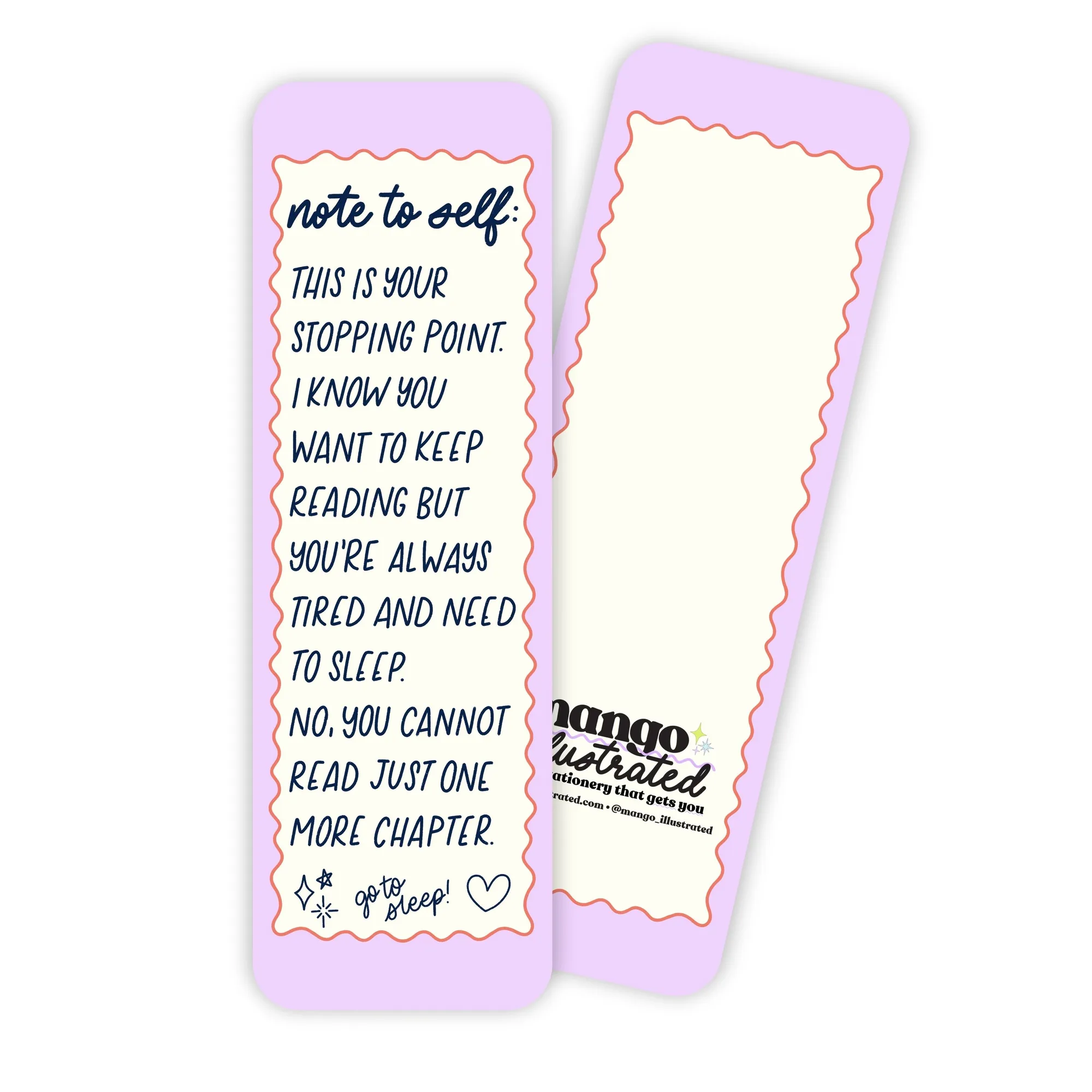
- Note to Self Stopping Point bookmark: Designed to mark your stopping point and remind you it is time to put the book down; rounded corners and soft touch matte finish on both sides; measures 2 in x 6 in. Useful if you tend to read one more chapter than planned; it gives you a physical place to pause and log progress in your journal.
- It's fine I'm fine everything's fine Tina Belcher sticker: Hand lettered and hand drawn Tina Belcher sticker; 3 x 3 inch durable waterproof and weatherproof vinyl; built for laptops, water bottles, planners, and journals. The 3 x 3 inch size is large enough to anchor a journal page or a laptop, and the waterproof vinyl holds up on a water bottle if you prefer to keep your reading mood visible outside the journal.
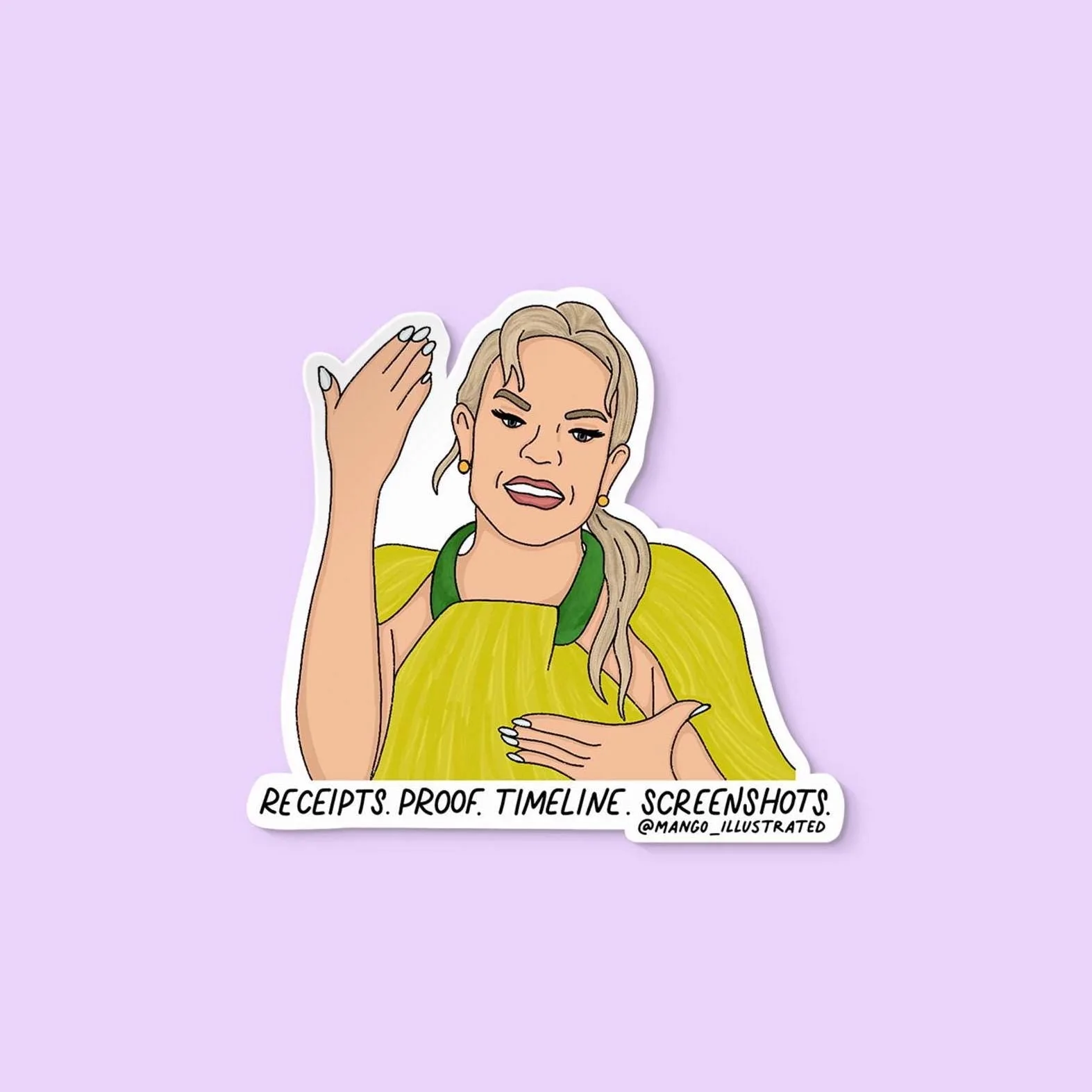
- Receipts proof timeline screenshots sticker: Hand lettered text reading Receipts. Proof. Timeline. Screenshots.; durable waterproof and weatherproof vinyl; built for laptops, water bottles, planners, and journals. A good fit for a reading journal page about a book with a mystery or argument you want to remember; the vinyl material means it will not smudge or peel if you carry the journal daily.
A reading journal works when it is easier to use than to avoid. Start with a 20-row tracker, one bookmark per reading status, and one sticker per finished book. Add sections only after the habit holds, and let the journal look lived-in rather than perfect.