Quick Answer
To safely dechlorinate tap water for your pond, use a quality dechlorinator like the AllPondSolutions Pond Rescue Tap Water Dechlorinator, adding the correct dose before or during water changes. Always test for chlorine and chloramine after treatment and adjust the dose if needed.
Why Tap Water Needs Treatment
Municipal tap water contains chlorine or chloramine to kill bacteria, but these chemicals are toxic to fish and can damage the biological filter in your pond. Chlorine dissipates over time, but chloramine does not, so a dechlorinator is essential for safe water changes.
Using a dechlorinator is faster and more reliable than letting water age, especially for larger ponds where waiting 24-48 hours is impractical.
Choosing the Right Dechlorinator
Not all dechlorinators are the same. Some only neutralize chlorine, while others also remove chloramine and heavy metals. For ponds, choose a product that handles both chlorine and chloramine to ensure complete safety.
The AllPondSolutions Pond Rescue Tap Water Dechlorinator 2.5L is a bulk option that removes chlorine compounds, chloramines, and metal ions, making it suitable for large ponds or regular water changes.
Step-by-Step Diagnosis and Treatment
- Symptom: Fish gasping or acting stressed after a water change: This is a classic sign of chlorine or chloramine toxicity. Test your tap water and pond water for chlorine and chloramine using a reliable test kit. If test results show chlorine or chloramine, treat immediately.
- Likely cause: Untreated tap water introduced during a water change: Chlorine and chloramine in tap water are toxic to fish and can disrupt the biological filter. Even small amounts can cause stress. Always treat new water before adding it to the pond.
- Corrective action: Apply a dechlorinator correctly: Use a pond-safe dechlorinator like AllPondSolutions Pond Rescue. Shake the bottle well, then add the correct dose to the new water before or as you add it to the pond. Refer to the label for dosing based on water volume. After treatment, retest the pond water to confirm chlorine and chloramine are at zero.
- Stop or choose another option if: Fish show severe symptoms or water quality issues persist: If fish are gasping at the surface, listless, or showing signs of ammonia poisoning, stop adding new water and perform a partial water change with properly treated water. If problems continue, consult a vet or pond specialist. Do not add more dechlorinator than the label recommends; overdosing can stress fish.
Product Facts
-
AllPondSolutions Pond Rescue Tap Water Dechlorinator 2.5L: The 2.5 litre bottle is the bulk answer for large ponds or scheduled water changes. If you have a big pond or change water regularly, this size saves you from frequent reordering.
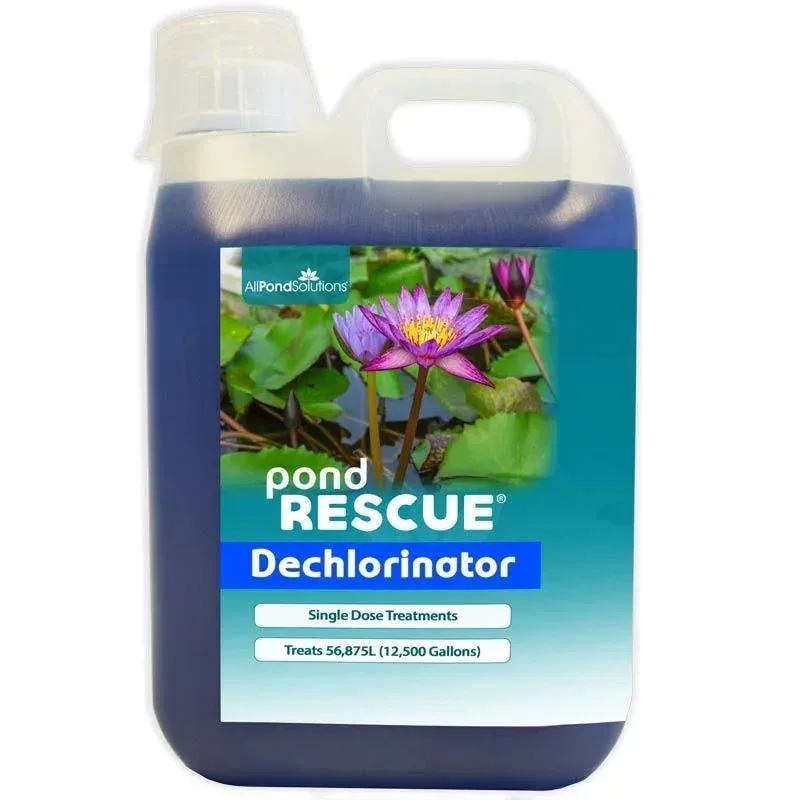
AllPondSolutions Pond Rescue Tap Water Dechlorinator 2.5L