Quick answer
Dress your baby for sleep in one layer more than you would wear, and choose the fabric based on room temperature. For rooms between 68-72°F (20-22°C), a bamboo pajama set with a 1.0 TOG sleep sack is a good starting point. Always check your baby's chest or back for sweat or coolness, and adjust from there.
Why fabric choice matters for sleep
Bamboo viscose is breathable and moisture-wicking, which helps regulate a baby's temperature during sleep. Unlike pure cotton, bamboo blends can stretch and feel cooler against the skin, reducing the chance of overheating. However, bamboo isn't magical—it still needs to be paired with the right room temperature and sleepwear weight.
When selecting bamboo pajamas, look for a snug fit. Loose fabric can ride up and pose a safety risk. Bamboo's natural stretch means the garment should hug the body without being tight. Always follow the manufacturer's sizing because bamboo blends can run small.
Understanding TOG ratings
TOG (Thermal Overall Grade) measures a garment's warmth. For sleep sacks and wearable blankets, TOG ratings range from 0.5 (lightest) to 3.5 (winter weight). A 1.0 TOG is suitable for standard room temperatures, while 2.5 TOG is for colder rooms. If you use a sleep sack, the TOG replaces the need for extra blankets, which are unsafe for infants.
If you're not using a sleep sack, you can estimate warmth by layers: a short-sleeve bodysuit plus bamboo pajamas is roughly equivalent to 1.0 TOG. A long-sleeve bodysuit underneath adds another 0.5 TOG. Always err on the side of cooler; overheating is linked to SIDS risk.
Step-by-step dressing for sleep
Follow these steps to dress your baby for sleep, adjusting based on the actual room temperature and your baby's cues.
Steps to dress your baby for sleep
- Check the room temperature: Use a thermometer in the nursery. Ideal sleep temperature is 68-72°F (20-22°C). If the room is warmer, dress lighter; if cooler, add a layer or increase TOG. Mistake: guessing the temperature. Always verify with a thermometer.
- Choose the base layer: Start with a short-sleeve bodysuit for mild rooms, or a long-sleeve bodysuit for cooler rooms. This layer wicks moisture and adds warmth. Checkpoint: the bodysuit should be snug but not tight.
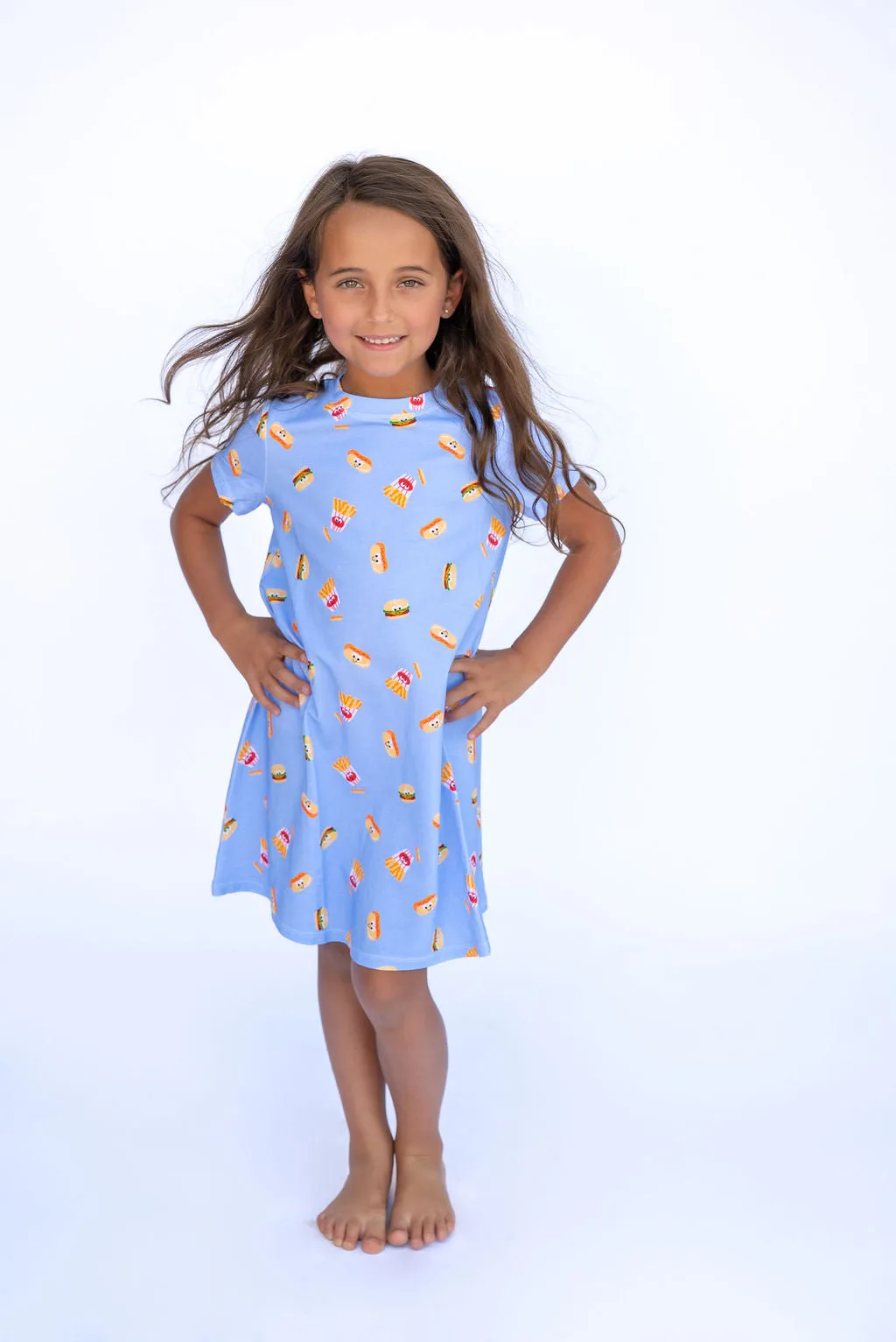
- Put on bamboo pajamas: Select a bamboo pajama set that fits snugly. Bamboo is breathable and moisture-wicking, helping prevent overheating. If using Fun Food 2.0, size up due to their snug fit. Mistake: choosing pajamas that are too loose. Loose fabric can ride up and is not safe for sleep.
- Add a sleep sack if needed: For room temperatures below 68°F, add a 1.0 TOG sleep sack over pajamas. For warmer rooms, skip the sack or use 0.5 TOG. Checkpoint: the sleep sack should allow free leg movement and fit snugly at the neck.
- Do a final comfort check: Feel your baby's chest or back. It should be warm but not sweaty. If sweaty, remove a layer; if cool, add a layer. Hands and feet are often cooler and not reliable indicators. Mistake: relying on hands and feet to judge temperature.
Product facts
- Fun Food 2.0: Fun Food 2.0 pajamas are made from 47% Modal, 48% Cotton, and 5% Spandex, and are tagless for comfort. They run 1-2 sizes small due to snug fit requirements. The modal blend is soft and breathable like bamboo, and the snug fit is safe for sleep. Because they run small, size up to avoid a too-tight fit that could be uncomfortable.