Quick answer
Use a noodle glove dog towel to blot and rub your dog's coat in the direction of hair growth, starting from the back and working down the legs. This removes the most water fast, then finish with a dry towel on the paws and face.
Why a glove towel speeds up drying
A noodle glove dog towel works like a wearable microfibre mitt: you put your hands into the pockets at the back and rub the fabric over your dog. Because you can use both hands and follow the body's contours, you cover more coat in less time than with a flat towel. The microfibre soaks up water and brushes away dirt at the same time, so your dog comes out cleaner as well as drier.
The trade-off is that a glove towel is not a full-body wrap. For very large or heavily coated dogs, you may still need a second towel to finish the job. But for most short- to medium-haired dogs, the glove gets them dry enough to stop shivering quickly.
When a glove towel is not the right tool
If your dog has a thick double coat or is soaked to the skin, a glove towel alone may not be enough. In that case, use the glove to remove the bulk of the water, then switch to a larger flat towel or a dog-specific drying coat. Also avoid using the glove on open wounds or hot spots; blot gently around those areas with a clean cloth instead.
Step-by-step: drying a wet dog with a noodle glove towel
- 1. Prep your dog and the towel: Stand your dog on a non-slip surface and have the noodle glove dog towel ready. Put your hands into the pockets at the back so the fabric covers your palms. Common mistake: trying to dry a dog that is still shaking off; wait a few seconds for the initial shake to finish.
- 2. Blot the back and sides first: Press the towel against your dog's back and sides, starting from the neck and moving toward the tail. Use gentle, downward strokes in the direction of the hair. Checkpoint: if the towel feels saturated, wring it out or switch to a dry section before continuing.
- 3. Work down the legs and belly: Use one hand to lift each leg slightly and rub the towel down from the body to the paw. For the belly, let your dog stand and slide the towel underneath with a gentle motion. Common mistake: rubbing against the hair growth, which can mat the coat and feel uncomfortable.
- 4. Finish the head and ears carefully: Use a corner of the towel to blot the face, avoiding the eyes and inside the ears. Never push the towel into the ear canal. Checkpoint: if your dog pulls away, slow down and use lighter pressure.
- 5. Do a damp check and repeat if needed: Run your hand against the coat to feel for damp patches. If the skin still feels wet, repeat steps 2 and 3 with a dry section of the towel. Takeaway: a dog that is dry to the touch on the back and legs is usually comfortable enough to go indoors.
Product facts
-
Noodle Glove Dog Drying Towel - Grey: Made with absorbent microfibre fabric that soaks up water and brushes away dirt. This means you can dry and clean your dog in one pass, saving time after muddy walks.
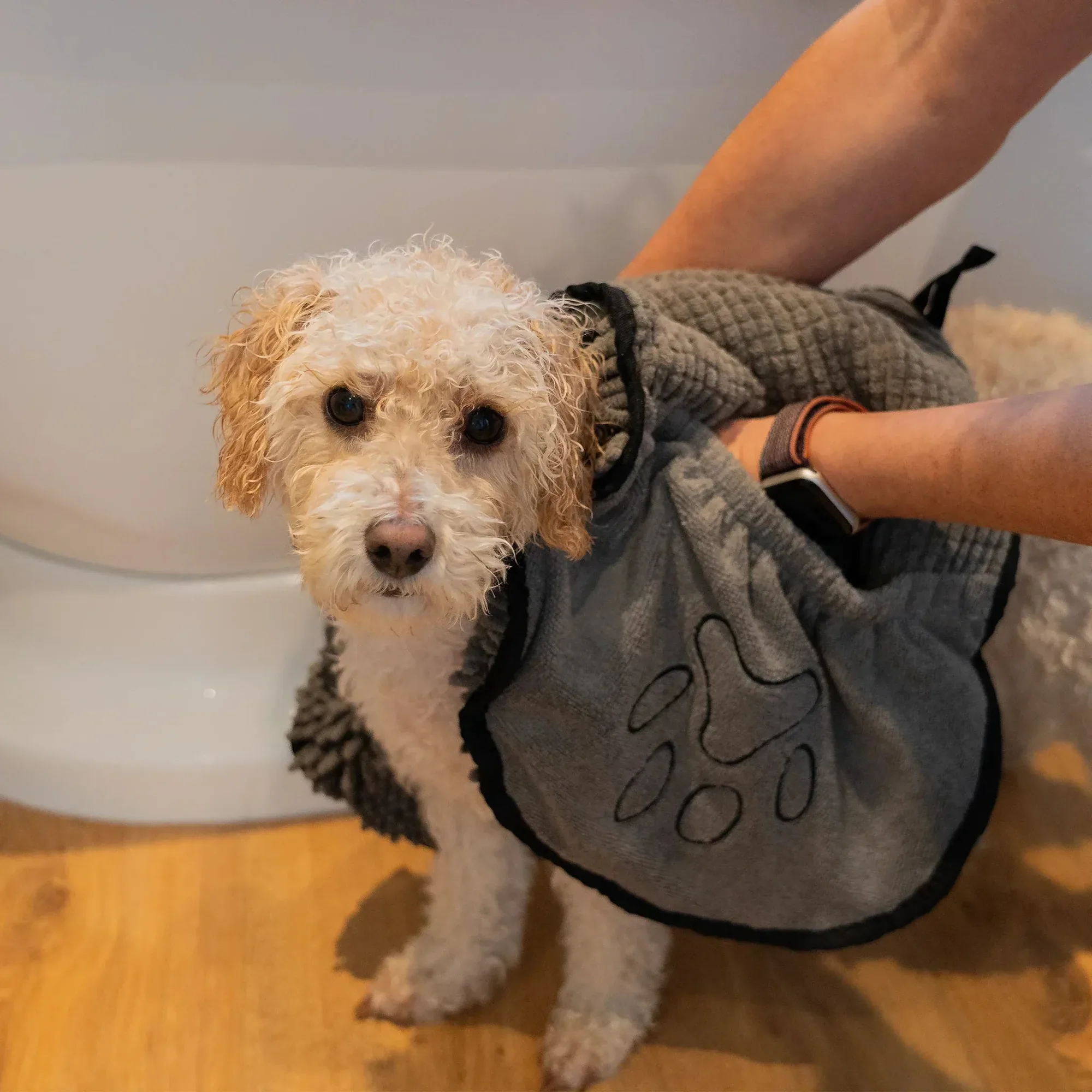
Noodle Glove Dog Drying Towel - Grey
-
Noodle Glove Dog Drying Towel - Grey: Machine washable for easy cleaning. You can reuse it after every wet walk without hand-washing, so it stays fresh and ready.