Quick answer
Don't fill a deep bed with 100% bagged potting mix. Instead, build a hugelkultur-style core: a bottom layer of logs and branches, then leaves or grass clippings, then a top 6–8 inches of quality soil or compost mix. This cuts the volume of purchased soil by half or more, improves drainage, and still gives roots deep, loose ground.
Calculate how much soil you actually need
Measure the bed's length, width, and the depth you plan to fill with soil. Multiply those three numbers to get cubic feet. For example, a 4 ft x 8 ft bed filled 12 inches deep needs 32 cubic feet. Most bagged soil is sold in 1 or 2 cubic foot bags, so you can quickly see the cost. If you only fill the top 8 inches with soil and use organic matter below, you cut the soil volume by a third or more.
Choose the right products for the job
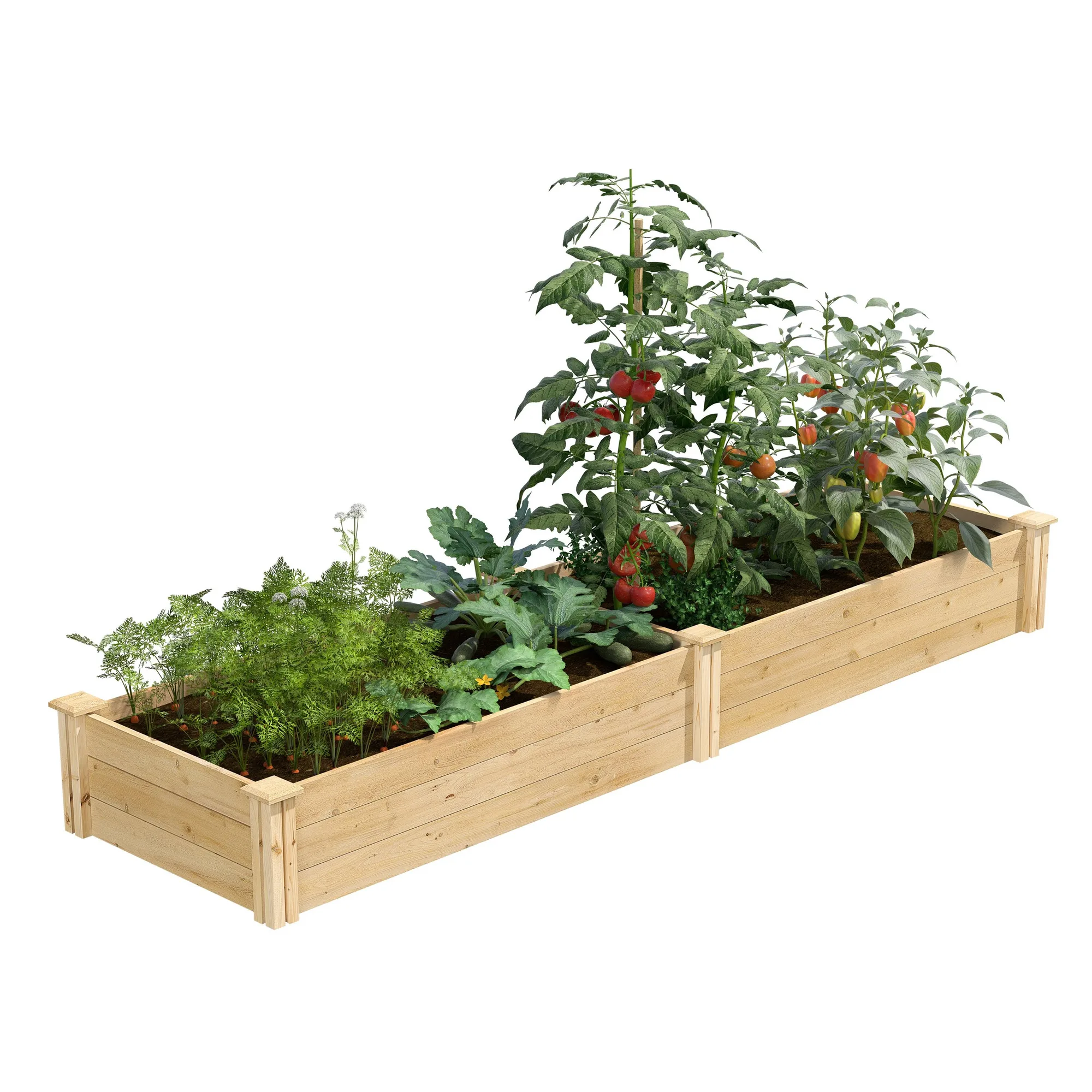
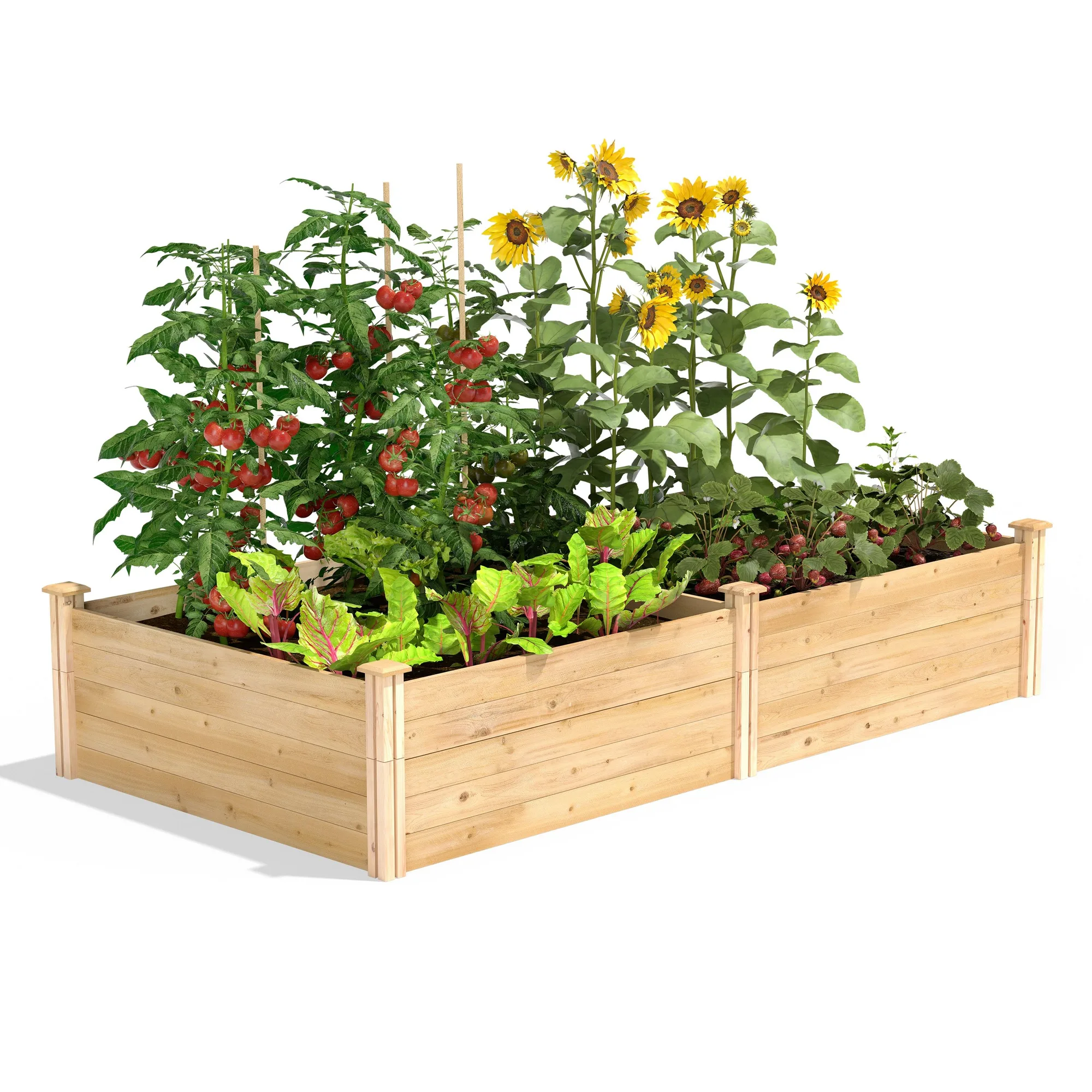
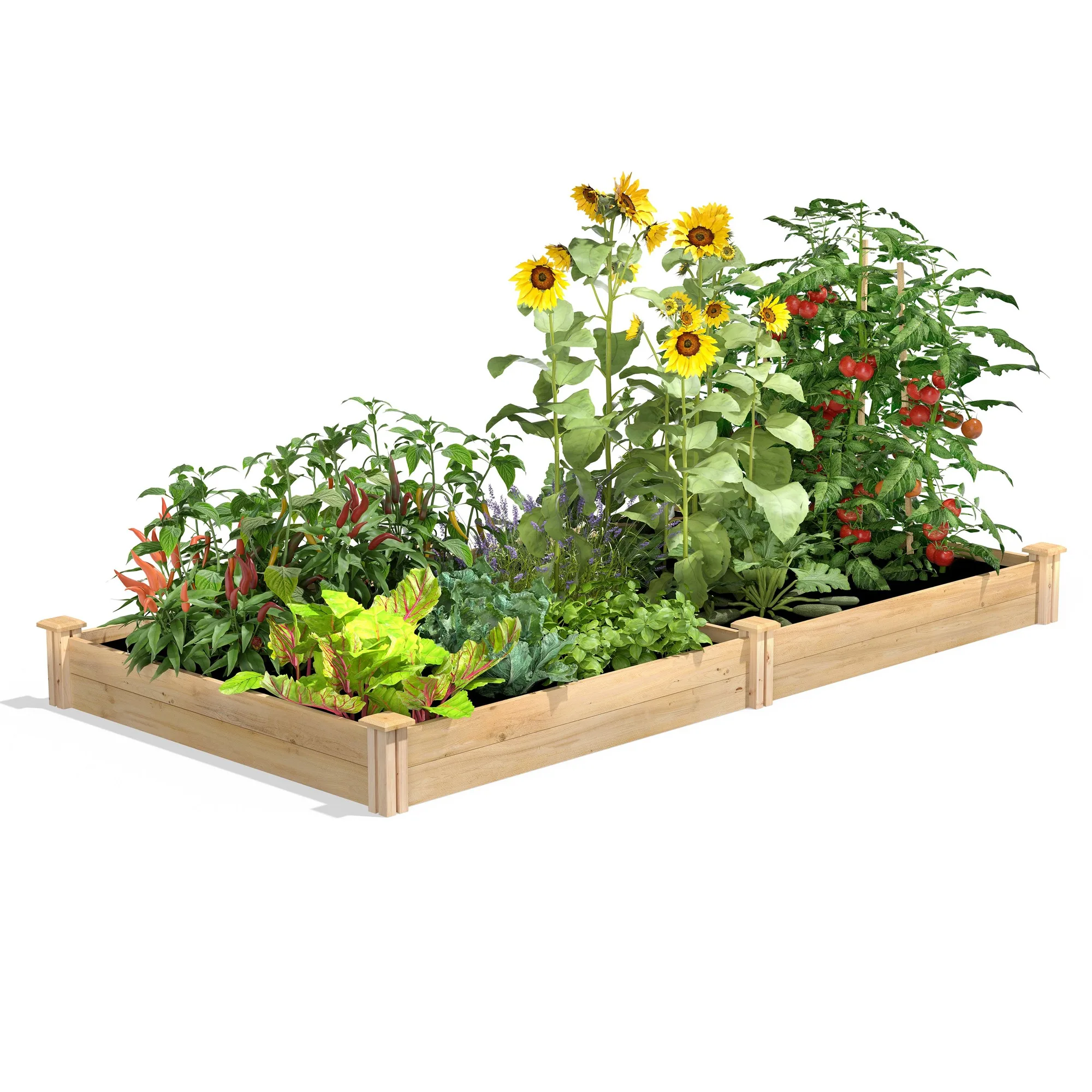
The depth of your bed determines how much filler you need. A 17.5-inch bed like the Premium Cedar Raised Garden Bed 4 ft x 8 ft x 17.5 in (3/4 in Thick) RC6S6T35B gives you plenty of room for a layered fill, while a shallower 7-inch bed like the Premium Cedar Raised Garden Bed 4 ft x 8 ft x 7 in (3/4 in Thick) RC48967 is best filled entirely with soil since there's less depth to work with. For a long, narrow space, the Premium Cedar Raised Garden Bed 2 ft x 8 ft x 10.5 in (3/4 in Thick) RC24966T offers a manageable size that still allows a modest layered approach.
Gather materials before you start
You'll need untreated logs, branches, or twigs; leaves, grass clippings, or straw; and a topsoil or compost blend. Avoid treated wood, black walnut, or diseased plant material. Also have a wheelbarrow or tarp, gloves, and a rake. If you're filling a bed on a patio or deck, check that the structure can handle the weight of wet soil.
Step-by-step: fill your deep bed
- 1. Calculate volume and mark your fill line: Measure the bed and decide how deep the soil layer will be. For a 17.5-inch bed, plan for 6–8 inches of soil on top of organic filler. Use a stick or tape to mark that line inside the bed so you don't overfill. Checkpoint: Write down the cubic feet of soil needed so you buy the right amount.
- 2. Add a bottom layer of logs and branches: Place untreated logs, thick branches, and twigs in the bottom third of the bed. Break them up so they don't create large voids. This is the core of a hugelkultur raised bed and will slowly decompose, feeding the soil. Common mistake: Using treated or painted wood, which can leach chemicals.
- 3. Fill the middle with leaves, grass, and kitchen scraps: Add a 4–6 inch layer of shredded leaves, grass clippings, straw, or compostable kitchen scraps. Tamp lightly to remove air pockets. This layer holds moisture and adds nutrients as it breaks down. Checkpoint: Keep the bed at least 6 inches from the top for the soil layer.
- 4. Top with a quality soil or compost mix: Fill the remaining depth with a blend of topsoil and compost. For a 17.5-inch bed, that's roughly 6–8 inches. Level it off and water gently to settle. Don't use straight garden soil from your yard, which can be heavy and weedy. Common mistake: Skimping on the top layer—this is where most roots grow.
- 5. Let it settle and plant: Water the bed thoroughly and wait a few days for the layers to settle. Top off with more soil if needed. Then plant your vegetables, herbs, or flowers as usual. Next step: Mulch the surface to retain moisture and suppress weeds.
Product facts
- Premium Cedar Raised Garden Bed 2 ft x 8 ft x 10.5 in (3/4 in Thick) RC24966T: Premium Cedar Raised Garden Bed 2 ft x 8 ft x 10.5 in (3/4 in Thick) RC24966T is made in the USA from untreated North American cedar with sanded 3/4 in. thick boards and routed corner posts. Untreated cedar is safe for edibles and resists rot, while the thicker boards and routed corners add strength without chemical treatments.
- Premium Cedar Raised Garden Bed 4 ft x 8 ft x 17.5 in (3/4 in Thick) RC6S6T35B: Premium Cedar Raised Garden Bed 4 ft x 8 ft x 17.5 in (3/4 in Thick) RC6S6T35B offers a deep 17.5-inch profile, expandable design, and no-tool assembly. The extra depth is ideal for layered hugelkultur filling, which saves soil and supports deep-rooted crops.
- Premium Cedar Raised Garden Bed 4 ft x 8 ft x 7 in (3/4 in Thick) RC48967: Premium Cedar Raised Garden Bed 4 ft x 8 ft x 7 in (3/4 in Thick) RC48967 is a shallower 7-inch bed made from chemical-free cedar. A 7-inch depth is best filled entirely with soil, so you won't need a bulky filler layer; it's a good choice for herbs, lettuce, and shallow-rooted plants.