Quick answer
Fill the bottom third of a tall raised bed with free organic material like logs, branches, and leaves (a hugelkultur raised bed method), then top with a balanced raised bed soil mix of 60% topsoil, 30% compost, and 10% perlite. Use a raised bed soil calculator to estimate volume, and avoid filling the entire bed with expensive bagged soil.
Why filling a raised bed gets expensive
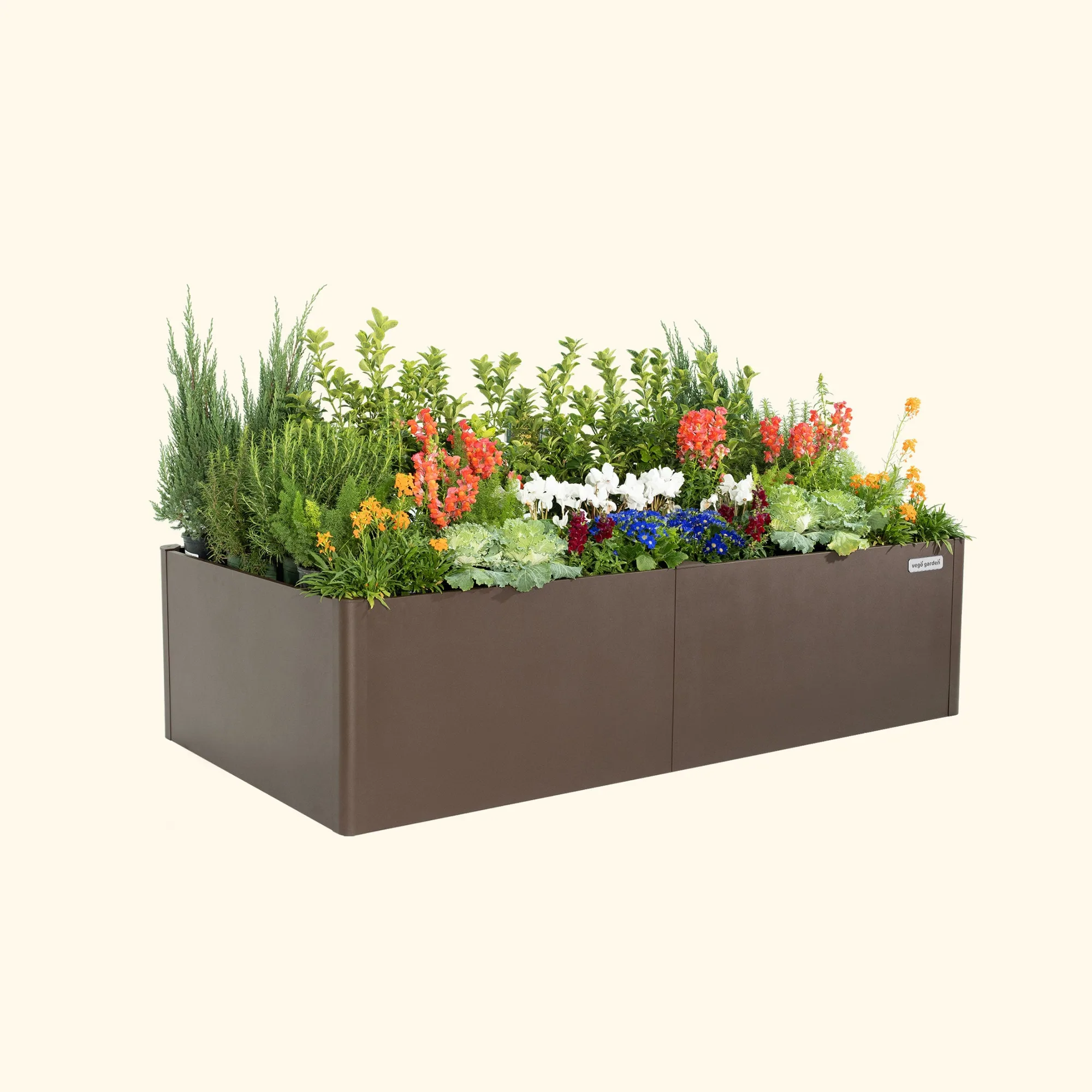
A 4x8 bed that is 17 inches tall holds about 45 cubic feet of soil—roughly 1.7 cubic yards. Buying that much bagged raised bed soil mix can cost hundreds of dollars. The solution is to fill the lower portion with free or low-cost organic matter that decomposes slowly, then reserve your best soil for the top 6–8 inches where most roots grow.
This approach works for any tall bed, including L-shaped or elevated designs. For example, the 17" Tall L-Shaped Raised Garden Bed Kit – Standard Size has a corner-friendly shape that can be filled the same way, using its height to your advantage.
Calculate how much soil you actually need
Before buying anything, measure your bed's length, width, and height in feet. Multiply them together to get cubic feet. For a 4x8 bed that is 1.5 feet tall, that's 48 cubic feet. If you plan to fill the bottom 8 inches (0.67 feet) with logs and leaves, you only need soil for the remaining 10 inches (0.83 feet), which is about 26.5 cubic feet.
Many online raised bed soil calculators assume you fill the entire bed with soil. Adjust the height field to only the depth you'll actually fill with soil mix. As a rough guide, 1 cubic yard equals 27 cubic feet. Bulk topsoil and compost are sold by the cubic yard and are far cheaper than bags.
Gather free and cheap filler materials
The best cheap raised bed filler is what you already have: fallen leaves, grass clippings (untreated), straw, cardboard, newspaper, and untreated wood scraps. Avoid using pressure-treated wood, glossy paper, or anything with plastic tape. For hugelkultur raised bed style, use rotting logs and branches—they act like a sponge, holding moisture and releasing nutrients as they break down.
If you don't have enough yard waste, ask neighbors for their leaves in fall, or check local arborists for free wood chips. Some municipalities offer free compost or mulch. Just be sure any material is free of pesticides and herbicides.
Layer your bed from the bottom up
Start with a 2–4 inch layer of cardboard or newspaper at the very bottom to suppress weeds. Then add logs and large branches, filling gaps with smaller twigs and leaves. Next, add a layer of grass clippings or straw, then a thin layer of native soil or unfinished compost. Finally, top with your raised bed soil mix.
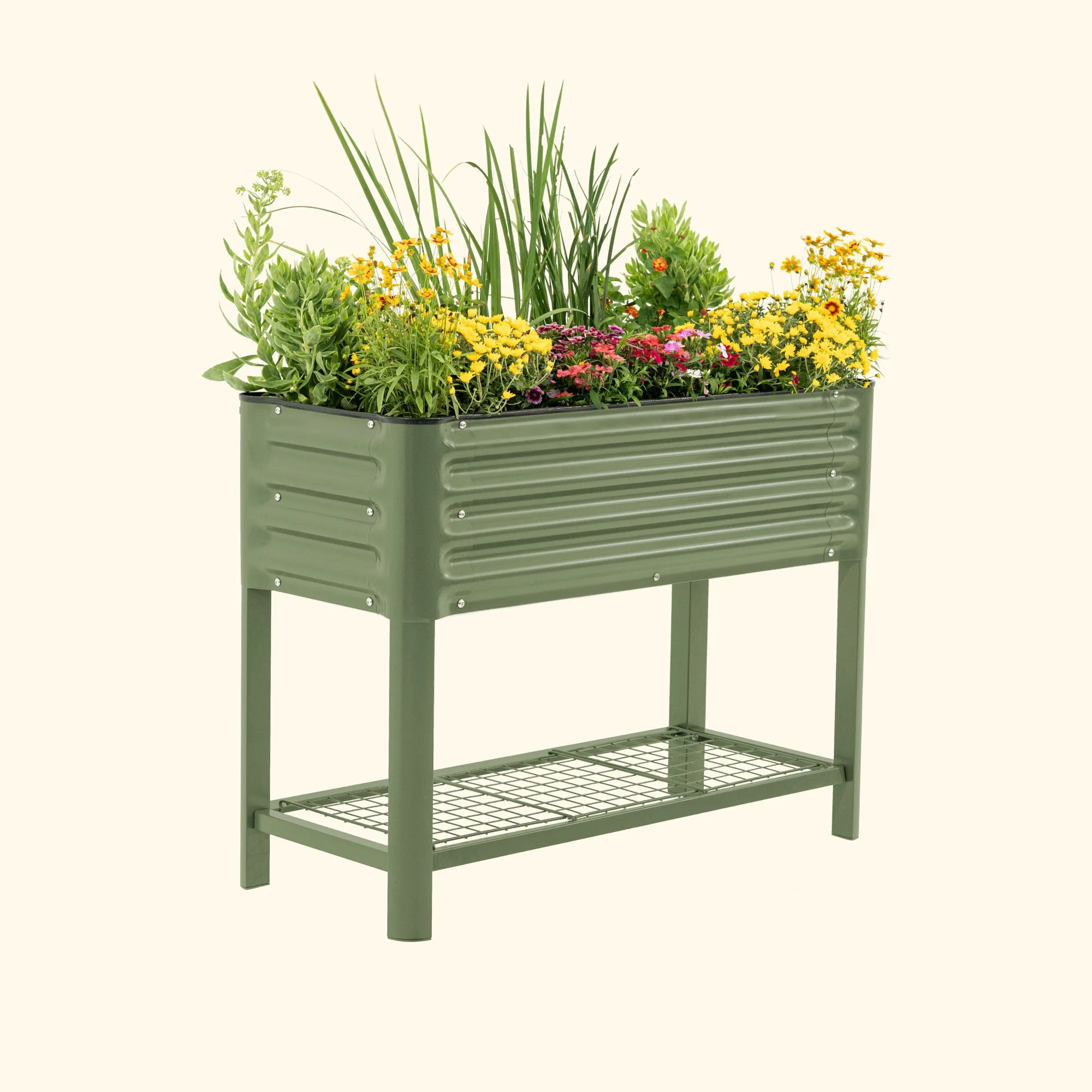
For a very tall bed, like the Elevated Garden Bed – Slim Series 1.5' x 3.5', which is designed for standing height, you may not want to fill the entire depth with logs because the bed is narrower. Instead, use a higher proportion of lightweight filler like leaves and straw to avoid excessive settling. Always leave 2–3 inches of space below the rim for mulch and watering.
Mix a balanced raised bed soil mix
The top 6–10 inches should be a nutrient-rich mix. A reliable recipe is 60% topsoil, 30% compost, and 10% perlite or coarse sand for drainage. If you're filling a large bed, buy topsoil and compost in bulk. For smaller beds, bagged mixes work fine. Avoid using only potting soil—it's too light and expensive for filling large volumes.
You can also mix in slow-release organic fertilizer or worm castings. Test your soil's pH and nutrient levels after the first season and adjust as needed. Remember that as the organic filler decomposes, the soil level will drop, so you'll need to top it off annually.
Step-by-step filling process
- Measure and calculate volume: Measure length, width, and height of your bed in feet. Multiply to get cubic feet. Decide how deep your soil layer will be (usually 6–10 inches) and calculate only that volume. Use an online calculator or do it manually. Checkpoint: Write down your total soil volume needed. This prevents overbuying.
- Add a weed barrier at the bottom: Lay down 2–4 layers of cardboard or 10 sheets of newspaper, overlapping edges. Wet it thoroughly. This smothers weeds and attracts worms. Mistake to avoid: Don't use plastic sheeting—it blocks drainage and air.
- Fill the bottom third with logs and branches: Place rotting logs, thick branches, and twigs in the bottom third of the bed. Fill gaps with leaves and grass clippings. This is the hugelkultur method. Checkpoint: The bed should be about one-third full. Don't compact the materials.
- Add a middle layer of leaves and straw: Add 4–6 inches of shredded leaves, straw, or untreated grass clippings. Tamp down lightly. This layer adds organic matter and improves drainage. Mistake to avoid: Don't use hay—it contains seeds that will sprout.
- Top with raised bed soil mix: Mix 60% topsoil, 30% compost, and 10% perlite. Fill the remaining depth, leaving 2–3 inches below the rim. Water thoroughly to settle. Checkpoint: Soil should be moist but not soggy. Add more mix after settling if needed.
- Mulch and maintain: Apply 2 inches of mulch (straw or wood chips) on top. Replenish soil annually as organic matter decomposes. Next step: Test soil pH and nutrients before each growing season.
Product facts
- 17" Tall L-Shaped Raised Garden Bed Kit - Standard Size: Our L-Shaped design offers a striking configuration perfect for corners, giving you access to more growing space for your vegetables, flowers, and other plants. The L-shape uses corner space efficiently, so you can fill it with the same layered method and grow more without needing extra soil volume.
- Elevated Garden Bed - Slim Series 1.5' x 3.5': At just 1.5 ft wide, it's compact enough for balconies and patios yet strong enough to deliver cleaner harvests, easier access, and a smarter way to garden season after season. Its slim profile means you need less soil to fill it, making it a budget-friendly option for small spaces.