Quick answer
Measure the finger you plan to wear it on with a strip of paper or a ring you already own, then choose the adjustable Buddha ring setting that matches that measurement. Because the band adjusts, you can fine-tune the fit after it arrives, but starting close to your true size keeps the ring secure and comfortable.
Why an adjustable band still needs a starting size
An adjustable ring is not one-size-fits-all. The band can open and close, but it still has a range. If you start too far outside that range, the ring may spin, pinch, or sit unevenly on your finger. Starting with an accurate measurement means the adjustable feature works as a fine-tuning tool rather than a fix for the wrong size.
The Adjustbale Buddha Ring uses an adjustable diameter, so the band can be gently shaped to your finger. That adjustability is helpful for swollen fingers, layered styling, or gift-giving, but it does not replace a basic measurement.
When to measure and when to re-check
Fingers change size during the day and with temperature. Measure in the afternoon or evening when your hands are at a normal temperature, not first thing in the morning or after exercise. If you are between sizes, choose the larger starting point and adjust the band slightly tighter, because opening a band that is too small puts more stress on the metal.
Re-check the fit after wearing the ring for an hour. A ring that feels right in the first minute can feel loose once your hands warm up or tight after typing or carrying bags.
Step-by-step: measure and set your Buddha ring fit
- Measure your finger with paper or string: Wrap a narrow strip of paper or non-stretch string around the base of the finger where the ring will sit. Mark where the ends meet, then lay it flat and measure the length in millimeters. This is your finger circumference. Common mistake: pulling the paper too tight; it should slide off easily. Measure the exact finger you plan to wear the ring on, not a neighboring finger.
- Check the measurement against a ring you already own: If you have a ring that fits well, measure its inside diameter with a ruler and compare it to your paper measurement. A ring that fits comfortably should slide over the knuckle with slight resistance and not spin freely. Common mistake: measuring the outside of the ring instead of the inside. Use the inside diameter, not the outer width, for comparison.
- Choose the closest adjustable setting: Set the adjustable band so its inner opening matches your measured circumference. Open or close the band gently with both hands, keeping the design centered. Common mistake: forcing the band open wider than needed, which can distort the shape. Adjust in small increments and try the ring on after each change.
- Wear-test for an hour and re-check: Wear the ring for at least an hour during normal activity. It should stay in place without leaving deep marks. If it spins or slides off easily, close the band slightly; if it feels tight or leaves a red indentation, open it a little. Common mistake: judging the fit in the first minute before your finger settles. A good fit leaves a light mark but does not restrict movement or feel uncomfortable.
- Fix a ring that is too loose: If the ring is too loose, gently squeeze the adjustable band inward in small steps until it stays on your finger. Avoid wearing a loose ring on a finger where it can slide off during hand washing or exercise. Common mistake: over-tightening to compensate for a band that has stretched; adjust only enough to keep the ring secure. If the band no longer holds its shape after repeated adjustments, stop adjusting and wear it on a different finger.
Product facts
-
Adjustbale Buddha Ring: The ring has an adjustable diameter and is made of stainless steel with cubic zirconia. The adjustable band lets you fine-tune the fit after measuring, while stainless steel holds its shape better than softer metals when you adjust it gently.
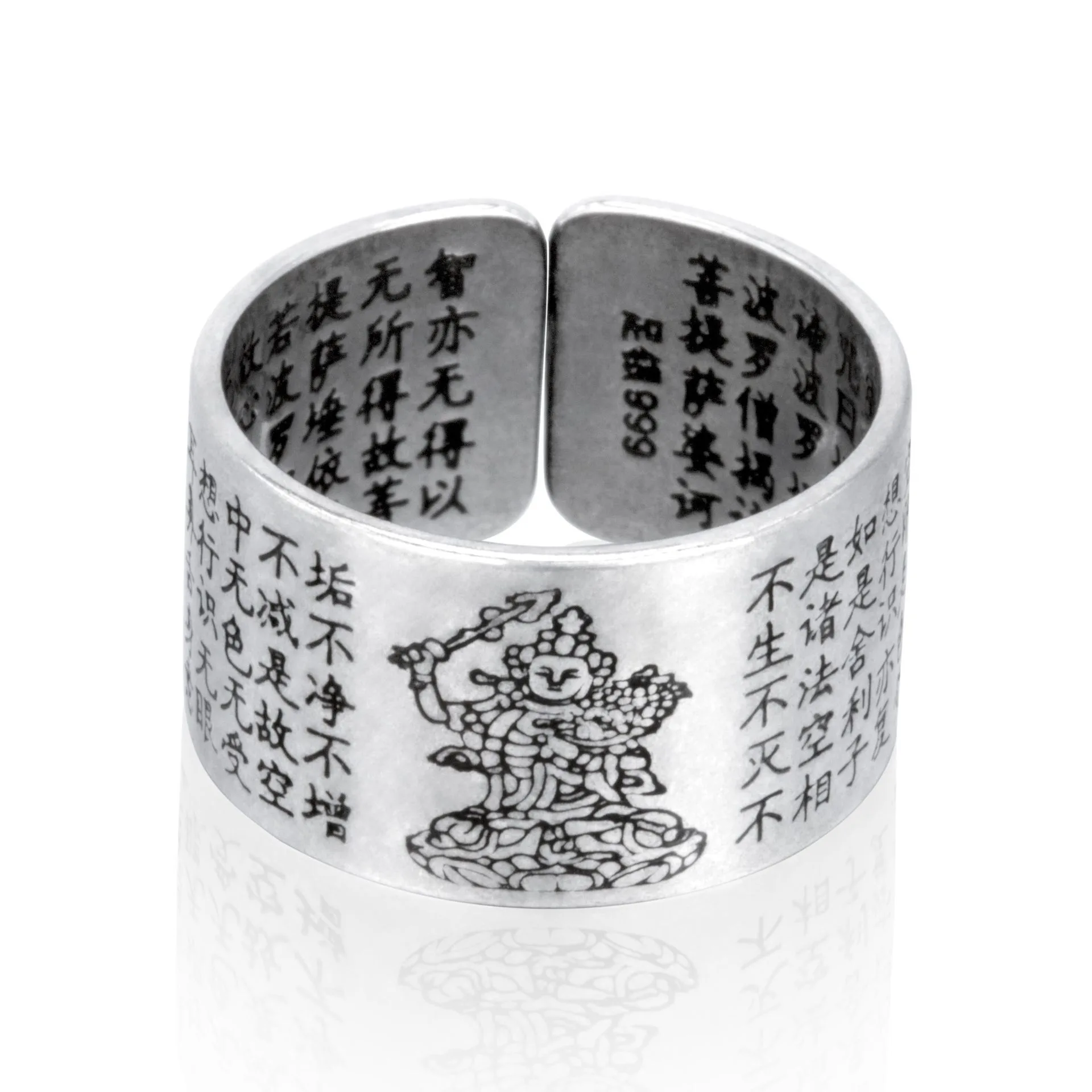
Adjustbale Buddha Ring