Quick Answer
Fit the collar high on the neck, just behind the ears, with the control ring on top. Adjust so it releases freely when slack and tightens only when you apply gentle pressure.
Why Slip Collar Fit Matters for Training
A slip collar that is too loose can slip over the dog's head accidentally, while one that is too tight may cause discomfort or restrict breathing. The correct fit ensures the collar releases quickly when slack, giving your dog clear communication during training.
Waterproof materials like Biothane add durability and easy cleaning, but the fitting principles remain the same as for nylon or leather slip collars.
Step-by-Step Fitting Guide
- 1. Choose the Right Size and Width: Measure your dog's neck circumference and add 2–3 inches (5–8 cm). For most dogs, a 1/2-inch (12 mm) width works well; use 3/4-inch (19 mm) for large breeds. The collar should slide over the dog's head easily when unfastened. A collar that is too short will not release properly; one that is too long may dangle and catch on objects.
- 2. Position High on the Neck: Place the collar just behind the ears, high on the neck. The control ring (the ring you attach the leash to) should sit on top, centered. This position gives you the most control with the least pressure. If the collar sits low near the shoulders, it may not release quickly and can put pressure on the trachea.
- 3. Check the Release: With the collar fitted, pull the leash gently to tighten, then release. The collar should fall back to a loose, open position immediately. If it stays tight or only loosens partially, the fit is too snug. A collar that does not release freely can cause accidental choking or confusion during training.
- 4. Test the Tightness Limit: Tighten the collar fully (as it would during a correction). You should be able to slide one or two fingers between the collar and your dog's neck. If you cannot, the collar is too tight; if you can fit more than two fingers, it is too loose. Never use a slip collar that cannot be loosened by hand—this indicates a safety risk.
- 5. Practice the Release Motion: Attach the leash and practice a gentle pop-and-release motion. The collar should tighten briefly and then release immediately as you slacken the leash. Do not hold constant tension. Constant pressure defeats the purpose of a slip collar and can cause neck injury or panic.
Recommended Product
-
Coral Waterproof Biothane Slip Dog Collar: Handmade in Yorkshire from waterproof, stink-proof Biothane that resists mud, rain, and river water. You can train in wet conditions without the collar absorbing odors or losing shape, and it rinses clean in seconds.
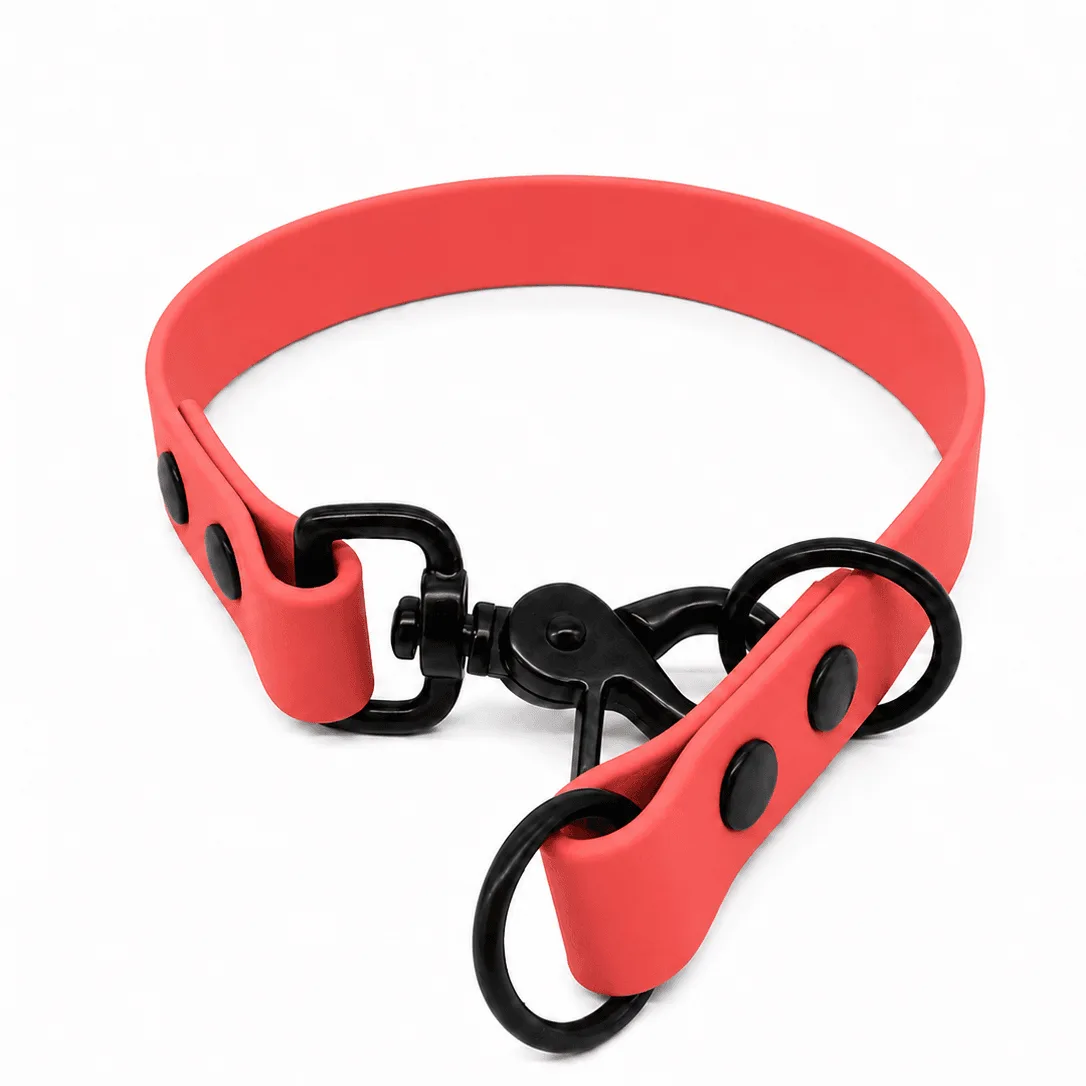
Coral Waterproof Biothane Slip Dog Collar