Quick answer
Start by fitting backpacking hunting boots with thick socks and a thumb's width of space at the toe, then follow a season-long care routine that keeps leather and membranes performing on multi-day trips.
Why fit and care matter more for backpacking hunting boots
Backpacking hunting boots carry heavy loads over uneven ground for days at a time. A poor fit leads to blisters, lost toenails, and fatigue that ruins a hunt. Neglected care lets moisture rot the leather and degrade the waterproof membrane, shortening the boot's life by half or more.
How to fit and care for backpacking hunting boots
- 1. Fit with your hunting socks on: Wear the same thick wool or synthetic socks you hunt in. Slide your foot forward until toes touch the front, then check the heel — you should barely fit one finger behind your heel. Stand up and check toe room: you need a thumb's width (about half an inch) between your longest toe and the boot's end. Common mistake: buying boots too short because you tried them on with thin socks. Always bring your hunting socks to the store.
- 2. Break in gradually over several walks: Wear the boots around the house for a few hours, then take short walks on flat ground. Gradually increase distance and add light pack weight over 1–2 weeks. Stop if you feel hot spots — those areas will become blisters. Use moleskin or boot stretchers on tight spots before they cause damage. Checkpoint: after 10 miles of break-in, the boots should feel supportive without painful pressure points. If not, reconsider the fit.
- 3. Clean after every trip, especially in mud or snow: Brush off loose dirt with a soft brush. For heavy grime, use a damp cloth — no soap unless the leather is very dirty. Dry boots slowly at room temperature away from direct heat. Never put them on a radiator or in front of a fire, as that cracks the leather and delaminates the sole. Common mistake: storing wet boots in a gear closet. They grow mildew and rot the stitching. Always dry fully before storage.
- 4. Condition leather and reproof regularly: Use a wax-based conditioner for full-grain leather boots like Zamberlan's Hydrobloc treatment. Apply a thin layer to clean, dry leather and let it absorb overnight. For GTX-lined boots, you only need to treat the leather — the membrane stays waterproof inside. Reproof every 3–4 trips or whenever water stops beading on the surface. Checkpoint: if the leather feels stiff or looks dry, condition immediately. Over-conditioning clogs pores and makes the boot heavy, so use sparingly.
- 5. Store boots properly between seasons: Clean and condition before storage. Stuff boots with newspaper or boot trees to hold shape. Keep them in a cool, dry place away from sunlight and heat sources. Never store in a sealed plastic bag — leather needs to breathe. Check every few months for mold or dry spots. Common mistake: shoving boots into a dark, damp basement. They'll develop mold and lose waterproofing. A closet shelf works better.
Product facts
-
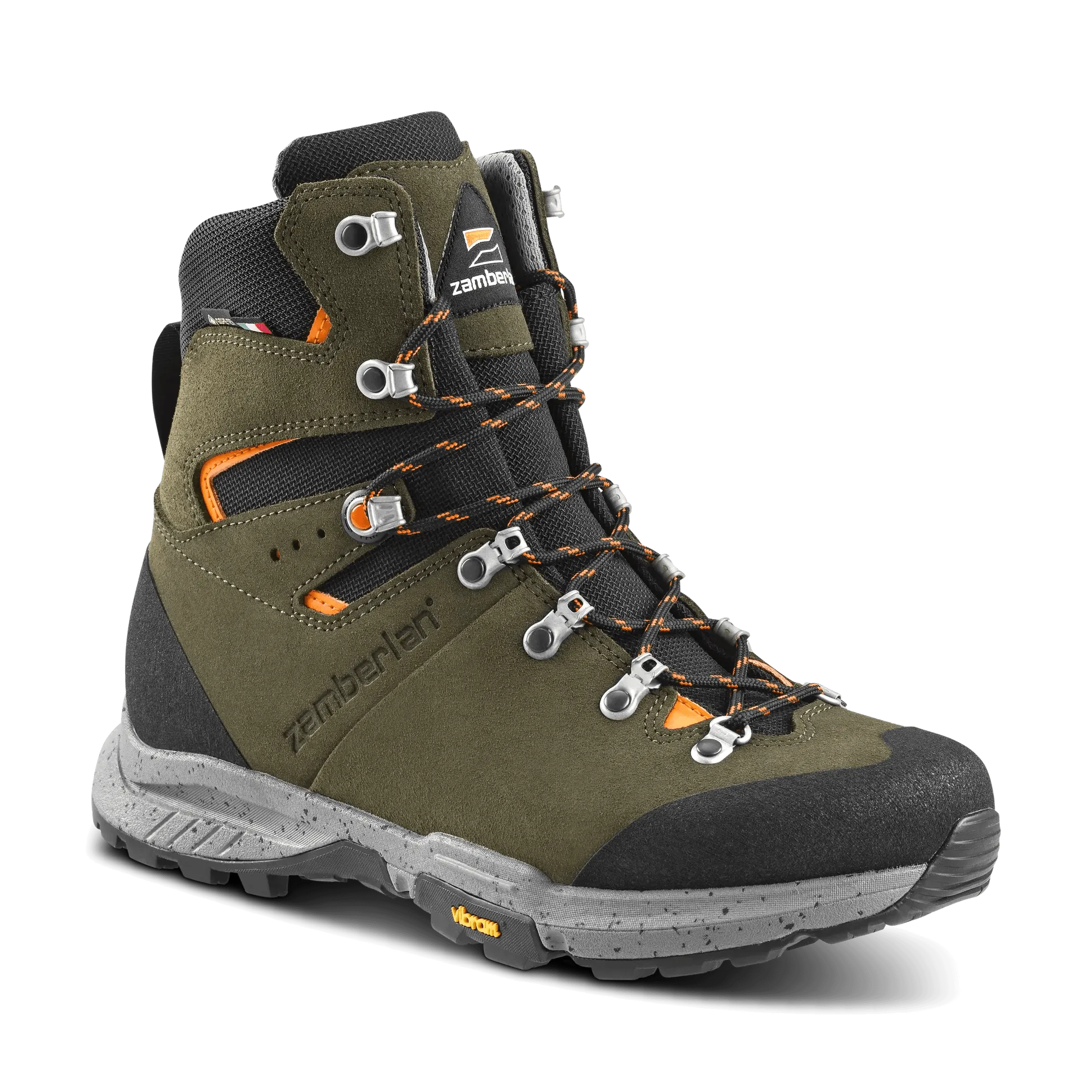
THUNDER PRO GTX - Musk: The Thunder Pro GTX uses Zamberlan's Active Heel Pad (AHP) construction with a low-density PU insert in the heel insole for continuous cushioning. This design reduces impact shock on rough descents, making it easier to stay stable when carrying a heavy pack over rocky terrain.
THUNDER PRO GTX - Musk