Quick answer
To use bed restraints safely, anchor the straps under a sturdy mattress, adjust each cuff so it stays snug without pinching, and agree on a safe word and quick-release plan before you begin.
Why under-mattress anchoring matters
Bed restraint systems rely on the weight of the mattress to hold the straps in place. A heavy mattress on a solid frame gives you the most stable anchor; a lightweight mattress on a slatted base may shift, so test the setup before play. Always check that straps run flat and cannot twist or bunch under the mattress, because a twisted strap can create pressure points or loosen unexpectedly.
Cuff fit: snug, not tight
Velcro-style closures let you fine-tune the fit, but they can also be over-tightened. You should be able to slide one finger under each cuff. If the skin around the cuff turns white, feels cold, or tingles, loosen it immediately. Check circulation every few minutes during play, especially if the cuffs are on ankles or wrists for an extended time.
When a bed restraint is not the right choice
If you have limited mobility, circulation issues, or a bed that cannot safely hold the straps, skip bed restraints and consider hand-held cuffs or other restraint styles that do not rely on furniture anchoring. Also avoid using bed restraints with a partner who cannot clearly communicate discomfort or who has not agreed to a safe word in advance.
Step-by-step bed restraint setup and wear
- Choose a suitable bed and clear the area: Pick a bed with a firm mattress and a solid frame. Remove loose bedding, pillows, or objects that could interfere with the straps. Common mistake: using a lightweight mattress that slides easily, which can cause the straps to shift during play. Test the mattress by pressing down where the straps will run; if it lifts easily, choose another bed.
- Lay out the straps before lifting the mattress: Unfold the straps and identify the cuff attachment points. Arrange them so they will sit where your partner’s wrists and ankles will naturally rest. Common mistake: twisting the straps during setup, which creates pressure points and weakens the anchor. Run your hand along each strap to confirm it lies flat and untwisted.
- Anchor the straps under the mattress: Lift the mattress and slide the securing straps beneath it, positioning them so the cuff ends emerge at the sides or foot of the bed. Pull the straps taut and lower the mattress. Common mistake: leaving slack, which lets the straps pull free when tension is applied. Tug each strap firmly from the cuff end to confirm the mattress holds it securely.
- Attach and adjust the cuffs: Fasten each cuff around your partner’s wrist or ankle using the velcro-style closure. Adjust until snug but not tight—you should be able to slide one finger underneath. Common mistake: over-tightening because velcro feels secure, which can restrict circulation. Do a quick circulation check: skin should be warm and normal color, with no tingling.
- Agree on a safe word and release plan: Before play, agree on a safe word and a physical signal in case speech is difficult. Confirm that you can reach the quick-release tabs or velcro closures easily. Common mistake: assuming the safe word is understood without practicing it. Practice the release once before you begin so both partners know exactly how to free the cuffs.
- Check in during play and after: Pause every few minutes to ask about comfort, numbness, or tingling. After play, remove cuffs slowly and inspect the skin for redness or marks. Common mistake: ignoring subtle discomfort because the scene is intense. If your partner reports any numbness or tingling, stop immediately and remove the cuffs.
Product facts
-
Boundless Bed Restraint: Includes wrist and ankle cuffs with velcro-style closures and universal claps. The adjustable closures let you dial in a secure but comfortable fit for different body types.
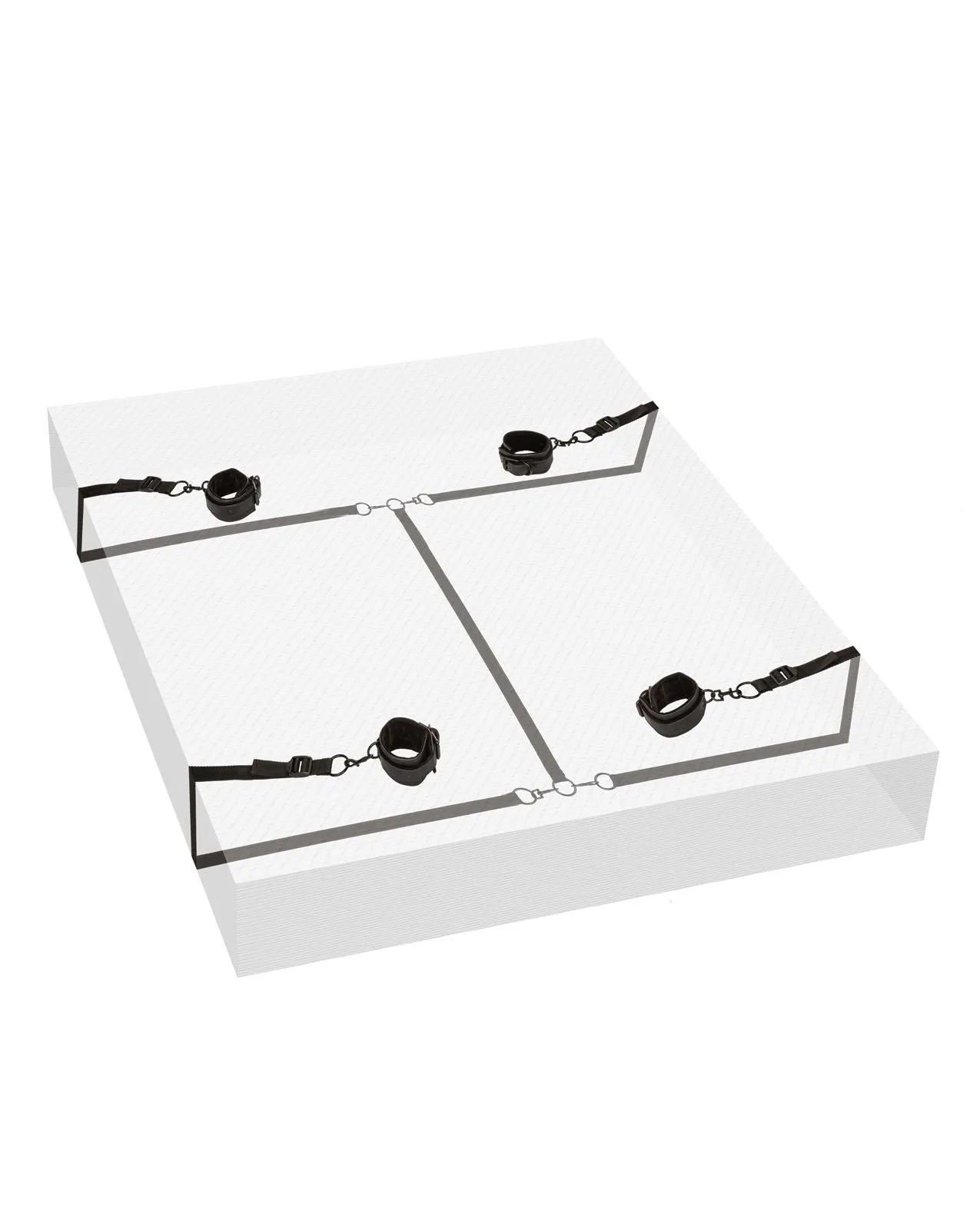
Boundless Bed Restraint
-
Boundless Bed Restraint: Very-sturdy, adjustable securing straps wrap beneath nearly any size bed mattress. You can anchor the system on most beds without permanent modifications, but always verify the mattress is heavy enough to hold the straps.