Quick Answer
If your bra digs into your shoulders, the band is usually carrying too little weight, so the straps take the load. Tighten the band to the loosest hook that stays level, then loosen the straps until you can slide two fingers under them. If the digging continues, switch to a bra with wider straps, a J-hook, or a more supportive band.
You take your bra off at the end of the day and there they are: two red grooves pressed into your shoulders. It is tempting to blame the straps and loosen them, but that often makes the problem worse. Shoulder digging is usually a support problem, not a strap problem.
The fix starts with understanding where the weight should sit. Once you know whether the band, the straps, or the cup is doing the wrong job, you can correct it in a few minutes or decide it is time for a different bra.
Why Your Straps Are Doing the Band's Job
A well-fitting bra carries most of its weight in the band, which wraps around your ribcage where the body is strongest. The straps should mainly hold the cups close to your chest, not hoist the whole bra up. When the band is too loose, it slides up in the back and stops supporting, so the straps have to take over. That is when they dig in.
This is why simply loosening tight straps rarely solves bra shoulder pain. It can even make things worse, because a loose strap lets the cup drop forward, which pulls the band up and repeats the cycle. The goal is a band that stays level and firm, with straps that sit lightly on your shoulders.
- Check the band first: it should be level all the way around and stay put when you lift your arms.
- Loosen straps only after the band is correct, and stop when two fingers slide under comfortably.
- If the band rides up in back, go down a band size and up a cup size to keep the same volume.
How to Fix It in Three Steps
Start with the band. Fasten it on the loosest hook and check that it sits level and does not lift when you raise your arms. If it lifts, tighten the band by moving to a tighter hook or sizing down. A band that stays put takes the weight off your shoulders immediately.
Next, adjust the straps. Loosen them until they rest on your shoulders without pressing, then tighten just enough that they do not slip off. You should be able to slide two fingers under each strap. If the straps are still digging after this, the cup size or shape may be wrong.
Finally, check the cups. If the center gore does not sit flat against your chest or the underwire presses on breast tissue, the cups are likely too small or too shallow. That forces the band up and the straps down into your shoulders. A cup size up often relieves shoulder pressure more than any strap adjustment.
- Fasten on the loosest hook first; move to tighter hooks as the band relaxes over time.
- Slide two fingers under each strap as a simple tightness test.
- If the center gore floats away from your chest, try one cup size larger.
When to Choose a Shoulder-Friendly Bra Instead
Some bras are simply better at spreading weight. Look for wider straps, a J-hook that converts to racerback, or a band with more rows of hooks for a more adjustable fit. A racerback conversion pulls the straps inward so they are less likely to slip and can reduce pressure points on the shoulders.
If you have a fuller bust, a bra with a hidden sling or a three-piece cup can lift from the bottom rather than pulling from the shoulders. The Mila Curve Balconette Bra - Cappuccino, for example, uses a hidden mesh sling in the bottom of the cups for lift and shape, and its four hook and eye closure gives extra room on days you need it. That construction can mean less strap tension overall.
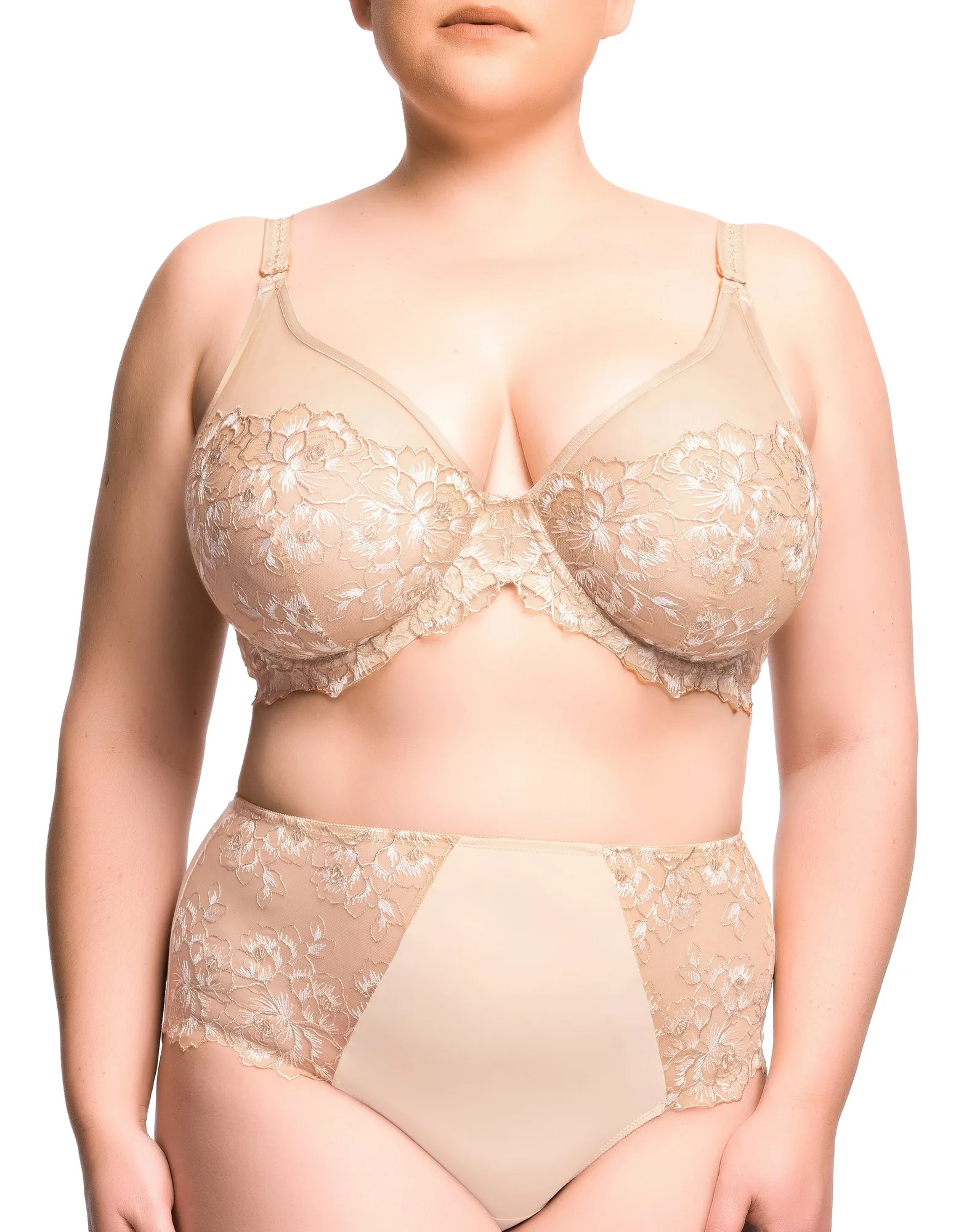
Mila Curve Balconette Bra - Cappuccino
If you have tried band and cup adjustments and still get deep grooves, it may be time to stop tightening and start shopping for a different structure. A shoulder-friendly bra is not a compromise; it is a better match for how your body carries weight.
- Look for bras with wider straps or a J-hook racerback option.
- More hook rows give you finer adjustment as the band stretches.
- A hidden sling or multi-piece cup can lift from the base instead of the shoulders.
What Not to Do
Do not tighten the straps to stop them slipping. That adds pressure to your shoulders and can cause headaches or numbness over time. If straps slip, the band is usually too loose or the strap position is wrong for your frame.
Do not ignore red marks that last for hours or cause tingling in your arms. A bra should leave light, temporary impressions at most. Persistent pain is a sign to change the bra, not to tough it out.
- Avoid tightening straps as a quick fix for slipping.
- If you feel tingling or numbness, take the bra off and reassess the fit.
Diagnose Your Shoulder Digging
- Band rides up in back: The band is too loose and the straps are carrying the weight. Tighten the band or go down a band size and up a cup size. If the band stays level, shoulder pressure should drop within minutes.
- Straps dig even after loosening: The cups may be too small or too shallow, pushing the band up and the straps down. Try one cup size larger. If the center gore sits flat and the digging stops, the cup size was the issue.
- Straps slip off constantly: The band is likely too loose or the strap position does not suit your shoulder shape. A J-hook racerback conversion can help. If slipping continues after band adjustment, look for a bra with a J-hook or wider straps.
- Red grooves or tingling after a few hours: This is beyond a simple adjustment. Stop tightening and switch to a shoulder-friendly bra with wider straps or a more supportive band. If symptoms persist with a well-fitted bra, consult a fitter or healthcare professional.
Bras That Take Pressure Off Your Shoulders
- Mila Curve Balconette Bra - Cappuccino: Features a hidden mesh sling in the bottom of the cups for lift and shape, plus a four hook and eye closure and back strap positioning that helps prevent straps from slipping. The sling lifts from the base so the straps do not have to hoist the bust, and the extra hooks let you fine-tune the band as it relaxes.
- Zhara Balconette Bra: Made with Sainted Sisters' Flex Lux padding that has multi-way stretch and moulds to your bust shape without restriction, and the shoulder straps feature a J-hook for racerback wear. The J-hook lets you convert to racerback, which can keep straps in place and reduce shoulder digging, while the flexible padding avoids adding bulk that pulls on the straps.
- Isabella Balconette Bra: Lightly padded with Flex Lux padding and shoulder straps that feature a J-hook for racerback or tank styles, with back strap positioning that helps prevent slipping. A racerback option and stable back strap placement are practical fixes when straps dig or slide, without needing to overtighten them.
Shoulder digging is usually a sign that your band needs to do more work and your straps need to do less. Fix the band first, adjust the straps second, and check your cup size third. If the grooves and pain continue, it is not a tightening problem anymore. It is a bra structure problem, and a shoulder-friendly style with a J-hook or hidden sling is the better answer.