Quick answer
Most loose sternum straps can be fixed by rethreading the webbing through the slider so it lies flat, then moving the anchor points to a position where the strap runs level across your chest. If the slider no longer grips or the elastic is stretched out, replace the strap.
Why sternum straps slip in the first place
A sternum strap stays put through friction: the slider grips the webbing, and the anchor points on the shoulder straps hold the strap at a fixed height. When either contact point loses tension, the strap slides a little with every arm swing. That is why a strap that felt fine in the store can creep downward on a long climb.
Shoulder strap shape matters too. On packs with curved or highly padded shoulder straps, the anchor hardware can sit at an angle, so the webbing pulls sideways instead of straight across. The fix is usually repositioning rather than tightening harder.
When tightening makes it worse
Over-tightening is the most common self-inflicted version of this problem. Crank the sternum strap too snug and the shoulder straps get pulled inward, which can distort the pack's fit and make the strap more likely to creep. Adjust in small steps and check that you can still slide a flat hand under the shoulder straps.
Also check the load. A pack that is under-packed or packed with weight sitting low will shift more, and the sternum strap will appear to slip when the whole pack is moving. Fixing the load often settles the strap.
Diagnose and fix your slipping sternum strap
- Symptom: strap slides down gradually while hiking: Check that the webbing runs straight through the slider and lies flat, not twisted. A twisted strap cannot grip evenly and will creep under load. Rethread it so the tail exits cleanly. If the strap still slides after rethreading, move to the anchor-position check.
- Symptom: strap pulls sideways or bunches at the anchor: Adjust sternum strap position up or down one notch at a time until the strap crosses your chest roughly level, about 2–3 inches below your collarbone. On curved shoulder straps, a slightly higher anchor often reduces sideways pull. Test on a short walk with your typical load before committing to the new position.
- Symptom: slider no longer grips the webbing: Inspect the slider for cracks, worn teeth, or a stretched opening. If the hardware is damaged or the elastic has lost its snap, repair is not practical and a sternum strap replacement is the right call. Choose replacement when the hardware itself is worn, not when only the position is wrong.
- Stop point: when to stop adjusting: If the strap holds position through a 10-minute walk with your normal load, stop. Further tightening risks distorting the shoulder strap fit. If slipping continues with sound hardware and a level strap, the shoulder strap anchor points may be worn or incompatible, and the pack should be checked by the manufacturer.
Replacement option
-
Sternum Strap: Adjustable 3/4-inch webbing with self-tensioning elastic and a built-in whistle. The self-tensioning elastic helps the strap hold its position as you move, and the whistle adds a safety backup without extra gear.
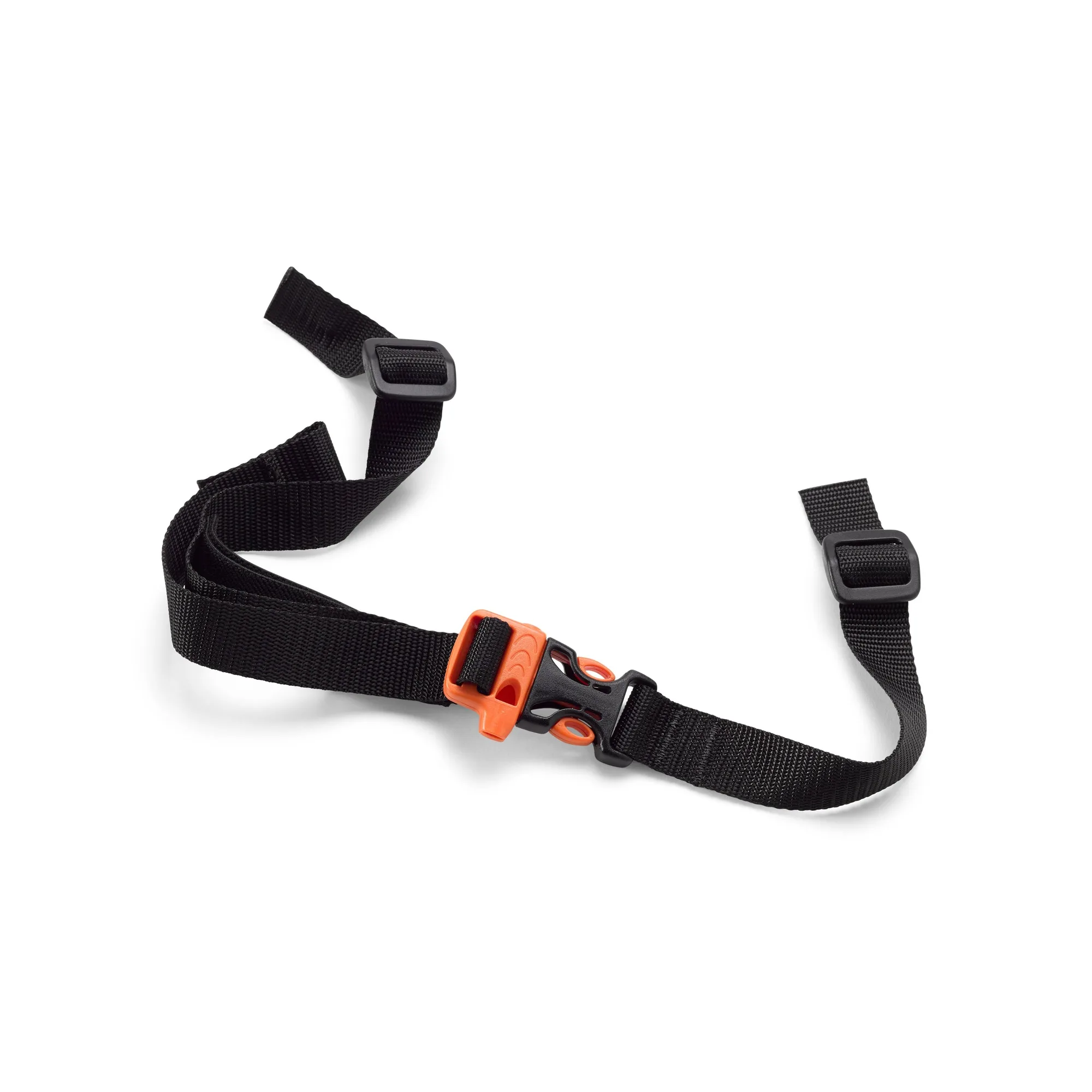
Sternum Strap